
'%20fill='%23a9976d'/%3e%3cpath%20id='Path_251'%20data-name='Path%20251'%20d='M8,35a1,1,0,0,1,1-1H23a1,1,0,0,1,0,2H9A1,1,0,0,1,8,35Z'%20transform='translate(-8%20-22)'%20fill='%23a9976d'/%3e%3cpath%20id='Path_252'%20data-name='Path%20252'%20d='M9,22a1,1,0,0,0,0,2h8a1,1,0,0,0,0-2Z'%20transform='translate(-8%20-16)'%20fill='%23a9976d'/%3e%3c/svg%3e)
'%20fill='%23a9976d'/%3e%3c/g%3e%3c/svg%3e)
木瓜─米其林必嘗台灣美味:木瓜牛奶
時令探索
主題探索
秋
文化美食
分享
'%3e%3cg%20id='Ellipse_27'%20data-name='Ellipse%2027'%20transform='translate(813%20250)'%20fill='none'%20stroke='%23ccac89'%20stroke-width='1'%3e%3ccircle%20cx='16'%20cy='16'%20r='16'%20stroke='none'/%3e%3ccircle%20cx='16'%20cy='16'%20r='15.5'%20fill='none'/%3e%3c/g%3e%3cg%20id='facebook'%20transform='translate(824.105%20258.296)'%3e%3cpath%20id='Path_243'%20data-name='Path%20243'%20d='M8.894.111V2.556H7.441a1.361,1.361,0,0,0-1.074.333,1.534,1.534,0,0,0-.278,1v1.75H8.8L8.441,8.38H6.089v7.028H3.255V8.38H.894V5.639H3.255V3.62A3.582,3.582,0,0,1,4.218.949,3.5,3.5,0,0,1,6.783,0,15.317,15.317,0,0,1,8.894.111Z'%20transform='translate(0%200)'%20fill='%23ccac89'/%3e%3c/g%3e%3c/g%3e%3c/svg%3e)

'%3e%3cg%20id='Ellipse_29'%20data-name='Ellipse%2029'%20transform='translate(901%20250)'%20fill='none'%20stroke='%23ccac89'%20stroke-width='1'%3e%3ccircle%20cx='16'%20cy='16'%20r='16'%20stroke='none'/%3e%3ccircle%20cx='16'%20cy='16'%20r='15.5'%20fill='none'/%3e%3c/g%3e%3cg%20id='link-45deg'%20transform='translate(902.607%20253.105)'%3e%3cg%20id='Group_479'%20data-name='Group%20479'%20transform='translate(7.393%205.896)'%3e%3cpath%20id='Path_241'%20data-name='Path%20241'%20d='M10.246,17.821,8.507,19.56a3.8,3.8,0,0,0,5.378,5.378L16.2,22.62a3.8,3.8,0,0,0-1.05-6.12l-.743.743a1.27,1.27,0,0,0-.2.252,2.535,2.535,0,0,1,1.091,4.23L12.99,24.042A2.536,2.536,0,0,1,9.4,20.455l1.005-1a5.093,5.093,0,0,1-.162-1.631Z'%20transform='translate(-7.393%20-12.02)'%20fill='%23ccac89'/%3e%3cpath%20id='Path_242'%20data-name='Path%20242'%20d='M18.236,9.327a3.8,3.8,0,0,0,1.05,6.12l.982-.984a2.535,2.535,0,0,1-1.136-4.241L21.448,7.9a2.536,2.536,0,1,1,3.587,3.587l-1.005,1a5.1,5.1,0,0,1,.162,1.631l1.739-1.739A3.8,3.8,0,1,0,20.553,7.01Z'%20transform='translate(-13.011%20-5.896)'%20fill='%23ccac89'/%3e%3c/g%3e%3c/g%3e%3c/g%3e%3c/svg%3e)
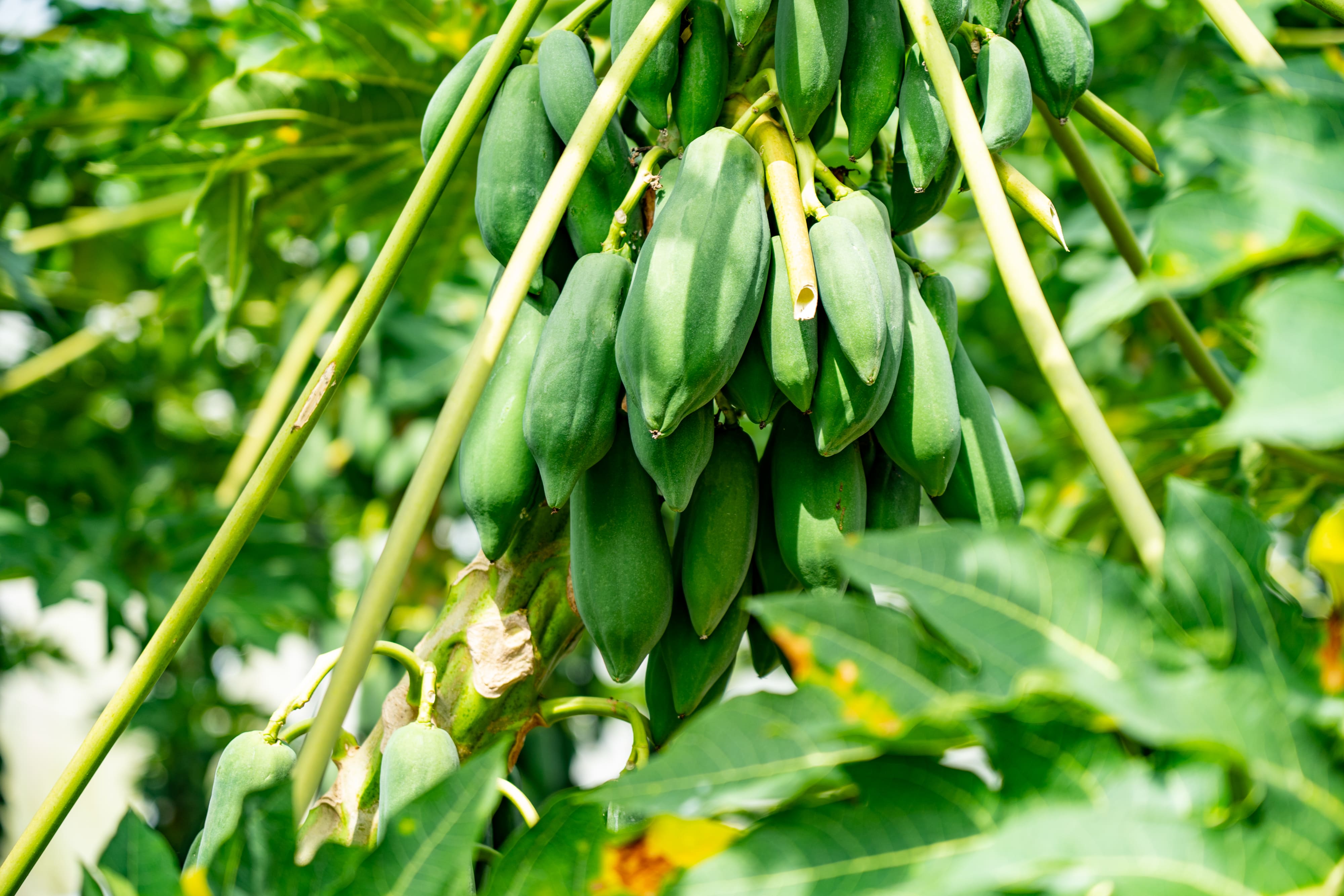
從清朝的「番木瓜」到外銷日本的台農品種,台灣木瓜透過改良與精緻栽培,成功打造口感香甜的風味,也為機能食品開創更多可能。
◤文.圖/看見台灣基金會編輯群
台
灣米其林指南2011,列出14項「必嘗」(must try)台灣美味,其中一項就是木瓜牛奶。主角之一的「木瓜」,被台灣人當成水果食用,其實是最近70年的事。根據農業媒體《上下游》報導,木瓜牛奶的起源有偶然也有必然,偶然是時機(兩者的盛產時節),必然則是政策因素(政府推廣牛奶)。
1960年代的冰果室就有銷售,可能源起於台中或高雄,不可考,「高雄牛乳大王」是先搶先贏的品牌名。
▋成功銷日,網室栽種量產穩定
木瓜於清朝末年自中國引進台灣,當時是味道重的「番木瓜」,多用來當飼料;1954年農試所鳳山分所引進蘇魯1號、日陞種木瓜做育種,台灣人才開始吃木瓜。如今台灣市占率最高的「台農2號」木瓜,甜度高、果肉軟,就是日陞種的後代,以台南為最大產區。
1975年,台灣木瓜成功外銷日本,為防範感染輪點病毒,近年多利用網室栽種,產量方趨於穩定。雖然木瓜全年可產,但主要產期為6至10月;其中,10到11月出產的木瓜,因秋天日夜溫差大,白天光合作用強,使醣分可以累積,因此最甜、最好吃。
除作鮮果食用,木瓜也可醃漬、乾燥加工做成蜜餞與果乾。木瓜果肉富含糖分、果膠、維生素、有機酸及木瓜鹼;種子則含芥子油苷、生育酚、類胡蘿蔔素等抗氧化物質,已漸發展為機能產品的潛力素材。
探索更多
養殖蝦─曾是養殖蝦王國,目前展開2.0篇章
蝦子是台灣人的熱門海鮮。300年前出版的《臺灣縣志》有一段紀錄:「台灣蝦有數種,鬚長於身,海中生者大,溪澗生者小……。」描述台灣有海水蝦也有淡水蝦可供食用。
荔枝─妃子笑與玉荷包
吃起荔枝,經常會跟唐明皇寵愛的楊貴妃聯想,杜甫還為它做了詩:「奔騰獻荔枝,百馬死山谷」。荔枝源於兩千多年前的中國,18世紀後,才陸續引進台灣栽種。
貢丸─發音來自台語的「打」
貢丸或作「摃丸」,為以豬肉作為原料之加工食品,台灣各處皆可見,亦為餐廳小吃、家戶間常見之食品。台灣的貢丸以新竹所產最為出名,常用以煮湯和另一知名物產米粉搭配,成為具代表性的街邊小食。