


◤Text and Images / iSee Taiwan Foundation Editorial Team
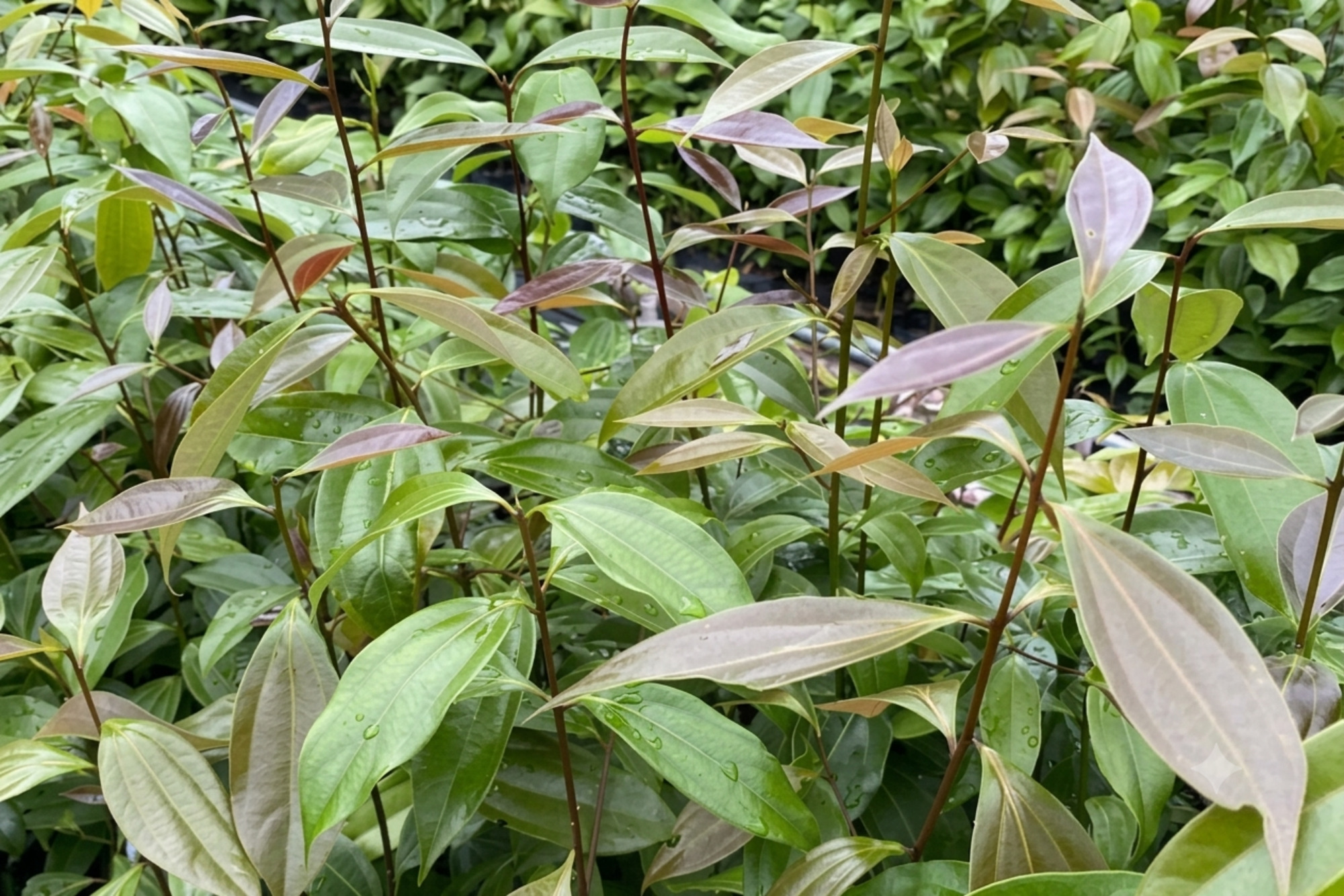
Taiwan Cinnamon (Cinnamomum osmophloeum Kanehira) is an evergreen tree in the family Lauraceae, endemic to Taiwan and native to the broadleaf forests of low to mid elevations. Unlike the cinnamon commonly used as a bark spice, Taiwan cinnamon is prized primarily for its leaves. When crushed, the leaves release a layered fragrance-sweet, aromatic, and faintly spicy-and can be dried and ground into powder, steeped as tea, or used in cooking. In Fenglin Township, Hualien County, cultivated plots now exceed 100 hectares, with producers developing cinnamon powder, tea, toothpaste, and shampoo from the crop. The Taichung Branch of the Forestry and Nature Conservation Agency has also selected and propagated seedlings with high cinnamaldehyde content, supporting growers in cultivation and processing and launching products including sparkling water and massage oil.
The fragrance of Taiwan cinnamon leaf is warm but not heavy, making it versatile across braised dishes, meat preparations, spiced broths, and desserts. In home cooking, dried Taiwan cinnamon leaves can be simmered with ginger, garlic, soy sauce, and sugar as a base for braised meats or lu wei. Ground into a fine powder, it can also be folded into cookie or cake batter as a partial substitute for imported cinnamon. Cinnamon rolls-a staple of Northern European and North American baking, made by spreading butter, sugar, and cinnamon powder over leavened dough before rolling and baking-take on an added dimension when Taiwan cinnamon powder is used in place of the conventional variety, lending the butter-sugar filling a faint note of Taiwan's mountain forests. Cinnamon powder is also a familiar addition to coffee, valued for warmth and fragrance; used without added sugar, it quietly deepens the cup.
An Indigenous Spice Memory of Mountain and Forest
Taiwan cinnamon is not notable for protein, fat, or vitamins, but for its aromatic compounds and phytochemicals-among them cinnamaldehyde, cinnamic acid, cinnamyl alcohol, and flavonoid glycosides. Research into its extracts has explored potential antioxidant, anti-inflammatory, and metabolic effects.
In the ethnobotanical knowledge of Taiwan's Indigenous peoples, Taiwan cinnamon has long held a place in both diet and daily life. Recorded sources note that the Tsou people chewed the roots to quench thirst and the bark for its pungent heat, using it as a cinnamon substitute; the leaves served as a spice. The Truku people steeped the leaves as tea or used them as an aromatic seasoning, while Paiwan records similarly document the leaves being used for tea and soup. From a fragrant plant of the natural forest to a cultivated crop yielding tea, condiments, and everyday products, Taiwan cinnamon has brought the scent of a native species back into view.