


◤Text and Images / iSee Taiwan Foundation Editorial Team
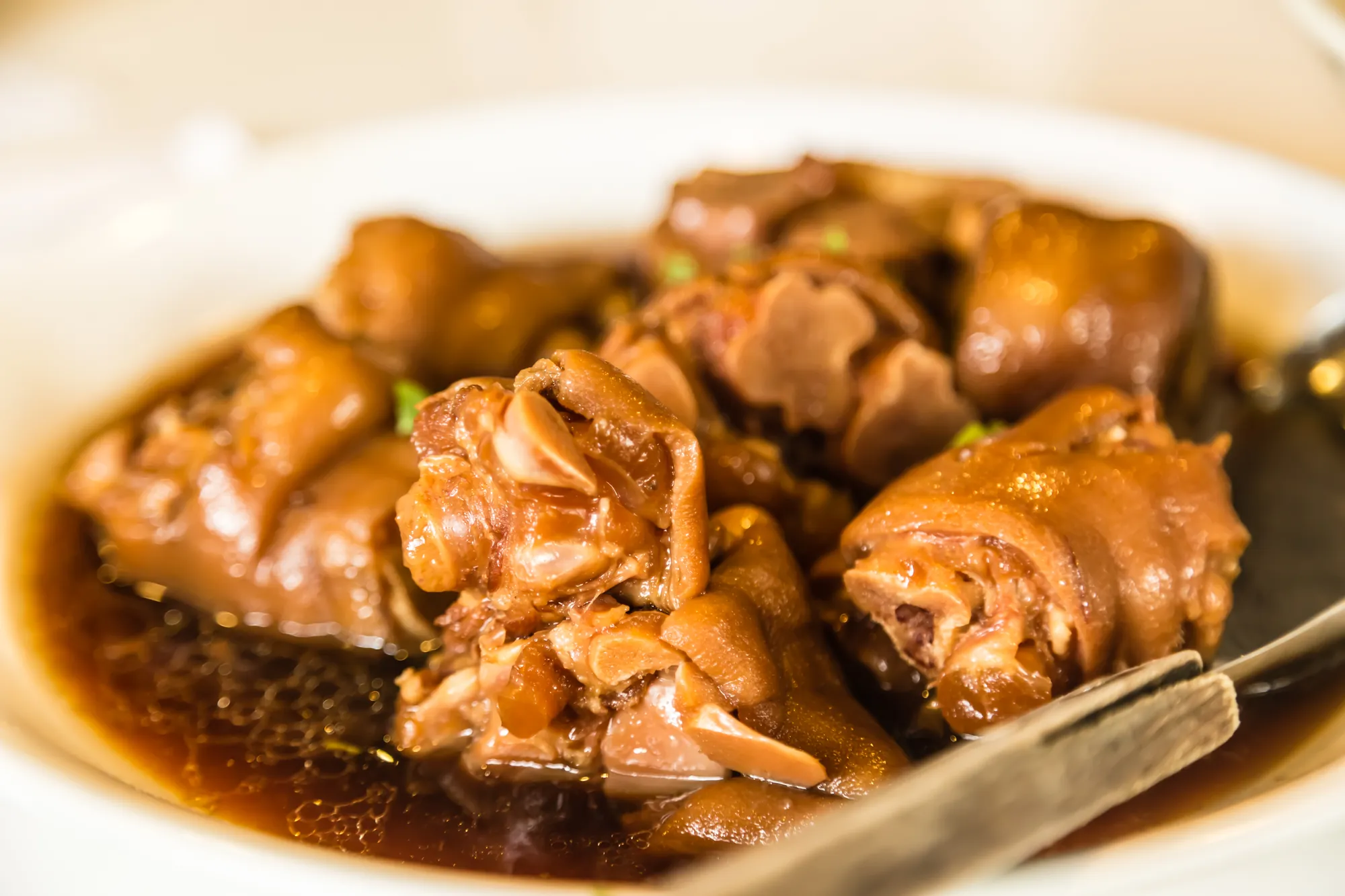
The rise of Wanluan pork knuckle in Pingtung grew out of a period of transformation in the local food business. In the early days, a master cook from Fujian brought the technique of braising pork knuckle to the area, and vendors who had mainly sold noodles and rice-such as Lin Hai-Hung, founder of Hai Hong Restaurant-switched over to pork knuckle one after another, at customers' suggestion, when business was poor, using the pig's forelegs. Thick-skinned, meaty, and rich in tendon, the front trotters, after long braising, take on a springy, chewy texture with a slight snap, neither greasy nor cloying; paired with a dip of minced garlic and soy sauce, they formed a distinctive local specialty and gradually built a reputation among locals and tourists alike.
The Taiwanese food writer Tang Lu-Sun once described its character as "fragrant but not cloying," precisely capturing the heart of Wanluan pork knuckle's flavor. As its reputation grew, Wanluan gradually formed a food cluster centered on pork knuckle, with dozens of pork-knuckle shops packed into a stretch of just a few dozen meters, drawing gourmets from all over and making the name "Wanluan" synonymous with pork knuckle. Wanluan pork knuckle is usually served cold, sliced, and eaten with a dip, setting it apart from ordinary hot braised pork knuckle and highlighting its springy meat and the slight snap of its skin.
From Festival Altar to Local Industry: A Dish as Symbol
Pork knuckle's standing and symbolism at the Taiwanese table are hard for many banquet centerpieces to match. In the harder times of the past, substantial cuts of pork were generally reserved for New Year festivities and other major celebrations, so pork knuckle gradually took on auspicious meaning. In traditional custom it symbolizes added longevity, strength, and blessing: during a leap month in the lunar calendar, married daughters traditionally prepare pork knuckle with longevity noodles for their parents as a symbolic wish for health and long life, and folk belief holds that "eating pork knuckle with misua drives off bad luck and wards away misfortune"-the rich fat and abundant gelatin of the knuckle signifying a turn in fortune and a replenishing of blessings. Such practices make pork knuckle not just a pleasure of the palate but a dish through which people express care and good wishes.
With the growth of local industry and the rise of tourism, and with its profile lifted by media and celebrity recommendations, Wanluan pork knuckle became a widely loved local food. From festival tables to everyday meals, Wanluan pork knuckle not only presents a local flavor but also mirrors the tightly woven relationship among food, emotion, and custom in Taiwanese food culture.