
'%20fill='%23a9976d'/%3e%3cpath%20id='Path_251'%20data-name='Path%20251'%20d='M8,35a1,1,0,0,1,1-1H23a1,1,0,0,1,0,2H9A1,1,0,0,1,8,35Z'%20transform='translate(-8%20-22)'%20fill='%23a9976d'/%3e%3cpath%20id='Path_252'%20data-name='Path%20252'%20d='M9,22a1,1,0,0,0,0,2h8a1,1,0,0,0,0-2Z'%20transform='translate(-8%20-16)'%20fill='%23a9976d'/%3e%3c/svg%3e)
'%20fill='%23a9976d'/%3e%3c/g%3e%3c/svg%3e)
苦瓜─又名半生瓜,50歲後才懂它的好
主題探索
文化美食
分享
'%3e%3cg%20id='Ellipse_27'%20data-name='Ellipse%2027'%20transform='translate(813%20250)'%20fill='none'%20stroke='%23ccac89'%20stroke-width='1'%3e%3ccircle%20cx='16'%20cy='16'%20r='16'%20stroke='none'/%3e%3ccircle%20cx='16'%20cy='16'%20r='15.5'%20fill='none'/%3e%3c/g%3e%3cg%20id='facebook'%20transform='translate(824.105%20258.296)'%3e%3cpath%20id='Path_243'%20data-name='Path%20243'%20d='M8.894.111V2.556H7.441a1.361,1.361,0,0,0-1.074.333,1.534,1.534,0,0,0-.278,1v1.75H8.8L8.441,8.38H6.089v7.028H3.255V8.38H.894V5.639H3.255V3.62A3.582,3.582,0,0,1,4.218.949,3.5,3.5,0,0,1,6.783,0,15.317,15.317,0,0,1,8.894.111Z'%20transform='translate(0%200)'%20fill='%23ccac89'/%3e%3c/g%3e%3c/g%3e%3c/svg%3e)

'%3e%3cg%20id='Ellipse_29'%20data-name='Ellipse%2029'%20transform='translate(901%20250)'%20fill='none'%20stroke='%23ccac89'%20stroke-width='1'%3e%3ccircle%20cx='16'%20cy='16'%20r='16'%20stroke='none'/%3e%3ccircle%20cx='16'%20cy='16'%20r='15.5'%20fill='none'/%3e%3c/g%3e%3cg%20id='link-45deg'%20transform='translate(902.607%20253.105)'%3e%3cg%20id='Group_479'%20data-name='Group%20479'%20transform='translate(7.393%205.896)'%3e%3cpath%20id='Path_241'%20data-name='Path%20241'%20d='M10.246,17.821,8.507,19.56a3.8,3.8,0,0,0,5.378,5.378L16.2,22.62a3.8,3.8,0,0,0-1.05-6.12l-.743.743a1.27,1.27,0,0,0-.2.252,2.535,2.535,0,0,1,1.091,4.23L12.99,24.042A2.536,2.536,0,0,1,9.4,20.455l1.005-1a5.093,5.093,0,0,1-.162-1.631Z'%20transform='translate(-7.393%20-12.02)'%20fill='%23ccac89'/%3e%3cpath%20id='Path_242'%20data-name='Path%20242'%20d='M18.236,9.327a3.8,3.8,0,0,0,1.05,6.12l.982-.984a2.535,2.535,0,0,1-1.136-4.241L21.448,7.9a2.536,2.536,0,1,1,3.587,3.587l-1.005,1a5.1,5.1,0,0,1,.162,1.631l1.739-1.739A3.8,3.8,0,1,0,20.553,7.01Z'%20transform='translate(-13.011%20-5.896)'%20fill='%23ccac89'/%3e%3c/g%3e%3c/g%3e%3c/g%3e%3c/svg%3e)
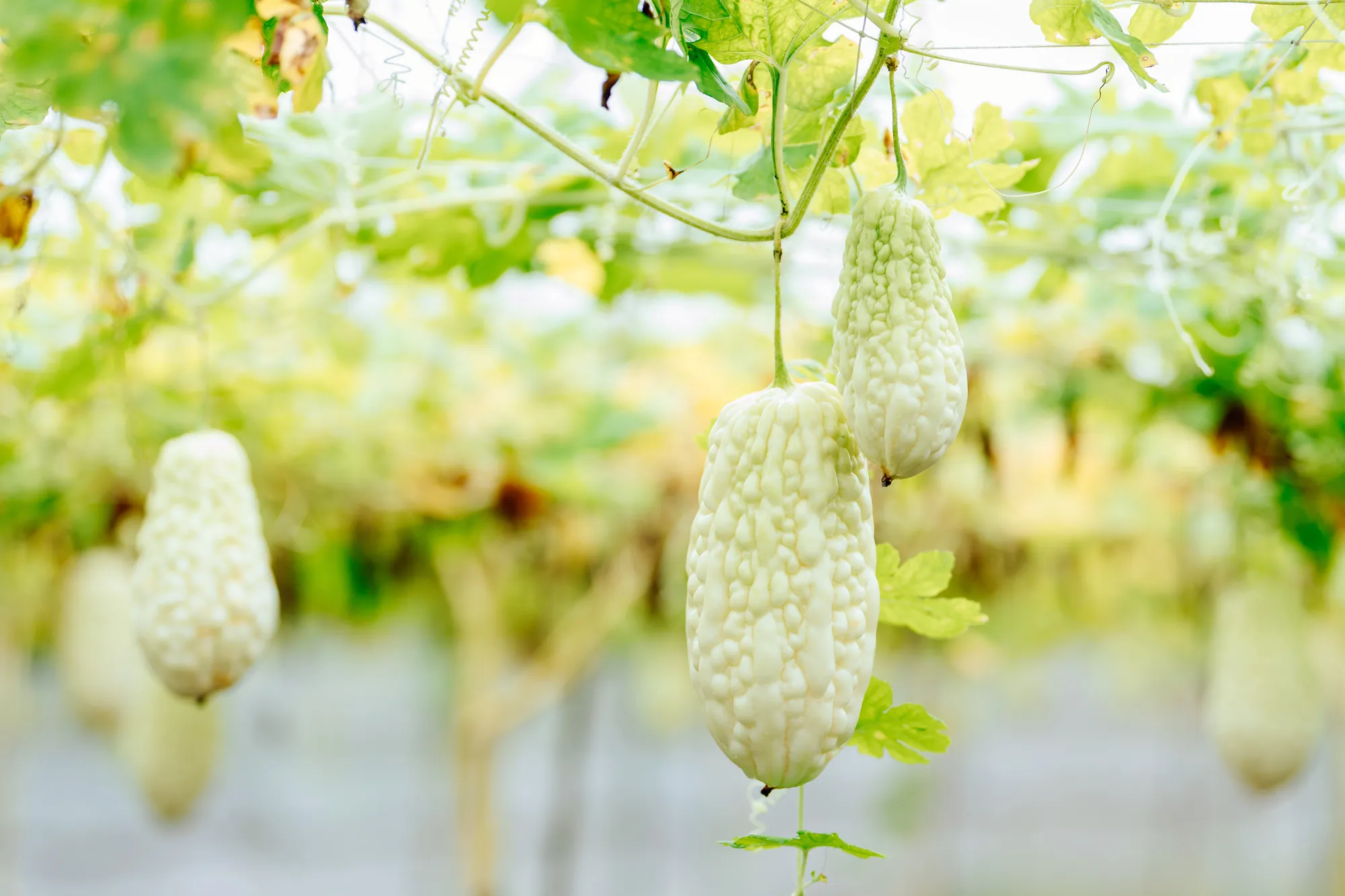
人類馴化苦瓜的歷史很長,最早約於6000多年前便已區分為野生種與栽培種的苦瓜,歷史記載印度早已有人種植,600年前傳入中國,在南方落地生根。
◤文.圖/看見台灣基金會編輯群
苦
瓜是台灣重要的夏季蔬果,既消暑且解熱;雖然名為「苦瓜」,但口感苦中回甘,是許多人的心頭好。也有人認為要到50歲的知天命之年,才能品味苦瓜那苦盡甘來的餘味,稱它為「半生瓜」。
詩人余光中在他的著作《白玉苦瓜》的自序中,如此深刻地解讀人生:「生命的苦瓜成了藝術的正果,這便是詩的意義。」他的宣傳話語是:「如果讀友要讀我的詩,就讀《白玉苦瓜》。」
苦瓜在台灣的歷史記載,首見於1685年編撰完成之《台灣府志》,其中紀錄苦瓜的別名:癩葡萄(表皮像癩蝦蟆的小疙瘩)、錦荔枝(瓜皮粗糙如荔枝)。
▋蘋果苦瓜可做沙拉
數千年來,苦瓜的尺寸從超小慢慢變大,又因為消費者挑食程度不同,「苦」的程度出現差異。其中,怕苦的台灣人一直朝向「愈來愈不苦」進行苦瓜育種,成果斐然,產量高、果實大的苦瓜品種「白玉苦瓜」,苦度最低,適合用於煮湯、清炒或清蒸,也很適合燉滷或做成涼拌小菜,不只台灣人愛吃,年年都還外銷香港、新加坡等華人聚集的國家和地區。
目前苦瓜以屏東縣栽培最多,其次是彰化、台中及高雄。
近年來台灣家庭型態慢慢轉為小家庭,育種公司也育出體積小如蘋果、可作為生食沙拉的「蘋果苦瓜」,儘管價格較高,依然很受歡迎。蘋果苦瓜外型比較圓胖,口感多汁、脆甜,適合涼拌、生吃,也適合清炒或燉湯。
探索更多
黑鮪魚故鄉在屏東─行家看魚形、魚腹、魚鱗
台灣四面環海,一年四季都有多樣的海鮮分布,滋養著人們,處處精采。其中,屏東東港鎮位於高屏溪出口東南方,隔海與小琉球風景區相望,是台灣南端恆春半島最熱鬧與忙碌的漁港。(圖片來源:陳漢元)
絲瓜─《本草綱目》:「其瓤有絡」
絲瓜又稱菜瓜,《本草綱目》就提到「其瓤有絡」,指瓜體布滿絲絡。
咖啡─阿里山豆,1公斤破3萬元
自星巴克從1998年登台起,有「西方世界品味fu的」咖啡,在台灣從消費、種植、咖啡競賽都引發了熱潮。根據農業部統計,近年台灣每年進口的咖啡生豆約超過5萬公噸,換算下來台灣每人平均一年喝下184杯咖啡。