
'%20fill='%23a9976d'/%3e%3cpath%20id='Path_251'%20data-name='Path%20251'%20d='M8,35a1,1,0,0,1,1-1H23a1,1,0,0,1,0,2H9A1,1,0,0,1,8,35Z'%20transform='translate(-8%20-22)'%20fill='%23a9976d'/%3e%3cpath%20id='Path_252'%20data-name='Path%20252'%20d='M9,22a1,1,0,0,0,0,2h8a1,1,0,0,0,0-2Z'%20transform='translate(-8%20-16)'%20fill='%23a9976d'/%3e%3c/svg%3e)
'%20fill='%23a9976d'/%3e%3c/g%3e%3c/svg%3e)
山葵─阿里山上的台灣綠金傳奇
地方探索
主題探索
南部
文化美食
分享
'%3e%3cg%20id='Ellipse_27'%20data-name='Ellipse%2027'%20transform='translate(813%20250)'%20fill='none'%20stroke='%23ccac89'%20stroke-width='1'%3e%3ccircle%20cx='16'%20cy='16'%20r='16'%20stroke='none'/%3e%3ccircle%20cx='16'%20cy='16'%20r='15.5'%20fill='none'/%3e%3c/g%3e%3cg%20id='facebook'%20transform='translate(824.105%20258.296)'%3e%3cpath%20id='Path_243'%20data-name='Path%20243'%20d='M8.894.111V2.556H7.441a1.361,1.361,0,0,0-1.074.333,1.534,1.534,0,0,0-.278,1v1.75H8.8L8.441,8.38H6.089v7.028H3.255V8.38H.894V5.639H3.255V3.62A3.582,3.582,0,0,1,4.218.949,3.5,3.5,0,0,1,6.783,0,15.317,15.317,0,0,1,8.894.111Z'%20transform='translate(0%200)'%20fill='%23ccac89'/%3e%3c/g%3e%3c/g%3e%3c/svg%3e)

'%3e%3cg%20id='Ellipse_29'%20data-name='Ellipse%2029'%20transform='translate(901%20250)'%20fill='none'%20stroke='%23ccac89'%20stroke-width='1'%3e%3ccircle%20cx='16'%20cy='16'%20r='16'%20stroke='none'/%3e%3ccircle%20cx='16'%20cy='16'%20r='15.5'%20fill='none'/%3e%3c/g%3e%3cg%20id='link-45deg'%20transform='translate(902.607%20253.105)'%3e%3cg%20id='Group_479'%20data-name='Group%20479'%20transform='translate(7.393%205.896)'%3e%3cpath%20id='Path_241'%20data-name='Path%20241'%20d='M10.246,17.821,8.507,19.56a3.8,3.8,0,0,0,5.378,5.378L16.2,22.62a3.8,3.8,0,0,0-1.05-6.12l-.743.743a1.27,1.27,0,0,0-.2.252,2.535,2.535,0,0,1,1.091,4.23L12.99,24.042A2.536,2.536,0,0,1,9.4,20.455l1.005-1a5.093,5.093,0,0,1-.162-1.631Z'%20transform='translate(-7.393%20-12.02)'%20fill='%23ccac89'/%3e%3cpath%20id='Path_242'%20data-name='Path%20242'%20d='M18.236,9.327a3.8,3.8,0,0,0,1.05,6.12l.982-.984a2.535,2.535,0,0,1-1.136-4.241L21.448,7.9a2.536,2.536,0,1,1,3.587,3.587l-1.005,1a5.1,5.1,0,0,1,.162,1.631l1.739-1.739A3.8,3.8,0,1,0,20.553,7.01Z'%20transform='translate(-13.011%20-5.896)'%20fill='%23ccac89'/%3e%3c/g%3e%3c/g%3e%3c/g%3e%3c/svg%3e)
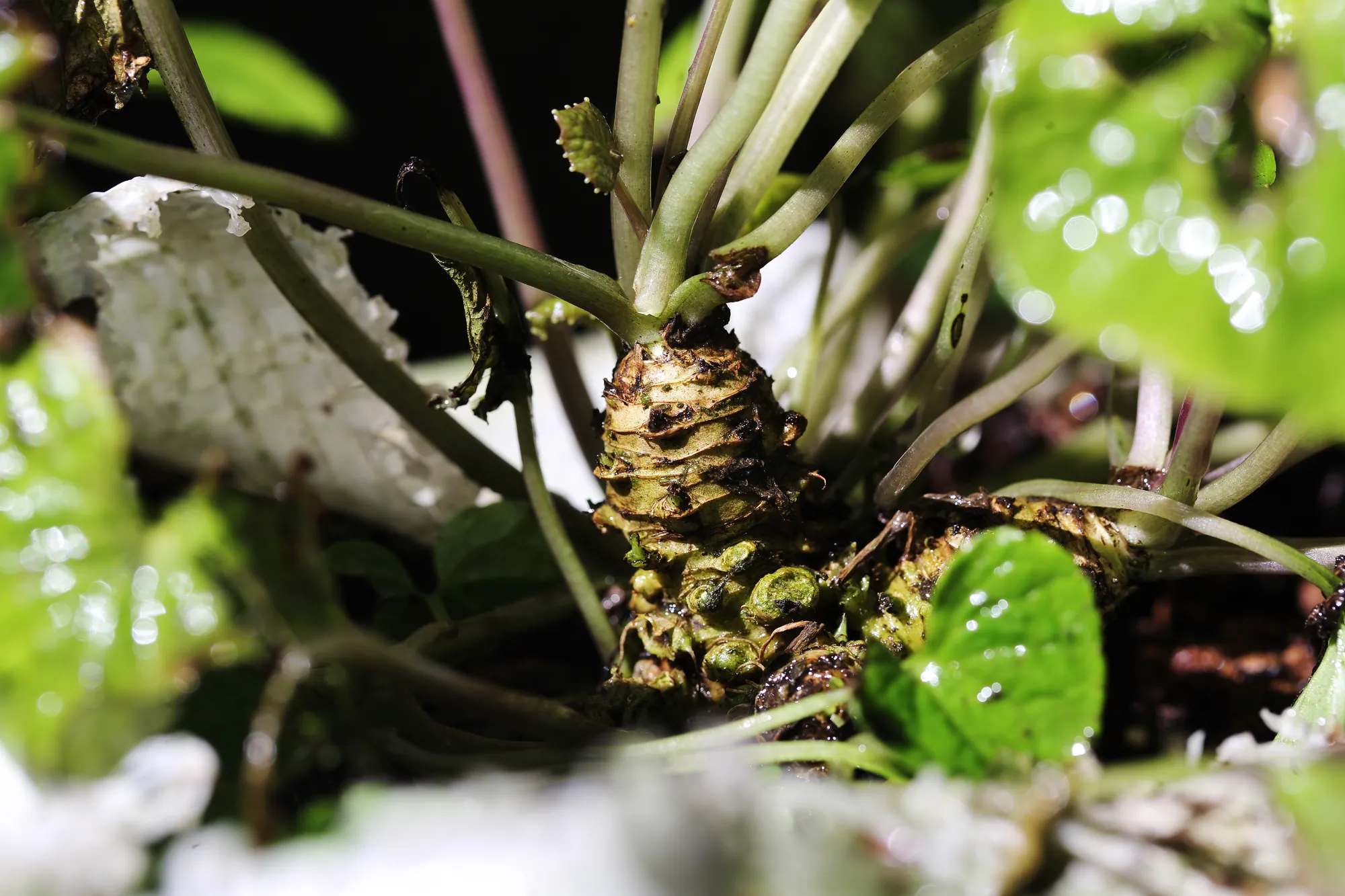
山葵,原生於日本及俄羅斯遠東地區,日語音讀為「わさび(Wasabi)」,台灣常以擬音「哇沙米」稱之。
◤文.圖/看見台灣基金會編輯群
日
治時代,台灣總督府開發阿里山林場,建造從平地直通海拔2000公尺的森林鐵道,在阿里山鐵道沿線開墾聚落、移植日式木造房舍,同時種植了家鄉帶來的山葵,是台灣栽種山葵最早的歷史。
日本人因為思鄉零星栽種山葵,意外地讓農民發現阿里山得天獨厚的氣候環境,竟能產出不輸日本品質與口感的山葵,開始大面積種植山葵外銷日本,尤其日本遭逢凜冬暴雪無法種植山葵時,台灣山葵特別重要。新鮮山葵出口日本,曾創下每噸100萬元台幣的天價!
然而,高經濟價值的誘因,某些葵農為了開闢更多種植地而侵佔、砍伐山林,破壞阿里山水土環境,2015年在當時的農委會林務局(現為農業部林保署)執行國土保安政策逐步回收國有林地後,結束了阿里山山葵「綠金傳奇」的一代輝煌。
▋二代返鄉創生,台灣山葵寫下新篇章
2000年後,有葵農引進日本品種交叉配種,在中低海拔成功復育山葵成功,並聯手在地青農找回當地的特色作物,帶動產業發展,幫助地方積蓄創生能量。
其中,奮起湖返鄉青年陳岱聲創立在地品牌,結合台灣傳統零食「米香」和山葵開發出蓬鬆酥脆的「山葵米磚」,2019年參加有「食品界米其林」之稱的比利時iTQi國際頂級美味大獎,從全球上千件參賽作品中拿下一星獎章,證明台灣傳統點心也可以很優秀,也為台灣山葵寫下一頁新篇章。
探索更多
嘉義雞肉飯─探索在地美食的獨特魅力
對很多人來說,品嘗當地料理是旅行的一大樂趣。台灣雖然是個和九州差不多大小的小島,卻擁有豐富的自然資源和多樣的食材。各地都有具代表性的小吃或甜點。這次,我們將帶你探索嘉義的代表性美食——火雞肉飯。(圖片來源:片倉真理)
梅子─青梅外銷轉內需,找到新生命力
梅原產於中國,台灣的梅樹也是300多年前從中國福建、廣東等地引入,主要栽種在高雄、南投、台東、台南等縣市的中低海拔山區。
八寶飯─日本皇太子的最愛
八寶飯是年節名菜之一,在糯米飯上鋪滿充滿吉祥寓意的甜鹹果食,且有聚寶盆的祈福之意;至於是哪八寶,那就各顯神通。其中一種是由蜜棗乾、蓮子、枸杞、桂圓、甘納豆、金橘、番茄乾和豆沙,共八種食材製成。