
'%20fill='%23a9976d'/%3e%3cpath%20id='Path_251'%20data-name='Path%20251'%20d='M8,35a1,1,0,0,1,1-1H23a1,1,0,0,1,0,2H9A1,1,0,0,1,8,35Z'%20transform='translate(-8%20-22)'%20fill='%23a9976d'/%3e%3cpath%20id='Path_252'%20data-name='Path%20252'%20d='M9,22a1,1,0,0,0,0,2h8a1,1,0,0,0,0-2Z'%20transform='translate(-8%20-16)'%20fill='%23a9976d'/%3e%3c/svg%3e)
'%20fill='%23a9976d'/%3e%3c/g%3e%3c/svg%3e)
夜市─東南亞旅客最有熟悉感的台灣街頭饗宴
主題探索
常民生活
分享
'%3e%3cg%20id='Ellipse_27'%20data-name='Ellipse%2027'%20transform='translate(813%20250)'%20fill='none'%20stroke='%23ccac89'%20stroke-width='1'%3e%3ccircle%20cx='16'%20cy='16'%20r='16'%20stroke='none'/%3e%3ccircle%20cx='16'%20cy='16'%20r='15.5'%20fill='none'/%3e%3c/g%3e%3cg%20id='facebook'%20transform='translate(824.105%20258.296)'%3e%3cpath%20id='Path_243'%20data-name='Path%20243'%20d='M8.894.111V2.556H7.441a1.361,1.361,0,0,0-1.074.333,1.534,1.534,0,0,0-.278,1v1.75H8.8L8.441,8.38H6.089v7.028H3.255V8.38H.894V5.639H3.255V3.62A3.582,3.582,0,0,1,4.218.949,3.5,3.5,0,0,1,6.783,0,15.317,15.317,0,0,1,8.894.111Z'%20transform='translate(0%200)'%20fill='%23ccac89'/%3e%3c/g%3e%3c/g%3e%3c/svg%3e)

'%3e%3cg%20id='Ellipse_29'%20data-name='Ellipse%2029'%20transform='translate(901%20250)'%20fill='none'%20stroke='%23ccac89'%20stroke-width='1'%3e%3ccircle%20cx='16'%20cy='16'%20r='16'%20stroke='none'/%3e%3ccircle%20cx='16'%20cy='16'%20r='15.5'%20fill='none'/%3e%3c/g%3e%3cg%20id='link-45deg'%20transform='translate(902.607%20253.105)'%3e%3cg%20id='Group_479'%20data-name='Group%20479'%20transform='translate(7.393%205.896)'%3e%3cpath%20id='Path_241'%20data-name='Path%20241'%20d='M10.246,17.821,8.507,19.56a3.8,3.8,0,0,0,5.378,5.378L16.2,22.62a3.8,3.8,0,0,0-1.05-6.12l-.743.743a1.27,1.27,0,0,0-.2.252,2.535,2.535,0,0,1,1.091,4.23L12.99,24.042A2.536,2.536,0,0,1,9.4,20.455l1.005-1a5.093,5.093,0,0,1-.162-1.631Z'%20transform='translate(-7.393%20-12.02)'%20fill='%23ccac89'/%3e%3cpath%20id='Path_242'%20data-name='Path%20242'%20d='M18.236,9.327a3.8,3.8,0,0,0,1.05,6.12l.982-.984a2.535,2.535,0,0,1-1.136-4.241L21.448,7.9a2.536,2.536,0,1,1,3.587,3.587l-1.005,1a5.1,5.1,0,0,1,.162,1.631l1.739-1.739A3.8,3.8,0,1,0,20.553,7.01Z'%20transform='translate(-13.011%20-5.896)'%20fill='%23ccac89'/%3e%3c/g%3e%3c/g%3e%3c/g%3e%3c/svg%3e)
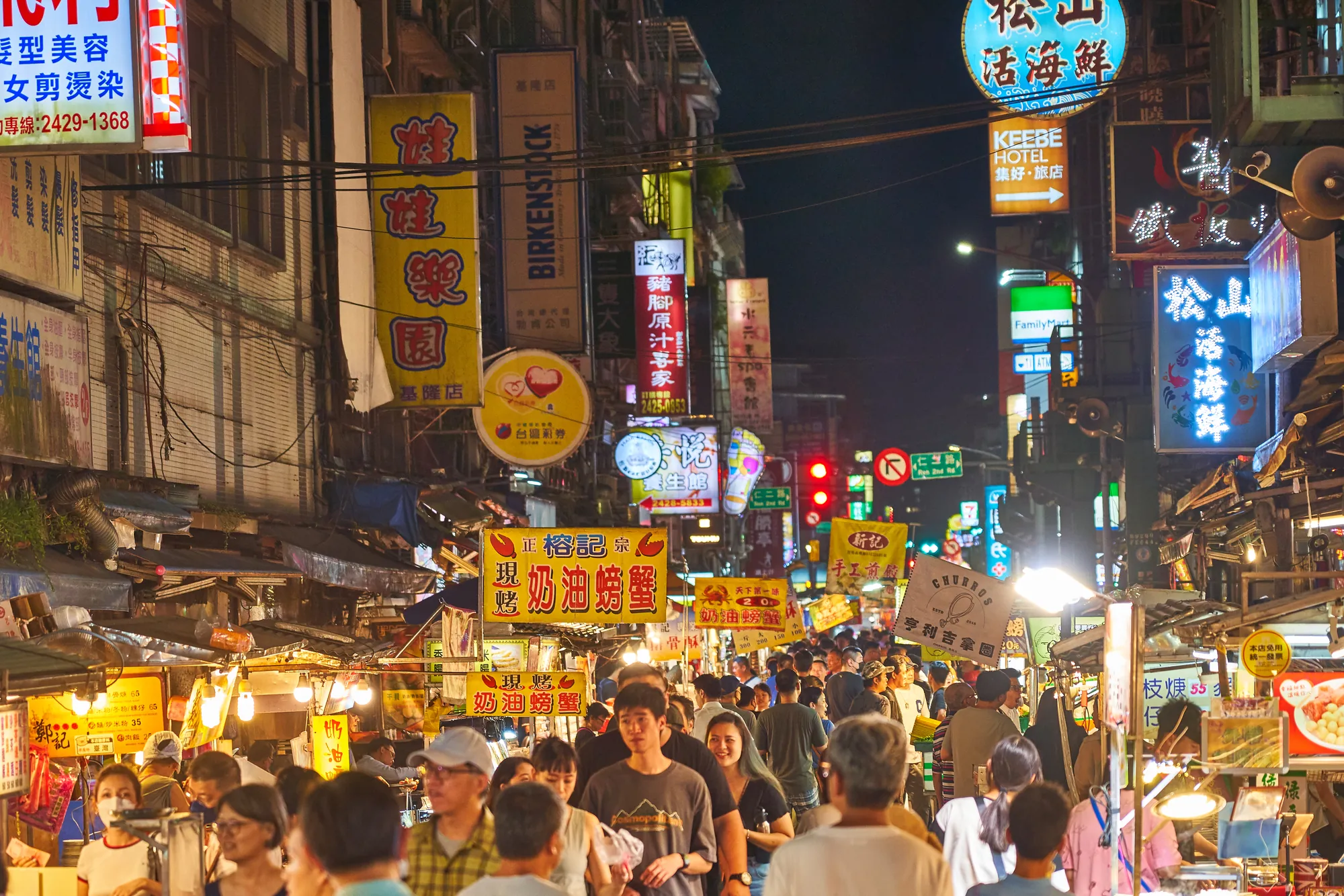
對東南亞的旅客而言,夜市與街頭小吃並不陌生;但台灣夜市的魅力,在於把地方食材、廟口文化、庶民生活與觀光體驗,濃縮在一條燈火通明的街道裡。從蚵仔煎、豆花、鹽酥雞到冰品,夜市不只是滿足味蕾的地方,也是外國旅客最容易感受台灣日常活力的現場。
◤文.圖/看見台灣基金會編輯群
台
灣的夜市已有超過百年的歷史。最初,小吃攤販聚集在人來人往的騎樓外、路邊,或學校、廟埕、市場等人潮匯聚之地,在農業時代,還有攤販就近設點,供應農夫休息補充吃食。
日治時期因電燈的日漸普及,1908年鳳山廳旗津天后宮前、1910年的嘉義東市場皆出現夜市的蹤跡,隨後吸納民間舉行的「納涼會」與提供市民夜間另一種飲食娛樂選擇的「沙卡里巴」(台南康樂市場前身,曾為小吃攤聚集地)的經驗,逐漸發展成在地獨有的夜市文化。
▋饒河街觀光夜市是第一個合法的
二戰時期夜市發展一度停滯,戰後則隨著社會治安趨於穩定持續發展。1987年,第一個合法以觀光夜市命名的台北市饒河街觀光夜市成立後,各地觀光夜市相繼成立,與原有街邊的小型夜市、流動夜市各放異彩。
現今台灣各地夜市結合當地特產食材、文化發展而各有特色,基隆廟口夜市以天婦羅、奶油螃蟹、鼎邊趖聞名,素有蛇街之名的華西街夜市,獨有的蛇酒與鱉肉引人注目,宜蘭羅東夜市用當地三星蔥結合小吃,蔥油餅、餡餅入口皆充滿三星蔥的獨特香氣。這些多樣化的夜市文化不僅豐富了台灣的飲食選擇,也成為了展示地方特色的重要窗口。
堪稱2024年全球第一男主角的輝達執行長黃仁勳,每次來台必逛夜市,逛成世界新聞,還熱情邀約從來沒去過台灣夜市的台積電創辦人張忠謀及廣達董事長林百里,同遊他最愛的寧夏夜市,三大巨頭吃吃喝喝,包括蚵仔煎、豆花等美食,張忠謀都喊讚。政府不花一毛錢,台灣夜市就取得轟動世界的免費廣告。
探索更多
紅豆──紅豆生南國,多元甜蜜食
冬天來碗熱呼呼的紅豆湯圓、盛夏則端一份甜滋滋的蜜紅豆煉奶剉冰,是現在台灣的常民生活。但其實100多年前,台灣沒有紅豆、台灣人也不吃紅豆。
異鄉.家鄉味—西班牙主廚的宜蘭慢食札記
一位西班牙主廚初來台灣,即被豐饒的在地食材深深吸引。旅台17年,他實際走訪市場、農場與漁港,發掘台灣食材的無限潛力,並以西班牙料理革命為例,鼓勵大眾支持在地生產者,共同推動台灣料理的革新。(圖片來源:Daniel Negreira)
醬瓜─清苦農村生活中溫暖的鹹香
醬瓜為台灣常見的傳統醃漬料理,簡單易做,廣見於家戶之間。醬瓜使用小黃瓜(又稱小胡瓜、小花瓜、花胡瓜、刺瓜仔)用黃豆醬油醃漬而成。