
'%20fill='%23a9976d'/%3e%3cpath%20id='Path_251'%20data-name='Path%20251'%20d='M8,35a1,1,0,0,1,1-1H23a1,1,0,0,1,0,2H9A1,1,0,0,1,8,35Z'%20transform='translate(-8%20-22)'%20fill='%23a9976d'/%3e%3cpath%20id='Path_252'%20data-name='Path%20252'%20d='M9,22a1,1,0,0,0,0,2h8a1,1,0,0,0,0-2Z'%20transform='translate(-8%20-16)'%20fill='%23a9976d'/%3e%3c/svg%3e)
'%20fill='%23a9976d'/%3e%3c/g%3e%3c/svg%3e)
香蕉─MIT香蕉,進駐東京奧運選手村
地方探索
主題探索
南部
文化美食
分享
'%3e%3cg%20id='Ellipse_27'%20data-name='Ellipse%2027'%20transform='translate(813%20250)'%20fill='none'%20stroke='%23ccac89'%20stroke-width='1'%3e%3ccircle%20cx='16'%20cy='16'%20r='16'%20stroke='none'/%3e%3ccircle%20cx='16'%20cy='16'%20r='15.5'%20fill='none'/%3e%3c/g%3e%3cg%20id='facebook'%20transform='translate(824.105%20258.296)'%3e%3cpath%20id='Path_243'%20data-name='Path%20243'%20d='M8.894.111V2.556H7.441a1.361,1.361,0,0,0-1.074.333,1.534,1.534,0,0,0-.278,1v1.75H8.8L8.441,8.38H6.089v7.028H3.255V8.38H.894V5.639H3.255V3.62A3.582,3.582,0,0,1,4.218.949,3.5,3.5,0,0,1,6.783,0,15.317,15.317,0,0,1,8.894.111Z'%20transform='translate(0%200)'%20fill='%23ccac89'/%3e%3c/g%3e%3c/g%3e%3c/svg%3e)

'%3e%3cg%20id='Ellipse_29'%20data-name='Ellipse%2029'%20transform='translate(901%20250)'%20fill='none'%20stroke='%23ccac89'%20stroke-width='1'%3e%3ccircle%20cx='16'%20cy='16'%20r='16'%20stroke='none'/%3e%3ccircle%20cx='16'%20cy='16'%20r='15.5'%20fill='none'/%3e%3c/g%3e%3cg%20id='link-45deg'%20transform='translate(902.607%20253.105)'%3e%3cg%20id='Group_479'%20data-name='Group%20479'%20transform='translate(7.393%205.896)'%3e%3cpath%20id='Path_241'%20data-name='Path%20241'%20d='M10.246,17.821,8.507,19.56a3.8,3.8,0,0,0,5.378,5.378L16.2,22.62a3.8,3.8,0,0,0-1.05-6.12l-.743.743a1.27,1.27,0,0,0-.2.252,2.535,2.535,0,0,1,1.091,4.23L12.99,24.042A2.536,2.536,0,0,1,9.4,20.455l1.005-1a5.093,5.093,0,0,1-.162-1.631Z'%20transform='translate(-7.393%20-12.02)'%20fill='%23ccac89'/%3e%3cpath%20id='Path_242'%20data-name='Path%20242'%20d='M18.236,9.327a3.8,3.8,0,0,0,1.05,6.12l.982-.984a2.535,2.535,0,0,1-1.136-4.241L21.448,7.9a2.536,2.536,0,1,1,3.587,3.587l-1.005,1a5.1,5.1,0,0,1,.162,1.631l1.739-1.739A3.8,3.8,0,1,0,20.553,7.01Z'%20transform='translate(-13.011%20-5.896)'%20fill='%23ccac89'/%3e%3c/g%3e%3c/g%3e%3c/g%3e%3c/svg%3e)
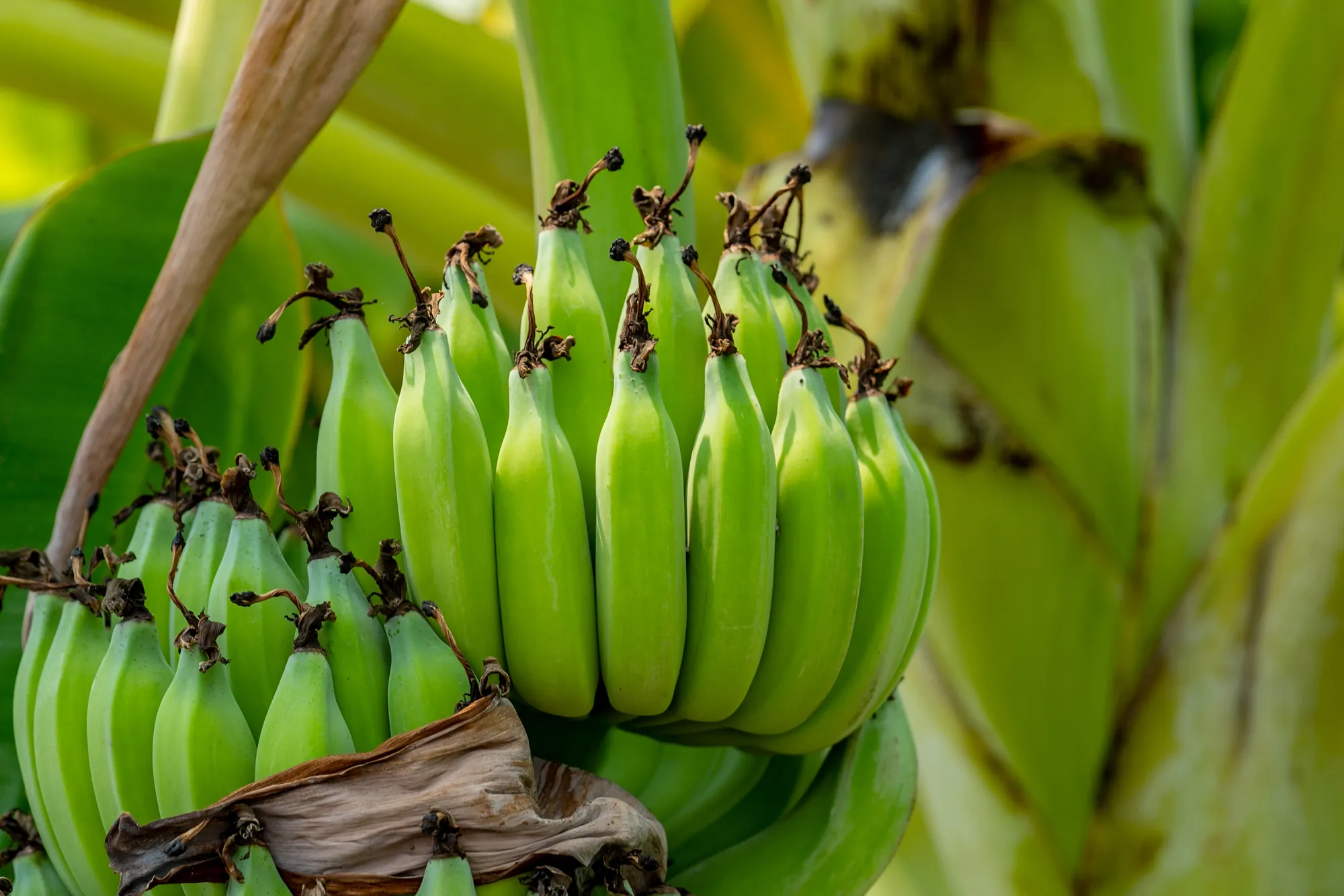
2021年7月的東京奧運,選手村食材中出現了「台灣香蕉」,這是第一次「MIT香蕉」成功進軍奧運殿堂。當時,農委會還召開了「跟世界蕉個朋友,為奧運選手加油」視訊記者會,是全台蕉農的一劑強心針。
◤文.圖/看見台灣基金會編輯群
香
蕉,源起東南亞與印度地區,1731年時自中國帶回台灣中部種植。
而那時,日本還沒有香蕉這水果。直到1895年日本治台,第一任台灣總督樺山資紀獻了兩箱給明治天皇;1909年日本《讀賣新聞》也刊登第五任台灣總督佐久間左馬太再度將南投集集的上等香蕉獻給天皇,當年11月《臺灣日日新報》便報導「明治天皇最愛吃香蕉」,還稱「台灣香蕉是『御食物』(帝王的食物)」。
這種上等集集山蕉被裝在籃子中運往日本,籃子上如果有寫著「千」字,就代表著品質優良,「帝王等級」。推波助瀾之下,香蕉成了日本最愛的台灣水果。1924年,台灣香蕉外銷到日本已超過10萬公噸。
▋香蕉轉內需也交出好成績 台灣人每人每年吃70根
1960年代台灣香蕉一直占總出口值的8~10%,外銷量排名世界第四,為台灣勇奪「香蕉王國」的美名。
當時,香蕉在台灣的產地主要為中、南部;中部以內銷為主,南部高雄旗山是主要產地,以外銷為主。
旗山的香蕉出口日本前得先儲存在高雄港的「香蕉棚」,這個儲存空間在2010年更名為觀光景點「香蕉碼頭」,展示昔日存放香蕉的場景與故事,是全台僅存之香蕉產業的歷史建築。
香蕉也是台灣人最喜歡的水果之一。一項2018年的統計,台灣平均每人每年的香蕉消費量約11.2公斤,大約是70根香蕉。
運動前後吃香蕉、肚子餓了吃香蕉,對切成長長的船型食器,中間三球草莓、香草、巧克力,桅桿和船帆則以櫻桃、鮮奶油與各式水果搭配的「香蕉船」,更是全台五六七年級生共同的青春回憶。
探索更多
芒果─品種超過20個,打造台灣芒果王國美譽
號稱「水果王國」的台灣,眾多水果中最讓全球觀光客在夏天慕名而來的,就是芒果。
葡萄─巨峰葡萄創造紫金傳奇
葡萄在6000多年前的非洲東北部和亞洲西南部已有栽種紀錄,台灣的葡萄栽培紀錄最早可追溯到1684年自中國引進的純歐洲品種。1895年,台灣人半田敏男從日本引進多種西洋、日本葡萄品種,奠定台灣種植釀酒用葡萄的基礎,但仍因台灣氣候條件限制,難以栽種。
龍眼─柴燒龍眼乾,助吳寶春在世界烘焙賽發光
台灣物資不豐的年代,盛夏之際到龍眼樹下奮力一跳,摘下一束龍眼,撥開褐色的外皮,瞬間出現晶瑩剔透的白色果肉,隱約還可以看到中間黑色的果核,看起來像極了眼珠子,滋味甜滋滋,這就是早年台灣孩子最重要的童年回憶。