
'%20fill='%23a9976d'/%3e%3cpath%20id='Path_251'%20data-name='Path%20251'%20d='M8,35a1,1,0,0,1,1-1H23a1,1,0,0,1,0,2H9A1,1,0,0,1,8,35Z'%20transform='translate(-8%20-22)'%20fill='%23a9976d'/%3e%3cpath%20id='Path_252'%20data-name='Path%20252'%20d='M9,22a1,1,0,0,0,0,2h8a1,1,0,0,0,0-2Z'%20transform='translate(-8%20-16)'%20fill='%23a9976d'/%3e%3c/svg%3e)
'%20fill='%23a9976d'/%3e%3c/g%3e%3c/svg%3e)
蚵仔煎─帝王食品,平民吃法
主題探索
文化美食
分享
'%3e%3cg%20id='Ellipse_27'%20data-name='Ellipse%2027'%20transform='translate(813%20250)'%20fill='none'%20stroke='%23ccac89'%20stroke-width='1'%3e%3ccircle%20cx='16'%20cy='16'%20r='16'%20stroke='none'/%3e%3ccircle%20cx='16'%20cy='16'%20r='15.5'%20fill='none'/%3e%3c/g%3e%3cg%20id='facebook'%20transform='translate(824.105%20258.296)'%3e%3cpath%20id='Path_243'%20data-name='Path%20243'%20d='M8.894.111V2.556H7.441a1.361,1.361,0,0,0-1.074.333,1.534,1.534,0,0,0-.278,1v1.75H8.8L8.441,8.38H6.089v7.028H3.255V8.38H.894V5.639H3.255V3.62A3.582,3.582,0,0,1,4.218.949,3.5,3.5,0,0,1,6.783,0,15.317,15.317,0,0,1,8.894.111Z'%20transform='translate(0%200)'%20fill='%23ccac89'/%3e%3c/g%3e%3c/g%3e%3c/svg%3e)

'%3e%3cg%20id='Ellipse_29'%20data-name='Ellipse%2029'%20transform='translate(901%20250)'%20fill='none'%20stroke='%23ccac89'%20stroke-width='1'%3e%3ccircle%20cx='16'%20cy='16'%20r='16'%20stroke='none'/%3e%3ccircle%20cx='16'%20cy='16'%20r='15.5'%20fill='none'/%3e%3c/g%3e%3cg%20id='link-45deg'%20transform='translate(902.607%20253.105)'%3e%3cg%20id='Group_479'%20data-name='Group%20479'%20transform='translate(7.393%205.896)'%3e%3cpath%20id='Path_241'%20data-name='Path%20241'%20d='M10.246,17.821,8.507,19.56a3.8,3.8,0,0,0,5.378,5.378L16.2,22.62a3.8,3.8,0,0,0-1.05-6.12l-.743.743a1.27,1.27,0,0,0-.2.252,2.535,2.535,0,0,1,1.091,4.23L12.99,24.042A2.536,2.536,0,0,1,9.4,20.455l1.005-1a5.093,5.093,0,0,1-.162-1.631Z'%20transform='translate(-7.393%20-12.02)'%20fill='%23ccac89'/%3e%3cpath%20id='Path_242'%20data-name='Path%20242'%20d='M18.236,9.327a3.8,3.8,0,0,0,1.05,6.12l.982-.984a2.535,2.535,0,0,1-1.136-4.241L21.448,7.9a2.536,2.536,0,1,1,3.587,3.587l-1.005,1a5.1,5.1,0,0,1,.162,1.631l1.739-1.739A3.8,3.8,0,1,0,20.553,7.01Z'%20transform='translate(-13.011%20-5.896)'%20fill='%23ccac89'/%3e%3c/g%3e%3c/g%3e%3c/g%3e%3c/svg%3e)
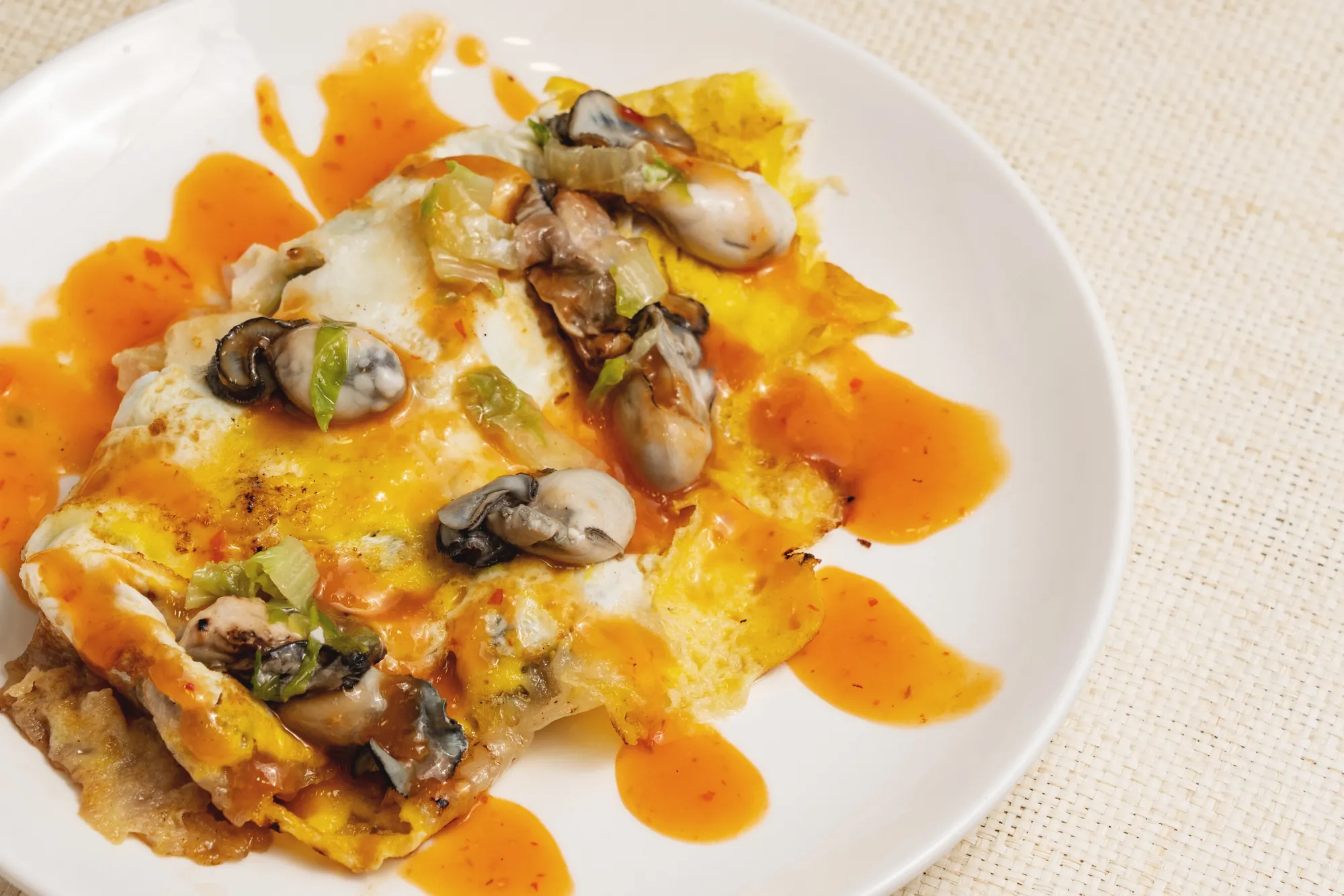
台灣最強小吃的是哪一款?鐵定眾說紛紜。2007年台灣經濟部商業司舉辦的「外國人台灣美食排行No.1票選活動」,蚵仔煎榮登首位。
◤文.圖/看見台灣基金會編輯群
據
信,蚵仔煎源於福建,又稱牡蠣、蠔,在華人地區有不同的作法版本和名稱,有的是菜、有的是小吃,廈門稱海蠣煎,馬來西亞是蠔煎,潮汕叫蠔烙。台灣的蚵仔煎,恐怕是其中「最小氣」的版本;別人一盤用掉半斤、一斤蚵仔不手軟,台灣版本要食客努力東翻西找,能找出7、8顆就算豪華的。那麼,台灣蚵仔煎到底憑什麼比其他地方的版本出名?還拿下小吃王國第一名的桂冠?
▋食用台版蚵仔煎像尋寶
從食客端的體驗,台灣版本吃起來有幾項優點:蚵仔帶腥味,太多會膩;青菜脆甜的口感同時平衡了蚵仔的腥味;蛋,加強蛋白質的供應;粉漿,保住了食材的水分和嫩度;甜辣醬料,則能提鮮壓腥。吃食過程找蚵仔,甚至具尋寶樂趣。總歸來說,台版蚵仔煎,勝。
16世紀時,地瓜隨西班牙人傳入東亞後,方有閩南人以地瓜粉製作蚵仔煎。傳入台灣後以地瓜粉和沿海易得之的蚵仔為主角,鮮香無比。
台灣的蚵仔主要產地在台南七股、嘉義東石、雲林台西、彰化王功西南沿海及金門、澎湖離島,漁民擔心颱風一夕摧毀蚵田,半年就搶收了,否則假以時日,也是能長大不少。
牡蠣具高蛋白質,歐洲人稱它為「海裡的牛奶」,日本人稱「帝王食品」,在中國明朝時叫「西施乳」。如此帝王級的食品,在台灣近乎銅板價就吃得到,能不流行乎?
探索更多
八寶飯─日本皇太子的最愛
八寶飯是年節名菜之一,在糯米飯上鋪滿充滿吉祥寓意的甜鹹果食,且有聚寶盆的祈福之意;至於是哪八寶,那就各顯神通。其中一種是由蜜棗乾、蓮子、枸杞、桂圓、甘納豆、金橘、番茄乾和豆沙,共八種食材製成。
胡麻油─黑白芝麻油、香油用法不同
胡麻油為台灣常見油品,胡麻又稱芝麻。在人類歷史上,芝麻出現得相當早,而胡麻油亦為最古老的食用油品之一。4000多年前的埃及及蘇丹即食用芝麻,後經絲路進中國,再傳到台灣。
咖啡─阿里山豆,1公斤破3萬元
自星巴克從1998年登台起,有「西方世界品味fu的」咖啡,在台灣從消費、種植、咖啡競賽都引發了熱潮。根據農業部統計,近年台灣每年進口的咖啡生豆約超過5萬公噸,換算下來台灣每人平均一年喝下184杯咖啡。