
'%20fill='%23a9976d'/%3e%3cpath%20id='Path_251'%20data-name='Path%20251'%20d='M8,35a1,1,0,0,1,1-1H23a1,1,0,0,1,0,2H9A1,1,0,0,1,8,35Z'%20transform='translate(-8%20-22)'%20fill='%23a9976d'/%3e%3cpath%20id='Path_252'%20data-name='Path%20252'%20d='M9,22a1,1,0,0,0,0,2h8a1,1,0,0,0,0-2Z'%20transform='translate(-8%20-16)'%20fill='%23a9976d'/%3e%3c/svg%3e)
'%20fill='%23a9976d'/%3e%3c/g%3e%3c/svg%3e)
'%3e%3cg%20id='Ellipse_27'%20data-name='Ellipse%2027'%20transform='translate(813%20250)'%20fill='none'%20stroke='%23ccac89'%20stroke-width='1'%3e%3ccircle%20cx='16'%20cy='16'%20r='16'%20stroke='none'/%3e%3ccircle%20cx='16'%20cy='16'%20r='15.5'%20fill='none'/%3e%3c/g%3e%3cg%20id='facebook'%20transform='translate(824.105%20258.296)'%3e%3cpath%20id='Path_243'%20data-name='Path%20243'%20d='M8.894.111V2.556H7.441a1.361,1.361,0,0,0-1.074.333,1.534,1.534,0,0,0-.278,1v1.75H8.8L8.441,8.38H6.089v7.028H3.255V8.38H.894V5.639H3.255V3.62A3.582,3.582,0,0,1,4.218.949,3.5,3.5,0,0,1,6.783,0,15.317,15.317,0,0,1,8.894.111Z'%20transform='translate(0%200)'%20fill='%23ccac89'/%3e%3c/g%3e%3c/g%3e%3c/svg%3e)

'%3e%3cg%20id='Ellipse_29'%20data-name='Ellipse%2029'%20transform='translate(901%20250)'%20fill='none'%20stroke='%23ccac89'%20stroke-width='1'%3e%3ccircle%20cx='16'%20cy='16'%20r='16'%20stroke='none'/%3e%3ccircle%20cx='16'%20cy='16'%20r='15.5'%20fill='none'/%3e%3c/g%3e%3cg%20id='link-45deg'%20transform='translate(902.607%20253.105)'%3e%3cg%20id='Group_479'%20data-name='Group%20479'%20transform='translate(7.393%205.896)'%3e%3cpath%20id='Path_241'%20data-name='Path%20241'%20d='M10.246,17.821,8.507,19.56a3.8,3.8,0,0,0,5.378,5.378L16.2,22.62a3.8,3.8,0,0,0-1.05-6.12l-.743.743a1.27,1.27,0,0,0-.2.252,2.535,2.535,0,0,1,1.091,4.23L12.99,24.042A2.536,2.536,0,0,1,9.4,20.455l1.005-1a5.093,5.093,0,0,1-.162-1.631Z'%20transform='translate(-7.393%20-12.02)'%20fill='%23ccac89'/%3e%3cpath%20id='Path_242'%20data-name='Path%20242'%20d='M18.236,9.327a3.8,3.8,0,0,0,1.05,6.12l.982-.984a2.535,2.535,0,0,1-1.136-4.241L21.448,7.9a2.536,2.536,0,1,1,3.587,3.587l-1.005,1a5.1,5.1,0,0,1,.162,1.631l1.739-1.739A3.8,3.8,0,1,0,20.553,7.01Z'%20transform='translate(-13.011%20-5.896)'%20fill='%23ccac89'/%3e%3c/g%3e%3c/g%3e%3c/g%3e%3c/svg%3e)
◤文/特約作家一Melody
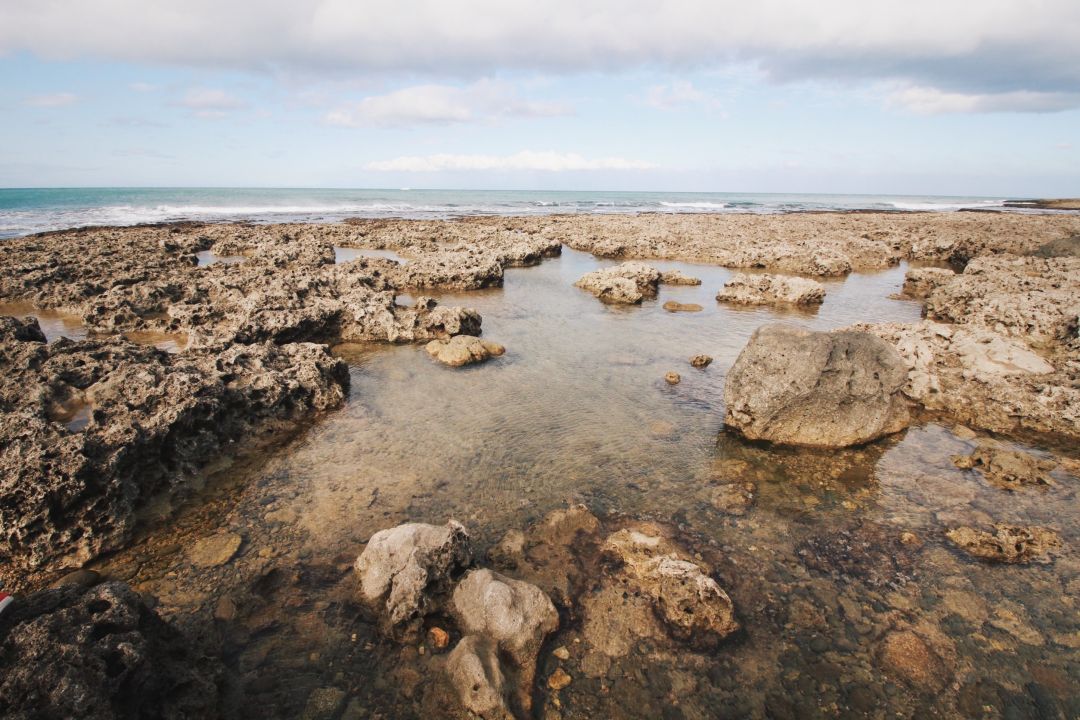
後灣位於屏東縣車城鄉,屬於環繞恆春半島的珊瑚礁海岸帶。這片海岸線從西側的楓港延伸至東側的旭海,長達90公里,沿途裙礁發達,海蝕作用在隆起的珊瑚礁上雕琢出無數海蝕溝、海蝕柱,以及大大小小的海蝕壺穴。
這些壺穴的形成是大自然千萬年的傑作。當波浪挾帶砂礫不斷沖刷礁岩表面,堅硬的珊瑚礁岩層上較為脆弱之處便逐漸凹陷,形成圓形或橢圓形的坑洞。渦流在坑洞中旋轉,使礁石不斷磨蝕,最終形成如同天然容器般的岩穴。後灣人稱這些岩穴為「鹽窟仔」,因為每年冬春之際,這些天然容器便成了取鹽的寶地。
掃鹽藏鹽的生活記憶
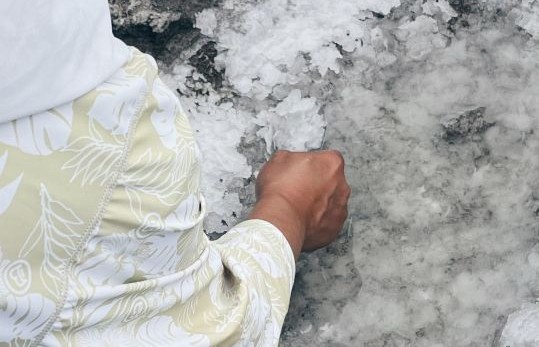
在台灣鹽業史上,明鄭參軍陳永華於1665年在台南瀬口「改煎為曬」,開啟了天日曬鹽的三百多年歷史。然而在缺乏鹽田條件的恆春半島,後灣居民發展出截然不同的取鹽方式。每年夏季颱風過後,狂暴的大浪將海水拍打到高處的珊瑚礁岩上,殘留在鹽窟仔裡。接著靠著冬季的海風與陽光,海水逐漸蒸發濃縮。待到農曆年前後,鹽窟仔中便會析出薄薄一層潔白的鹽花,以及鹹度達波美25度(編按:波美度為鹹度單位,海水初始約波美3度,即每公升含30克鹽,當鹵水經陽光蒸發濃縮至波美25度時,即達飽和狀態)的濃稠鹵水——這正是取鹽的最佳時機。
早年,後灣的長者會在此時穿梭於礁岩間「掃鹽」,用簡單的工具收集鹽花與鹵水,帶回家中自用。這些鹽可以用來醃製魚肉、調味烹飪,鹵水則用於製作豆腐。然而在日本時代至戰後,台灣實施鹽專賣制度,鹽警會到車城、小琉球一帶取締私鹽,因此掃鹽、藏鹽、藏鹵水等,便成了不合法的行為。
隨著1975年苗栗通霄精鹽廠開始量產,便宜的精製鹽取代了傳統海鹽,許多後灣長輩也漸漸忘記了家中還藏著的「陳年老鹽」,這段取鹽的生活記憶幾乎要隨著時間消逝。
從保育到文化的傳承之路
2010年,為了守護家鄉的陸蟹與海岸環境,後灣居民楊美雲成立了「後灣人文暨自然生態保育協會」,開始推動生態旅遊與文化遊程。在社區田野調查中,她重新挖掘出這段幾乎被遺忘的取鹽記憶,並花費五、六年時間摸索,復刻了「鹽窟仔取鹽」與鹽鹵豆腐製作的技藝。
首先,取鹽的時機必須精準掌握。一旦春雨降臨,鹽鹵水便會混入雜質而變淡;到了梅雨季與颱風期,即使陽光炙熱,也會因泥沙、碎屑沉澱而品質不佳。因此想取得最純淨的鹽鹵,必須在冬末春初之際,帶著空桶穿越海岸保安林,在珊瑚礁岩間跳上躍下,仔細搜尋那些鹽花豐盛、鹵水清澈的岩窟。
當看見閃亮半透明的鹽花薄片,便知這是老天爺賞賜的禮物。小心翼翼地將鹽花與鹵水收集起來,這第一步便是整個製鹽過程的關鍵——唯有最乾淨的原料,才能製作出高品質的海鹽。
馬尾藻鹽的海洋風味
後灣不僅有珊瑚礁鹽鹵,還有豐富的海藻資源。馬尾藻是一種生長在中潮帶珊瑚礁上的褐藻,也是海龜的食物與潮間帶小生物的棲所。每年二月孢子成熟時,馬尾藻的品質與風味最佳,採摘時必須輕巧撥開藻體觀察,避免干擾藏身其中的小蝦小魚小蟹,經過多次清洗、浸泡、換水,再曬乾數日才能存放。
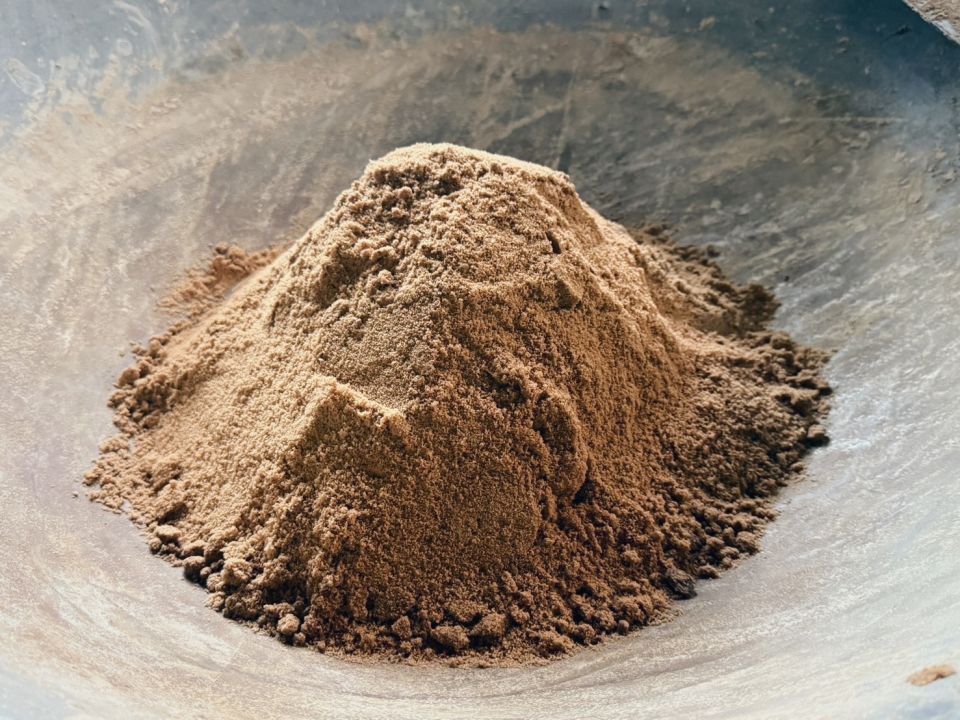
製作馬尾藻鹽的工序繁複而講究。先將乾燥的馬尾藻熬煮超過四小時,直到聞到海菜味、柴魚味,代表褐藻膠已經析出;同時預煮鹽鹵水,撈除雜質。接著讓藻水與鹽鹵水混合,繼續熬煮,從液態慢慢變成濃稠的泥狀。因膠質豐富,鏟子會越來越沉重,必須雙手不斷翻炒,掌控火候,避免燒焦。
從液體到泥漿,再到褐色的結晶,整個過程需要8至12小時。離火後還要包裹棉被保溫,待其慢慢降溫,隔天才能裝瓶。這種馬尾藻鹽帶著多層次的海洋風味,有人形容是「大海味」,有人說帶著「蔗糖香」,甚至有人嘗到「淡淡的螃蟹味」,風味絲毫不輸日本的藻鹽。
與海共生的生活哲學
後灣的鹽窟仔取鹽,不單純只是一種製鹽技術,還體現了海島居民與自然共生的生活智慧,包含了對環境的細膩觀察——掌握季節、潮汐、天氣的變化;對資源的珍惜利用——採集時避免破壞生態,熬煮後的馬尾藻還能作為果樹堆肥;以及對傳統的尊重傳承——將幾乎失傳的技藝復刻於當代。
從明鄭時期陳永華在台南建立鹽田,到清代西海岸各地鹽場的興盛,再到日治時期鹽田面積擴張至七千多甲,台灣曾經歷過三百多年的「白金歲月」。2002年,隨著最後一座鹽田停曬,大規模的產業製鹽走入歷史。然而在後灣,這種源自珊瑚礁岩穴的古老取鹽法,卻以文化傳承的姿態延續下來。
時至今日,後灣的鹽窟仔取鹽不是為了商業利益,而是為了提醒人們海洋的重要,留下在地人與大自然共存的生活智慧。在全球永續飲食運動中,手工海鹽正成為新興趨勢。法國格朗德的鹽之花(Fleur de sel)、日本能登的揚濱鹽、英國馬爾頓的片狀海鹽,都是運用傳統工法製作的高級海鹽,在國際市場上備受推崇。這些海鹽的共同特點,是保留了產地的風土特色與製作者的工藝精神。