

◤Text and Images / iSee Taiwan Foundation Editorial Team
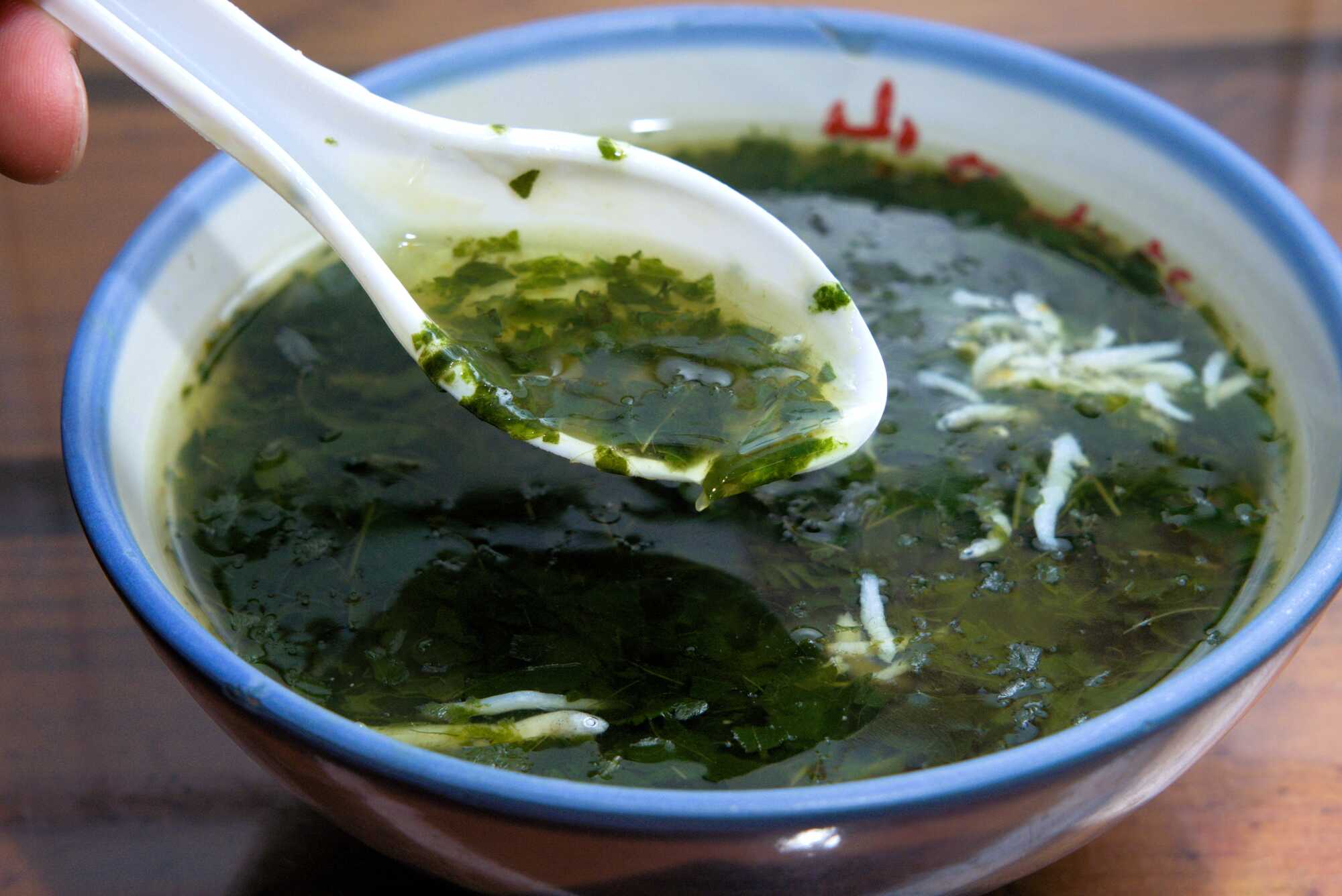
On the summer tables of longtime Taichung residents, you often see a pot of soup in a deep green. In it are chunks of sweet potato and dried anchovies; it tastes faintly bitter going in, yet leaves a sweet aftertaste in the throat-this is the mayi soup common in Taichung. For many people from elsewhere the flavor may be unfamiliar, but for many Taichung people it is one of the most local of home tastes on a scorching summer table. For children, the peculiar bitterness usually takes getting used to; for elders, it may be the most familiar of summer memories.
Mayi, also written 麻芛 (pronounced wěi), refers to the tender leaves of jute. Jute was once a common crop in central Taiwan, used mainly for fiber-rope, gunny sacks, and the like. Suited to warmer climates, it left its mark on the industry and place-names of the central plains: the Nantun District of Taichung City, for instance, still keeps place-names tied to "Mayuan," the old jute fields, to this day. Sown in late spring, the tender leaves can be picked in succession as the plant grows, making mayi a common local ingredient at the height of summer.
A Local Dish Also Noted in Taiwan Travelogue
The Nantun area of Taichung City was once closely tied to jute growing. After taking the fiber, farmers did not throw the tender leaves away; instead, they worked out a way to remove the bitterness: first pulling off the coarse stems and old leaf-veins, then rubbing and rinsing the leaves again and again to draw out some of the bitter juice, and finally simmering them into a soup with ingredients such as sweet potato and dried anchovies. Filling yet refreshing, this bowl of mayi soup gradually became a signature summer dish of the Taichung area, showing the thrifty resourcefulness of Taiwanese farming households.
In recent years, mayi has drawn fresh attention through literature. In her novel Taiwan Travelogue, the writer Yang Shuang-zi portrays Taichung's mayi and other local foods, using food to string together memories of the land and stories of an era. The book went on to win the U.S. National Book Award for Translated Literature and the U.K. International Booker Prize, allowing many more readers around the world to see the richness of Taiwan's food culture.
As the jute industry declined, and given the fairly elaborate steps of making mayi, the dish once faded from modern tables. In recent years, though, Taichung's local shops and innovative brands have begun to reappraise its worth: for instance, the long-established Taichung bakery Wish Lin folds mayi into its pastries, making distinctive mayi sun cakes, scholar cakes, sponge cakes, and the like; some restaurants cook with mayi, developing new flavors beyond the traditional soup. This old-time taste that once belonged to farm-country summers is being carried on in new ways.