
'%20fill='%23a9976d'/%3e%3cpath%20id='Path_251'%20data-name='Path%20251'%20d='M8,35a1,1,0,0,1,1-1H23a1,1,0,0,1,0,2H9A1,1,0,0,1,8,35Z'%20transform='translate(-8%20-22)'%20fill='%23a9976d'/%3e%3cpath%20id='Path_252'%20data-name='Path%20252'%20d='M9,22a1,1,0,0,0,0,2h8a1,1,0,0,0,0-2Z'%20transform='translate(-8%20-16)'%20fill='%23a9976d'/%3e%3c/svg%3e)
'%20fill='%23a9976d'/%3e%3c/g%3e%3c/svg%3e)
草莓─食用本體是花托、假果
地方探索
時令探索
主題探索
中部
冬
文化美食
分享
'%3e%3cg%20id='Ellipse_27'%20data-name='Ellipse%2027'%20transform='translate(813%20250)'%20fill='none'%20stroke='%23ccac89'%20stroke-width='1'%3e%3ccircle%20cx='16'%20cy='16'%20r='16'%20stroke='none'/%3e%3ccircle%20cx='16'%20cy='16'%20r='15.5'%20fill='none'/%3e%3c/g%3e%3cg%20id='facebook'%20transform='translate(824.105%20258.296)'%3e%3cpath%20id='Path_243'%20data-name='Path%20243'%20d='M8.894.111V2.556H7.441a1.361,1.361,0,0,0-1.074.333,1.534,1.534,0,0,0-.278,1v1.75H8.8L8.441,8.38H6.089v7.028H3.255V8.38H.894V5.639H3.255V3.62A3.582,3.582,0,0,1,4.218.949,3.5,3.5,0,0,1,6.783,0,15.317,15.317,0,0,1,8.894.111Z'%20transform='translate(0%200)'%20fill='%23ccac89'/%3e%3c/g%3e%3c/g%3e%3c/svg%3e)

'%3e%3cg%20id='Ellipse_29'%20data-name='Ellipse%2029'%20transform='translate(901%20250)'%20fill='none'%20stroke='%23ccac89'%20stroke-width='1'%3e%3ccircle%20cx='16'%20cy='16'%20r='16'%20stroke='none'/%3e%3ccircle%20cx='16'%20cy='16'%20r='15.5'%20fill='none'/%3e%3c/g%3e%3cg%20id='link-45deg'%20transform='translate(902.607%20253.105)'%3e%3cg%20id='Group_479'%20data-name='Group%20479'%20transform='translate(7.393%205.896)'%3e%3cpath%20id='Path_241'%20data-name='Path%20241'%20d='M10.246,17.821,8.507,19.56a3.8,3.8,0,0,0,5.378,5.378L16.2,22.62a3.8,3.8,0,0,0-1.05-6.12l-.743.743a1.27,1.27,0,0,0-.2.252,2.535,2.535,0,0,1,1.091,4.23L12.99,24.042A2.536,2.536,0,0,1,9.4,20.455l1.005-1a5.093,5.093,0,0,1-.162-1.631Z'%20transform='translate(-7.393%20-12.02)'%20fill='%23ccac89'/%3e%3cpath%20id='Path_242'%20data-name='Path%20242'%20d='M18.236,9.327a3.8,3.8,0,0,0,1.05,6.12l.982-.984a2.535,2.535,0,0,1-1.136-4.241L21.448,7.9a2.536,2.536,0,1,1,3.587,3.587l-1.005,1a5.1,5.1,0,0,1,.162,1.631l1.739-1.739A3.8,3.8,0,1,0,20.553,7.01Z'%20transform='translate(-13.011%20-5.896)'%20fill='%23ccac89'/%3e%3c/g%3e%3c/g%3e%3c/g%3e%3c/svg%3e)
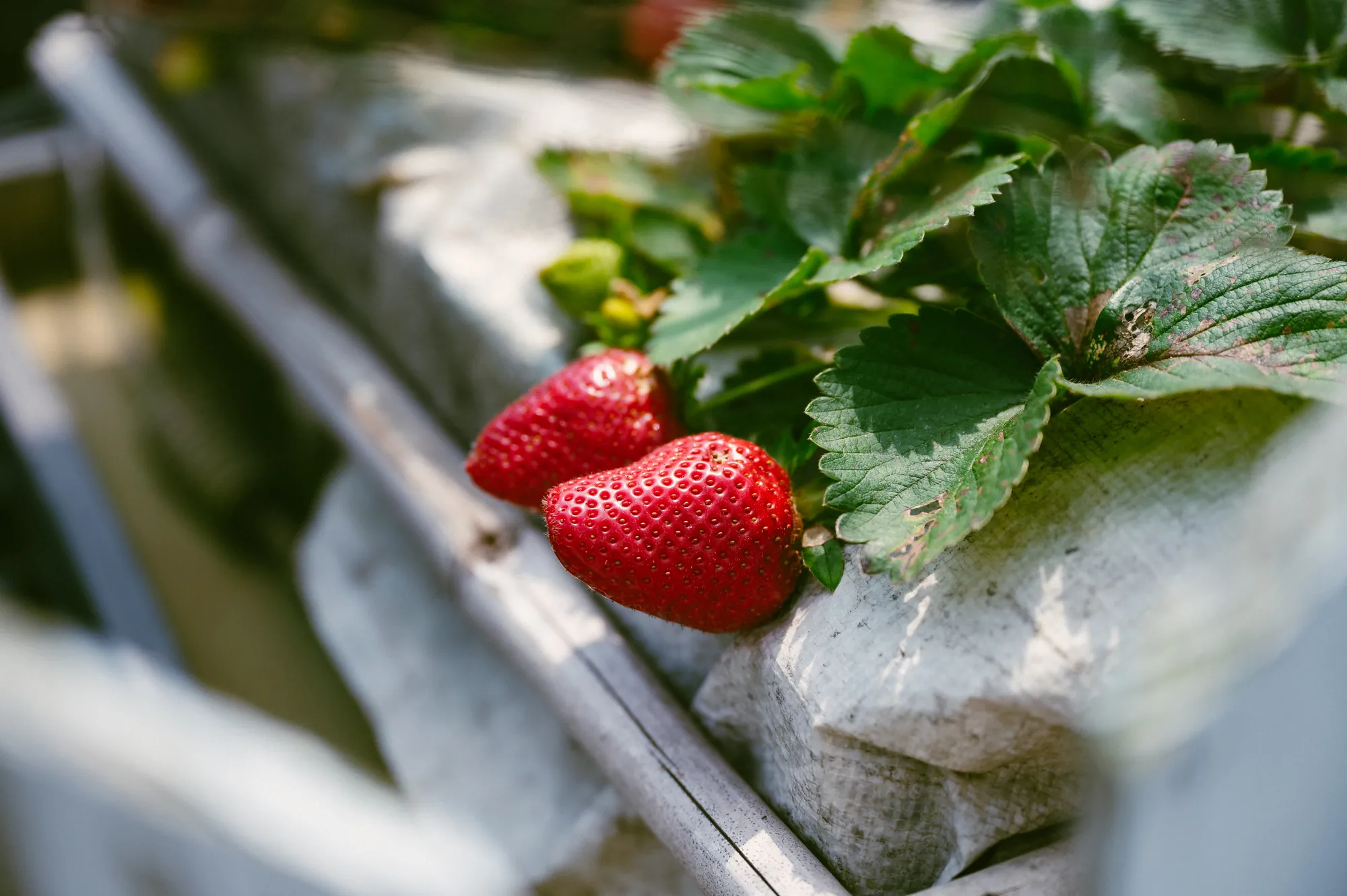
草莓為冬季的代表性水果,產期自每年12月至隔年4月左右,香氣濃郁、風味酸甜,除作鮮果食用,亦為甜點蛋糕的好夥伴。
◤文.圖/看見台灣基金會編輯群
草
莓鮮艷欲滴的紅色果肉,其實是花托,假果,遍布花托上的小顆粒才是真果及種子。
草莓原產於南美洲,台灣引種於1934年,最初並非栽種於苗栗大湖鄉,而於新北金山等地試種,成果不佳。1958年,草莓由鄉民引入苗栗大湖鄉種植,由於土壤環境利於草莓生長,「草莓之鄉」自此誕生。大湖鄉為主要產地,約占全台8成產量,苗栗全縣占9成。
草莓為薔薇科草莓屬作物,全球已有200多年的栽種歷史,日據時期亦有植物學家發現台灣原生種草莓,但並未大規模種植。由於草莓易生蟲害、種植不易,故施藥過多常為人所詬病。現今在有機產業及農民努力下,已有農場藉由預測病蟲害減用農藥,成功種出無病蟲害的認證草莓。
▋目前主力品種叫「香水」
目前台灣常見的草莓約有5個品種,「豐香」為最早的主力品種,味道最濃郁,後來農民大量改種抗病力較佳的「香水」。從日本也進口不少草莓,白草莓品種頗稀奇;但行家分析,論口感香氣,台灣草莓一點也不遜色,而且要比付機票錢來的外國草莓新鮮、便宜多了。
草莓營養豐富,維他命C含量勝過蘋果、葡萄,且能助消化,故亦有「水果皇后」的美稱。在台灣,草莓是愛好甜點人士冬季不可錯過的甜蜜選擇。
探索更多
葡萄酒─兩個酒莊連奪世界首獎
葡萄酒,原本是法國的天下;然而,誰料得到,在亞洲,相較之下只是彈丸之地的台灣,以橫空出世的氣勢,在三年內連續冒出兩個世界冠軍等級的葡萄酒。(圖片來源:Unsplash)
年糕─甜甜神明嘴,只說好話
年糕,台語稱年糕為甜粿,客語稱為甜粄,不同族群所製作之年糕或有不同,然多半為赤黃色、琥珀色之糯米製甜食。台灣有「吃年糕,年年高」之俗諺,且由於過往糖不易取得,故帶有甜味的食物多半象徵富貴。
白蘿蔔─吉祥蔬菜,語意:好彩頭
蘿蔔在中國栽種歷史悠長,北魏時期(約533至544年)成書的《齊民要術》即已對蘿蔔的種植有一定的了解;台灣栽種白蘿蔔的歷史,推估應隨先民來台時引入,歷經清領及日治時期,已成為庶民餐桌上不可或缺的食物。