


◤Text and Images / iSee Taiwan Foundation Editorial Team
Beigang Old Street in Yunlin County centers on Zhongshan Road, which fronts Chaotian Temple. The street inherits the Qing dynasty's Poonkan commercial network and once served as a crucial inland route to the river port. According to local accounts, after Zheng Zhilong, a Chinese admiral, developed Poonkan—or “Poon Harbour,” now Beigang—in the late Ming dynasty, it rapidly became a thriving trade hub during the Qing. The township flourished as goods concentrated and dispersed through the port.
However, silt accumulated in the Poonkan River and floods became frequent. The port's functions gradually declined, shifting the commercial center inland. During the Japanese colonial period, urban renewal reshaped the streetscape into the Zhongshan Road-centered layout visible today. After the war, the population initially declined, but as Mazu worship at Chaotian Temple intensified, pilgrims kept arriving. Beigang transformed from a commercial port into a religious town, and the old street persisted to the present day.
Rice and Pastries: Flavors of Devotion
Beigang's flat terrain and fertile soil made it a distribution hub for the Yunlin-Chiayi-Tainan plain's rice and agricultural products. This concentration of goods fostered local processing industries and a rice-based food culture. Snacks made from glutinous rice fill the streets—some pillowy and delicate, others hearty and substantial. When steamed, glutinous rice desserts release a subtle rice aroma, becoming part of everyday life.
Established shops earned renown for distinctive preparations. A Feng's you fan, Taiwanese sticky rice with perfectly separated grains and a rich oil aroma, draws crowds for its masterful execution. Chen Family's shop specializes in bi-kue, glutinous rice cakes, and tuā-tn̂g, glutinous rice sausage—offerings that have defined the establishment for generations. Each vendor developed its own seasoning and texture, showcasing the diversity of Beigang's rice culture.
As Mazu worship flourished, Beigang Old Street developed a pastry-centered food culture. During temple festivals and processions, pilgrims surged through the street, and pastry shops proliferated to meet demand—their goods functioning as both sacred offerings and gifts. Among the most beloved are two standouts: malao and da bing.
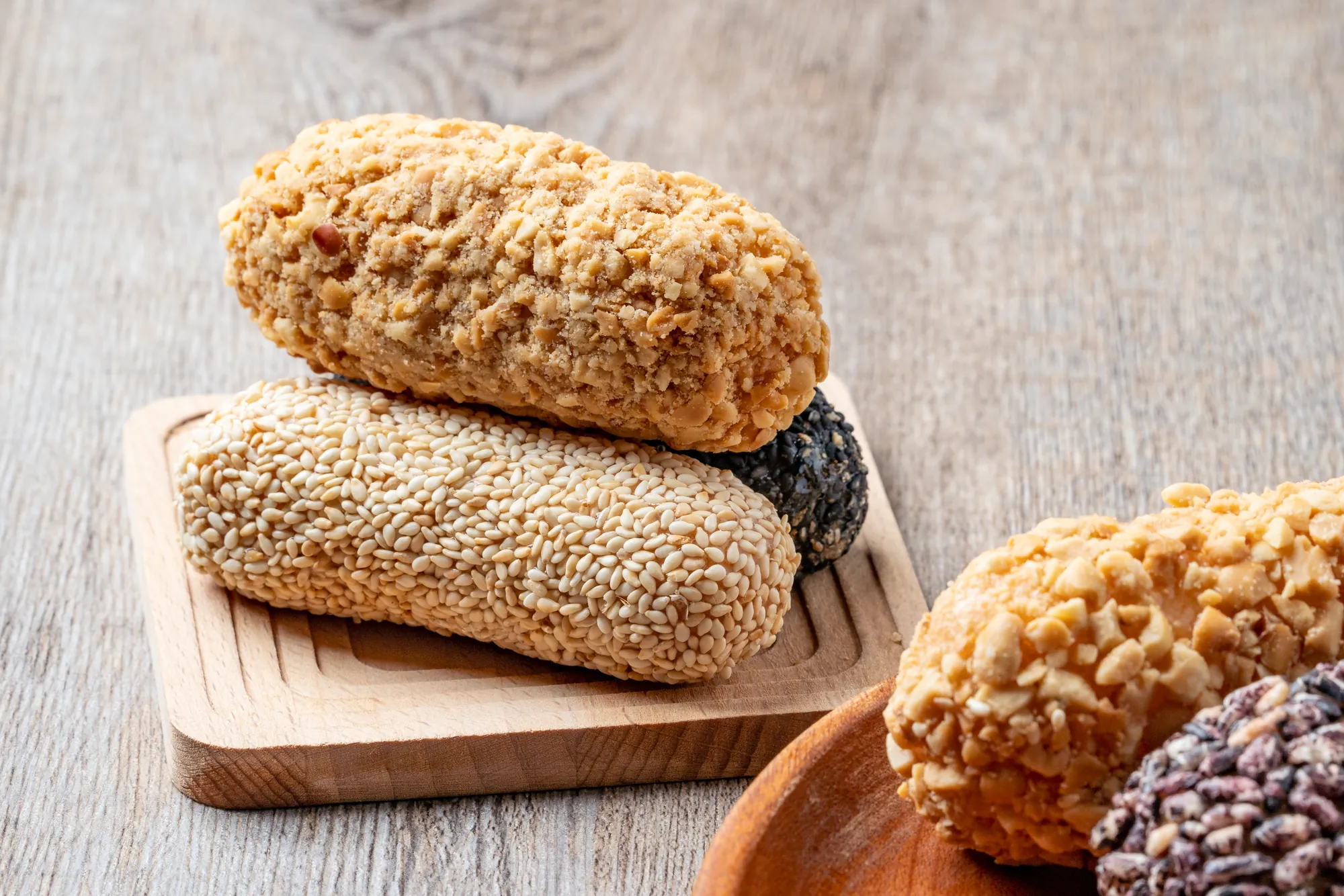
Malao—fried glutinous rice cakes coated in maltose and topped with sesame and peanuts—deliver crisp exteriors and tender interiors with subtle sweetness. They remain a common temple offering.
Da bing, large traditional pastries historically made for weddings, represent the pinnacle of Beigang pastry craft. Though traditionally associated with marriage celebrations, these pastries now serve as gifts and offerings for various occasions. Fillings range from mung bean paste and red bean paste to jujube, lotus seed, and pork, each symbolizing completeness and blessing.
Established shops such as Rexingtang and Jinxiangzhai have produced traditional Chinese wedding cakes for decades. These pastries mark important life events—marriages, full-month celebrations, and other family milestones. From temple altars to life's major moments, Beigang's pastries transcend mere culinary pleasure. They embody emotion and faith.