
'%20fill='%23a9976d'/%3e%3cpath%20id='Path_251'%20data-name='Path%20251'%20d='M8,35a1,1,0,0,1,1-1H23a1,1,0,0,1,0,2H9A1,1,0,0,1,8,35Z'%20transform='translate(-8%20-22)'%20fill='%23a9976d'/%3e%3cpath%20id='Path_252'%20data-name='Path%20252'%20d='M9,22a1,1,0,0,0,0,2h8a1,1,0,0,0,0-2Z'%20transform='translate(-8%20-16)'%20fill='%23a9976d'/%3e%3c/svg%3e)
'%20fill='%23a9976d'/%3e%3c/g%3e%3c/svg%3e)
'%3e%3cg%20id='Ellipse_27'%20data-name='Ellipse%2027'%20transform='translate(813%20250)'%20fill='none'%20stroke='%23ccac89'%20stroke-width='1'%3e%3ccircle%20cx='16'%20cy='16'%20r='16'%20stroke='none'/%3e%3ccircle%20cx='16'%20cy='16'%20r='15.5'%20fill='none'/%3e%3c/g%3e%3cg%20id='facebook'%20transform='translate(824.105%20258.296)'%3e%3cpath%20id='Path_243'%20data-name='Path%20243'%20d='M8.894.111V2.556H7.441a1.361,1.361,0,0,0-1.074.333,1.534,1.534,0,0,0-.278,1v1.75H8.8L8.441,8.38H6.089v7.028H3.255V8.38H.894V5.639H3.255V3.62A3.582,3.582,0,0,1,4.218.949,3.5,3.5,0,0,1,6.783,0,15.317,15.317,0,0,1,8.894.111Z'%20transform='translate(0%200)'%20fill='%23ccac89'/%3e%3c/g%3e%3c/g%3e%3c/svg%3e)

'%3e%3cg%20id='Ellipse_29'%20data-name='Ellipse%2029'%20transform='translate(901%20250)'%20fill='none'%20stroke='%23ccac89'%20stroke-width='1'%3e%3ccircle%20cx='16'%20cy='16'%20r='16'%20stroke='none'/%3e%3ccircle%20cx='16'%20cy='16'%20r='15.5'%20fill='none'/%3e%3c/g%3e%3cg%20id='link-45deg'%20transform='translate(902.607%20253.105)'%3e%3cg%20id='Group_479'%20data-name='Group%20479'%20transform='translate(7.393%205.896)'%3e%3cpath%20id='Path_241'%20data-name='Path%20241'%20d='M10.246,17.821,8.507,19.56a3.8,3.8,0,0,0,5.378,5.378L16.2,22.62a3.8,3.8,0,0,0-1.05-6.12l-.743.743a1.27,1.27,0,0,0-.2.252,2.535,2.535,0,0,1,1.091,4.23L12.99,24.042A2.536,2.536,0,0,1,9.4,20.455l1.005-1a5.093,5.093,0,0,1-.162-1.631Z'%20transform='translate(-7.393%20-12.02)'%20fill='%23ccac89'/%3e%3cpath%20id='Path_242'%20data-name='Path%20242'%20d='M18.236,9.327a3.8,3.8,0,0,0,1.05,6.12l.982-.984a2.535,2.535,0,0,1-1.136-4.241L21.448,7.9a2.536,2.536,0,1,1,3.587,3.587l-1.005,1a5.1,5.1,0,0,1,.162,1.631l1.739-1.739A3.8,3.8,0,1,0,20.553,7.01Z'%20transform='translate(-13.011%20-5.896)'%20fill='%23ccac89'/%3e%3c/g%3e%3c/g%3e%3c/g%3e%3c/svg%3e)
◤文/旅台西班牙名廚—Daniel Negreira
剛來台灣的外國人,每天都像在闖關一樣困難;但只要你開始發掘這片土地的寶藏,就會像我一樣,不知不覺愛上這裡,最後把台灣當成家。
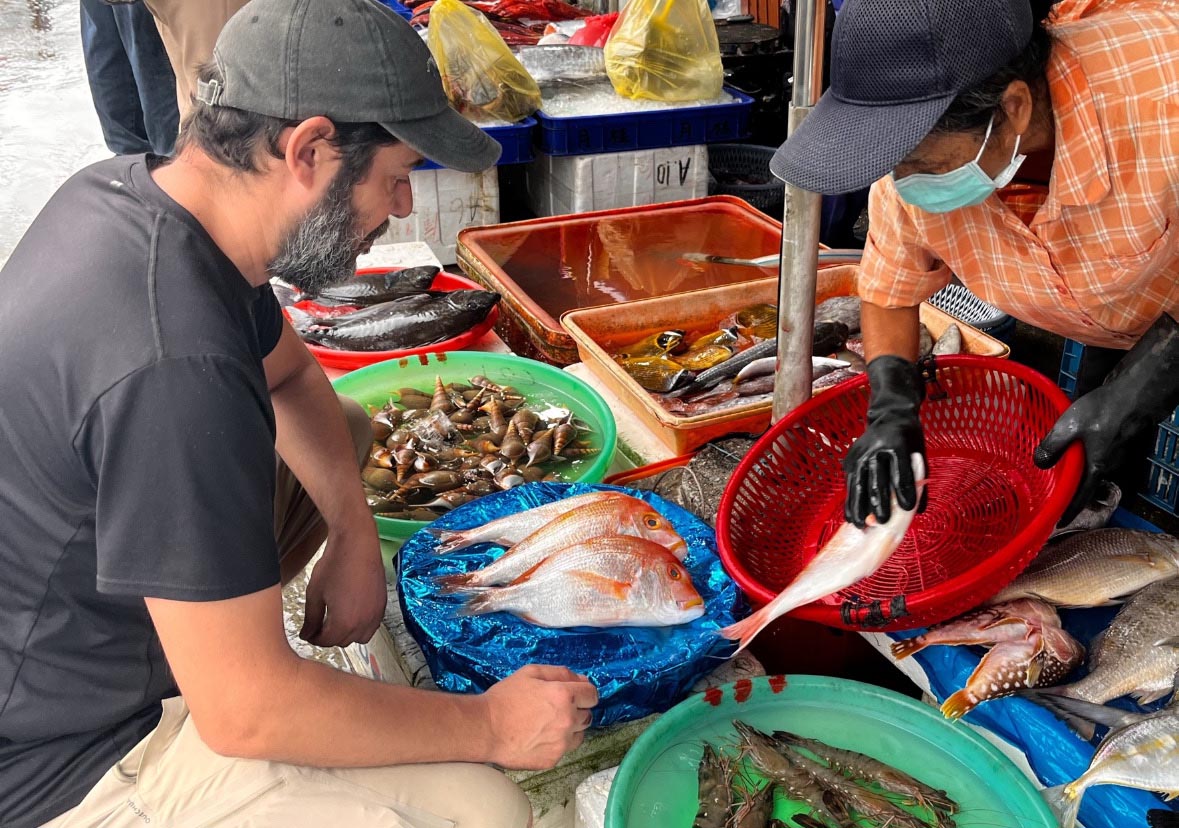
想起在西班牙的日子,我對台灣的認識少得可憐。小時候看到「台灣製造」,腦海裡就只冒出一個詞:「便宜」,但在這裡生活了將近17年後,我徹底改觀了⋯⋯。從踏上這片土地開始,不只是人文風情和自然景觀讓我驚艷,更讓我著迷的是這裡豐富的食材,簡直就是廚師的天堂!每次去市場、農場或漁港,我都興奮得像個誤闖玩具店的小孩。
原住民食材:意想不到的味覺寶藏
很多人以為,台灣是熱帶國家,頂多就是水果和蔬菜比較特別;但我要說,這裡的海鮮、家禽和豬肉,品質都好得讓人驚訝。特別要提的是那些原住民特有的珍貴食材,真的要感謝花蓮的阿明師,帶我認識了這些寶貝。
許多人可能嘗過或聽過有名的馬告,但那絕不是唯一的寶藏。舉幾個原住民食材的例子:在花蓮市場可以找到的小山葵葉,保有山葵獨特的香氣,卻沒有那種讓人無法接受的辛辣刺激感;還有類似美國珍珠洋蔥、但甜度更高的小洋蔥,雖然剝皮極為費時,但經過技巧處理後,就能變成真正美味的食材。
這些年來,我和太太Terri在台灣開了幾間餐廳,可能有些朋友還記得。如果你來過,一定感受得到我對這些「獨特」食材的熱情,以及台灣食材無限的可能性。還記得一個小故事,有位客人和我熱烈討論為什麼大家總是覺得進口食材比較高級,我跟他說:「就拿沙丁魚來說吧,雖然在台灣漁港不太常見,但要是能買到,我敢說比從歐洲進口的好上10倍。」
想想看,進口魚要經過多少關卡:從漁船到港口、到出口商、再到機場海關,搭飛機來亞洲、當地海關、本地經銷商,最後才到餐廳,這過程差不多要一周。所以是要選昨晚還在海裡游的台灣沙丁魚,還是要選運送時間已接近一個禮拜的進口魚?
對我來說,答案再明顯不過了。
人們常常不懂得珍惜自己的東西,一看到國外進口的,就覺得一定比較好。抱歉,但事實不是這樣的。
宜蘭新生活:與農民的趣味互動
自從和Terri決定離開繁忙的城市,在宜蘭開了餐廳後,我發現了在台北想都想不到的食材。我每天和在地阿伯、阿姨互動,一大早自己去收放山雞蛋,在漁港跟阿姨們打屁,圍繞著食材的小冒險數也數不完。
每次開車經過農田,停在路邊走進田裡,問阿伯能不能賣幾顆漂亮的紅蘿蔔或高麗菜給我時,他們一開始都是一臉狐疑,大概心想:「這個老外是不是迷路了?」不過,因為我會說中文,他們很快就願意跟我聊天,幾次下來甚至變成朋友。
最近我愛上了一種傳統的本地番茄品種,而種植這些番茄的農夫恰好是我朋友的父親。我這位朋友認為,買塊地讓父親種點蔬菜、養些雞,是保持他活力和健康的好方法。大多時候我去農場時,兒子也在那裡幫忙;如果我去得晚一點,兒子已經去上班了,只剩下老爸一個人,這時他就會抱怨兒子在他辛苦養家這麼多年後,還逼他辛苦工作。但只要兒子在場,他立刻變成一副感謝兒子為他著想的慈祥模樣。因為我知道這個小秘密,當兒子離開,談到價格時,我就會「輕微勒索」他,要求多給些紅蘿蔔或番茄來讓我閉嘴,他總是大笑著回答:「你是一個很壞的外國人。」
雖然我們之間有這種「勒索」關係,但他還是經常帶著新鮮農產品來訪,回去時則帶著伊比利火腿或其他進口美食。說到底,用紅蘿蔔換伊比利火腿對他來說也不壞。寫到這裡,我開始覺得被勒索的其實是我,正如我父親常說的西班牙諺語:「魔鬼之所以聰明,不是因為他是魔鬼,而是因為他年紀大。」
這是我喜歡這份工作的原因之一:認識這些用心栽種的農夫,他們為了給我們這些廚師最棒的食材,付出了很多心血。
台灣也能發起一場料理革命
幾年前,我買了一罐白蘆筍給孩子吃,是西班牙進口品牌,價格不便宜,但當我打開罐子時,標籤上的一行字讓我震驚:「西班牙包裝,台灣種植」。這又是一個例子,台灣農民種出這麼棒的農產品,卻要送到國外包裝,再用10倍的價格賣回台灣。
你可能聽說過西班牙料理革命,很多人以為這是由天才廚師費蘭.阿德里亞(Ferran Adrià)和他傳奇的El Bulli餐廳開始的,但事實並非如此。這場革命始於費蘭之前的幾十年,由胡安.馬里.阿爾薩克(Juan Mari Arzak)帶領一群勇敢的廚師,他們問自己:「為什麼我們總是更看重來自其他國家的東西?」
他們對這個問題的回答才是真正的革命,因為他們決定利用自己知名的餐廳作為平台,展示本地食材,用他們的技巧將這些食材變成奇蹟,創造了一個至今仍在運作的循環:他們使用這些食材,不僅為農民提供收入,還提供了一種關鍵的成分──「驕傲」。
農民們也加入了這場革命,向這些廚師展示最好的產品,並用從中獲得的資源改進設備、生產方式。經過10年,這些努力終於獲得回報,為今日西班牙料理奠定了基礎。這些廚師對使用本地食材所表現出的熱情,逐漸傳播到普通大眾,進一步促進了生產者的成長,這種驕傲感就超越了國界,他們向全世界展示西班牙生產的優質食材。
這場革命讓西班牙料理從最基本的食材源頭做起,最後成為世界級美食。我真心鼓勵所有讀者去探索、品嘗、體驗在地食材,支持本地生產者,發起台灣的料理革命。