◤文.圖/看見台灣基金會編輯群
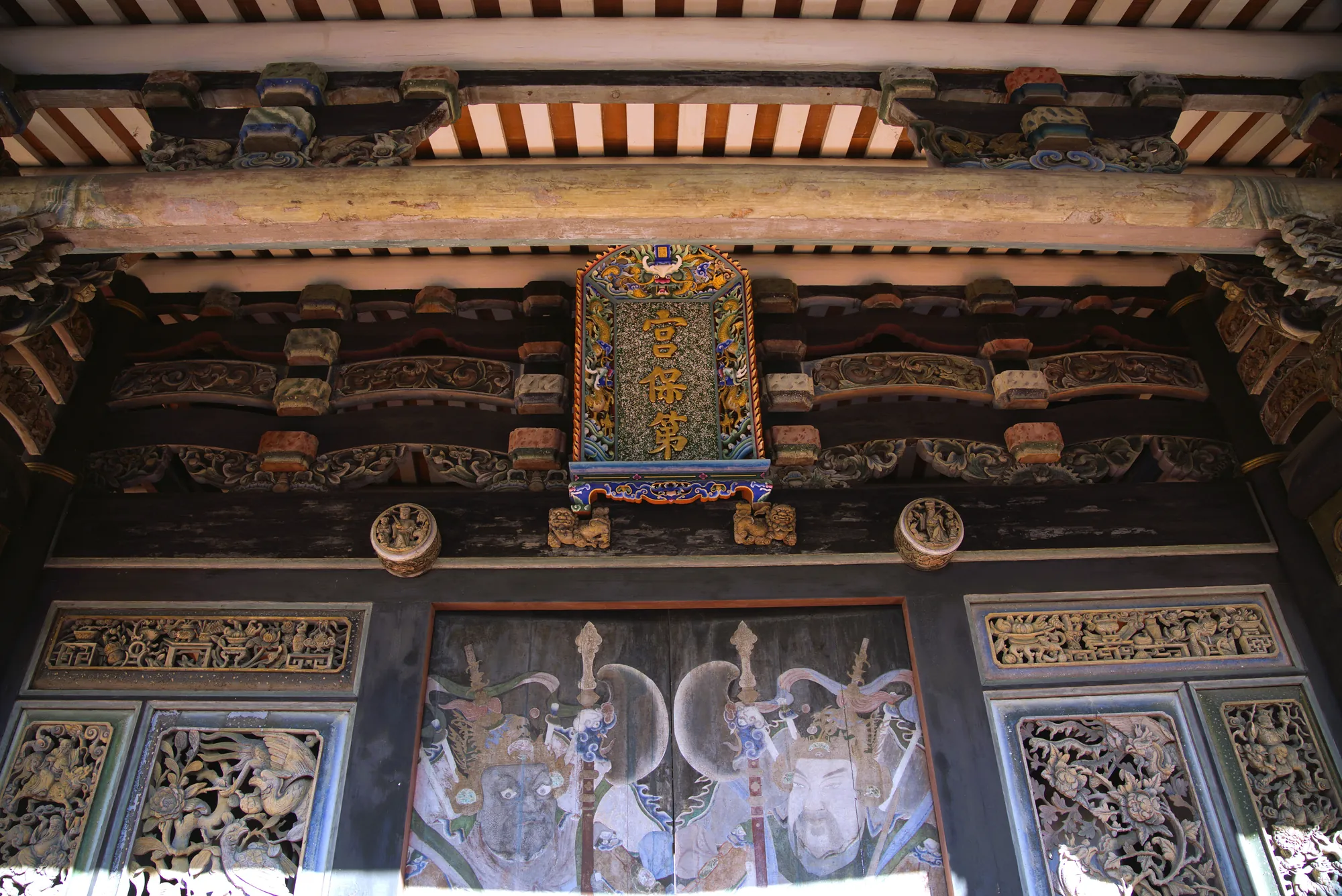
走進台中霧峰林家宮保第園區,如同步入台灣近代史的重要現場。作為清代台灣五大家族之一,霧峰林家留下全台保存最完整的清代官宅建築群,其範圍涵蓋下厝、頂厝系統及萊園三大部分。林文察因率領台勇平定太平天國,獲清朝追封「太子少保」,始稱「宮保第」,遂建此宅第以彰顯家族榮耀。「宮保第」歷經九二一地震重創後重建,今日仍可循著建築格局,想像昔日的官宦生活景象。

'%20fill='%23a9976d'/%3e%3cpath%20id='Path_251'%20data-name='Path%20251'%20d='M8,35a1,1,0,0,1,1-1H23a1,1,0,0,1,0,2H9A1,1,0,0,1,8,35Z'%20transform='translate(-8%20-22)'%20fill='%23a9976d'/%3e%3cpath%20id='Path_252'%20data-name='Path%20252'%20d='M9,22a1,1,0,0,0,0,2h8a1,1,0,0,0,0-2Z'%20transform='translate(-8%20-16)'%20fill='%23a9976d'/%3e%3c/svg%3e)
'%20fill='%23a9976d'/%3e%3c/g%3e%3c/svg%3e)
'%3e%3cg%20id='Ellipse_27'%20data-name='Ellipse%2027'%20transform='translate(813%20250)'%20fill='none'%20stroke='%23ccac89'%20stroke-width='1'%3e%3ccircle%20cx='16'%20cy='16'%20r='16'%20stroke='none'/%3e%3ccircle%20cx='16'%20cy='16'%20r='15.5'%20fill='none'/%3e%3c/g%3e%3cg%20id='facebook'%20transform='translate(824.105%20258.296)'%3e%3cpath%20id='Path_243'%20data-name='Path%20243'%20d='M8.894.111V2.556H7.441a1.361,1.361,0,0,0-1.074.333,1.534,1.534,0,0,0-.278,1v1.75H8.8L8.441,8.38H6.089v7.028H3.255V8.38H.894V5.639H3.255V3.62A3.582,3.582,0,0,1,4.218.949,3.5,3.5,0,0,1,6.783,0,15.317,15.317,0,0,1,8.894.111Z'%20transform='translate(0%200)'%20fill='%23ccac89'/%3e%3c/g%3e%3c/g%3e%3c/svg%3e)

'%3e%3cg%20id='Ellipse_29'%20data-name='Ellipse%2029'%20transform='translate(901%20250)'%20fill='none'%20stroke='%23ccac89'%20stroke-width='1'%3e%3ccircle%20cx='16'%20cy='16'%20r='16'%20stroke='none'/%3e%3ccircle%20cx='16'%20cy='16'%20r='15.5'%20fill='none'/%3e%3c/g%3e%3cg%20id='link-45deg'%20transform='translate(902.607%20253.105)'%3e%3cg%20id='Group_479'%20data-name='Group%20479'%20transform='translate(7.393%205.896)'%3e%3cpath%20id='Path_241'%20data-name='Path%20241'%20d='M10.246,17.821,8.507,19.56a3.8,3.8,0,0,0,5.378,5.378L16.2,22.62a3.8,3.8,0,0,0-1.05-6.12l-.743.743a1.27,1.27,0,0,0-.2.252,2.535,2.535,0,0,1,1.091,4.23L12.99,24.042A2.536,2.536,0,0,1,9.4,20.455l1.005-1a5.093,5.093,0,0,1-.162-1.631Z'%20transform='translate(-7.393%20-12.02)'%20fill='%23ccac89'/%3e%3cpath%20id='Path_242'%20data-name='Path%20242'%20d='M18.236,9.327a3.8,3.8,0,0,0,1.05,6.12l.982-.984a2.535,2.535,0,0,1-1.136-4.241L21.448,7.9a2.536,2.536,0,1,1,3.587,3.587l-1.005,1a5.1,5.1,0,0,1,.162,1.631l1.739-1.739A3.8,3.8,0,1,0,20.553,7.01Z'%20transform='translate(-13.011%20-5.896)'%20fill='%23ccac89'/%3e%3c/g%3e%3c/g%3e%3c/g%3e%3c/svg%3e)
◤文.圖/看見台灣基金會編輯群
走進台中霧峰林家宮保第園區,如同步入台灣近代史的重要現場。作為清代台灣五大家族之一,霧峰林家留下全台保存最完整的清代官宅建築群,其範圍涵蓋下厝、頂厝系統及萊園三大部分。林文察因率領台勇平定太平天國,獲清朝追封「太子少保」,始稱「宮保第」,遂建此宅第以彰顯家族榮耀。「宮保第」歷經九二一地震重創後重建,今日仍可循著建築格局,想像昔日的官宦生活景象。
宅第中的「大花廳」尤具代表性。其為福州戲台形式,兼具宴飲與觀戲功能,這裡曾是林家款待賓客、舉行重要宴會的核心空間。近年電視劇《茶金》亦曾於此取景,使這處歷史場域再度走入當代視野,映照出清末官家生活的繁華氣象。
進入日本時代後,林家在台灣的政治影響力雖逐漸式微,但仍在零星文獻中留下飲食線索。後代整理帳冊時發現,清末採購清單中夾雜著閩南語註記與中西物產:如木藍(白蘭地)、白香檳、花露水、羊肉、罐頭、枸杞與菊花酒等。這些未成菜譜的紀錄,拼湊出台灣飲食由傳統走向近代的過渡樣貌──地方物產、福建輸入品與「洋貨」並存,可能形塑出跨文化的宴席結構。
今日的宮保第,在場域活化後,並未試圖復刻失落的菜單,而是以現代語彙重新詮釋歷史飲宴。遊客可在大花廳品嘗獅頭造型芋頭糕、「宮保第」匾字綠豆糕,佐以清茶,於古厝空間中感受飲食與歷史交織的氛圍。中式迎賓、西式儀式與台式點心並置,構成跨時代的生活風景。
此外,林家亦結合文創與地方產業,與蘭輝酒莊合作推出「宮保第白蘭地」,並與霧峰區農會酒莊釀製「霧峰宮保第燒酎」,以在地香米、埔里泉水與日本麴菌釀造,將歷史文化意象轉化為當代風味飲食。