
'%20fill='%23a9976d'/%3e%3cpath%20id='Path_251'%20data-name='Path%20251'%20d='M8,35a1,1,0,0,1,1-1H23a1,1,0,0,1,0,2H9A1,1,0,0,1,8,35Z'%20transform='translate(-8%20-22)'%20fill='%23a9976d'/%3e%3cpath%20id='Path_252'%20data-name='Path%20252'%20d='M9,22a1,1,0,0,0,0,2h8a1,1,0,0,0,0-2Z'%20transform='translate(-8%20-16)'%20fill='%23a9976d'/%3e%3c/svg%3e)
'%20fill='%23a9976d'/%3e%3c/g%3e%3c/svg%3e)
薑─嫩薑用於做菜,老薑用於養身
地方探索
主題探索
南部
東部
中部
文化美食
分享
'%3e%3cg%20id='Ellipse_27'%20data-name='Ellipse%2027'%20transform='translate(813%20250)'%20fill='none'%20stroke='%23ccac89'%20stroke-width='1'%3e%3ccircle%20cx='16'%20cy='16'%20r='16'%20stroke='none'/%3e%3ccircle%20cx='16'%20cy='16'%20r='15.5'%20fill='none'/%3e%3c/g%3e%3cg%20id='facebook'%20transform='translate(824.105%20258.296)'%3e%3cpath%20id='Path_243'%20data-name='Path%20243'%20d='M8.894.111V2.556H7.441a1.361,1.361,0,0,0-1.074.333,1.534,1.534,0,0,0-.278,1v1.75H8.8L8.441,8.38H6.089v7.028H3.255V8.38H.894V5.639H3.255V3.62A3.582,3.582,0,0,1,4.218.949,3.5,3.5,0,0,1,6.783,0,15.317,15.317,0,0,1,8.894.111Z'%20transform='translate(0%200)'%20fill='%23ccac89'/%3e%3c/g%3e%3c/g%3e%3c/svg%3e)

'%3e%3cg%20id='Ellipse_29'%20data-name='Ellipse%2029'%20transform='translate(901%20250)'%20fill='none'%20stroke='%23ccac89'%20stroke-width='1'%3e%3ccircle%20cx='16'%20cy='16'%20r='16'%20stroke='none'/%3e%3ccircle%20cx='16'%20cy='16'%20r='15.5'%20fill='none'/%3e%3c/g%3e%3cg%20id='link-45deg'%20transform='translate(902.607%20253.105)'%3e%3cg%20id='Group_479'%20data-name='Group%20479'%20transform='translate(7.393%205.896)'%3e%3cpath%20id='Path_241'%20data-name='Path%20241'%20d='M10.246,17.821,8.507,19.56a3.8,3.8,0,0,0,5.378,5.378L16.2,22.62a3.8,3.8,0,0,0-1.05-6.12l-.743.743a1.27,1.27,0,0,0-.2.252,2.535,2.535,0,0,1,1.091,4.23L12.99,24.042A2.536,2.536,0,0,1,9.4,20.455l1.005-1a5.093,5.093,0,0,1-.162-1.631Z'%20transform='translate(-7.393%20-12.02)'%20fill='%23ccac89'/%3e%3cpath%20id='Path_242'%20data-name='Path%20242'%20d='M18.236,9.327a3.8,3.8,0,0,0,1.05,6.12l.982-.984a2.535,2.535,0,0,1-1.136-4.241L21.448,7.9a2.536,2.536,0,1,1,3.587,3.587l-1.005,1a5.1,5.1,0,0,1,.162,1.631l1.739-1.739A3.8,3.8,0,1,0,20.553,7.01Z'%20transform='translate(-13.011%20-5.896)'%20fill='%23ccac89'/%3e%3c/g%3e%3c/g%3e%3c/g%3e%3c/svg%3e)
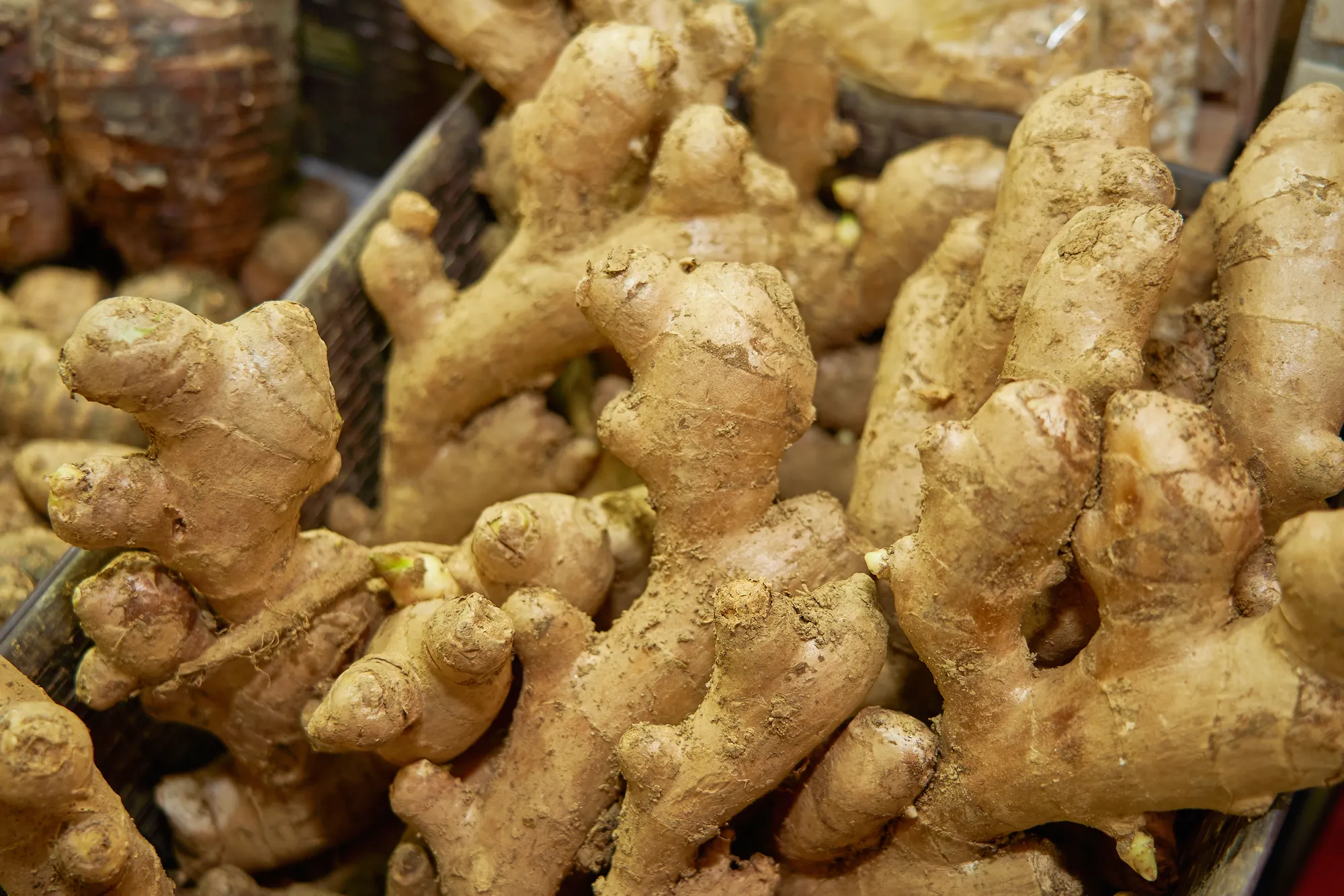
薑,不僅是華人飲食文化中不可或缺的食材,更承載著深厚的歷史。台灣的嫩薑與老薑更以優越品質享譽國際,征服日本、荷蘭等國餐桌。
◤文.圖/看見台灣基金會編輯群
華
人俗語:「薑是老的辣。」是一句帶點江湖氣的稱讚之詞,用來形容人的智慧及權謀能力,會隨著年歲增長。
薑的辛辣味來自薑辣素等物質,有祛寒、祛濕的效果;老薑外皮粗厚而多纖維,汁少辣味更強。台灣為海島型氣候國家,易積累濕氣,薑也因而成為台灣家戶間常見之調味食材。
薑性偏溫,食之可以驅散寒氣,用作溫飲,能暖身、改善末梢循環,如薑母茶等驅寒飲品。目前全球以印度為薑的最大生產國,其次為中國。
▋台灣嫩薑變身日本熱銷品
廚師推薦炒菜用嫩薑較佳,薑的根莖具辛辣氣味可以去腥,適宜用於海鮮料理如魚湯;嫩薑切細絲,加上醋,則是小籠湯包的好搭檔。
目前台灣的薑種植分為嫩薑(生育期約4個月)、粉薑(生育期約半年)、老薑(生育期約10個月)三種模式,以南投、嘉義及台東為主要產地。
媒體報導,1978年日本岩下食品的社長岩下邦夫在出差來台的飛機餐點中,對台灣醃漬嫩薑大感驚豔,這出自台灣品種「竹薑」爽脆清甜的口感,催生了在日本大受歡迎的品牌「岩下新生薑」。
台灣不只嫩薑強到攻占日本餐桌,2023年疫情解封後,中國薑供不應求,台灣南投薑農把握機會,首度出口老薑至荷蘭,趁此打入歐洲市場。
探索更多
釋迦─台灣釋迦果品品質,世界第一
台灣是全球公認的水果王國,「釋迦」是主力戰將之一。
麻糬─中國?日本?客家?身世成謎
麻糬是由糯米製成的小甜食,流行於台灣、日本、韓國、大陸華南地區,名稱各異。台灣常見的麻糬,具體反映多元文化對台灣飲食的影響。
葡萄酒─兩個酒莊連奪世界首獎
葡萄酒,原本是法國的天下;然而,誰料得到,在亞洲,相較之下只是彈丸之地的台灣,以橫空出世的氣勢,在三年內連續冒出兩個世界冠軍等級的葡萄酒。(圖片來源:Unsplash)