
'%20fill='%23a9976d'/%3e%3cpath%20id='Path_251'%20data-name='Path%20251'%20d='M8,35a1,1,0,0,1,1-1H23a1,1,0,0,1,0,2H9A1,1,0,0,1,8,35Z'%20transform='translate(-8%20-22)'%20fill='%23a9976d'/%3e%3cpath%20id='Path_252'%20data-name='Path%20252'%20d='M9,22a1,1,0,0,0,0,2h8a1,1,0,0,0,0-2Z'%20transform='translate(-8%20-16)'%20fill='%23a9976d'/%3e%3c/svg%3e)
'%20fill='%23a9976d'/%3e%3c/g%3e%3c/svg%3e)
'%3e%3cg%20id='Ellipse_27'%20data-name='Ellipse%2027'%20transform='translate(813%20250)'%20fill='none'%20stroke='%23ccac89'%20stroke-width='1'%3e%3ccircle%20cx='16'%20cy='16'%20r='16'%20stroke='none'/%3e%3ccircle%20cx='16'%20cy='16'%20r='15.5'%20fill='none'/%3e%3c/g%3e%3cg%20id='facebook'%20transform='translate(824.105%20258.296)'%3e%3cpath%20id='Path_243'%20data-name='Path%20243'%20d='M8.894.111V2.556H7.441a1.361,1.361,0,0,0-1.074.333,1.534,1.534,0,0,0-.278,1v1.75H8.8L8.441,8.38H6.089v7.028H3.255V8.38H.894V5.639H3.255V3.62A3.582,3.582,0,0,1,4.218.949,3.5,3.5,0,0,1,6.783,0,15.317,15.317,0,0,1,8.894.111Z'%20transform='translate(0%200)'%20fill='%23ccac89'/%3e%3c/g%3e%3c/g%3e%3c/svg%3e)

'%3e%3cg%20id='Ellipse_29'%20data-name='Ellipse%2029'%20transform='translate(901%20250)'%20fill='none'%20stroke='%23ccac89'%20stroke-width='1'%3e%3ccircle%20cx='16'%20cy='16'%20r='16'%20stroke='none'/%3e%3ccircle%20cx='16'%20cy='16'%20r='15.5'%20fill='none'/%3e%3c/g%3e%3cg%20id='link-45deg'%20transform='translate(902.607%20253.105)'%3e%3cg%20id='Group_479'%20data-name='Group%20479'%20transform='translate(7.393%205.896)'%3e%3cpath%20id='Path_241'%20data-name='Path%20241'%20d='M10.246,17.821,8.507,19.56a3.8,3.8,0,0,0,5.378,5.378L16.2,22.62a3.8,3.8,0,0,0-1.05-6.12l-.743.743a1.27,1.27,0,0,0-.2.252,2.535,2.535,0,0,1,1.091,4.23L12.99,24.042A2.536,2.536,0,0,1,9.4,20.455l1.005-1a5.093,5.093,0,0,1-.162-1.631Z'%20transform='translate(-7.393%20-12.02)'%20fill='%23ccac89'/%3e%3cpath%20id='Path_242'%20data-name='Path%20242'%20d='M18.236,9.327a3.8,3.8,0,0,0,1.05,6.12l.982-.984a2.535,2.535,0,0,1-1.136-4.241L21.448,7.9a2.536,2.536,0,1,1,3.587,3.587l-1.005,1a5.1,5.1,0,0,1,.162,1.631l1.739-1.739A3.8,3.8,0,1,0,20.553,7.01Z'%20transform='translate(-13.011%20-5.896)'%20fill='%23ccac89'/%3e%3c/g%3e%3c/g%3e%3c/g%3e%3c/svg%3e)
◤文.圖/看見台灣基金會編輯群
新竹東門市場曾是風城最繁華的「百貨商場」,不僅擁有全市第一座手扶梯,更聚集了五百多個攤位,終日人聲鼎沸。隨著時代變遷與大型量販店興起,市場逐漸沒落,一扇扇鐵門隨之拉下,繁華景象一度沉寂。轉機出現在2015年,清華大學服務科學研究所的陳泓維及多位學生與在地年輕人組成「開門工作室」,與新竹市政府合作「大學與地方跨域治理計畫」,推動東門市場活化。團隊結合建築、設計與服務科學等專長,並成功爭取資源,吸引青年創業者進駐。
市場的復甦,市場自治會長陳建璋的堅持同樣功不可沒。身為魚漿攤的第四代,他深知這座市場對其家族與整座城市的重要性。他說:「是老市場養大了我們一家,我一定要讓它再現風華。」他積極釋出閒置攤位,廣邀青年創業者進駐,促成文創小店與傳統攤販和諧並存的獨特景象。如今走進東門市場,可見老魚攤與咖啡廳、甜點店、酒吧比鄰而立;「Candy Bird」則是市場中的創意品牌,結合藝術創作與文創設計,成為文青聚集地。
新舊交融:市場美食的國際級魅力
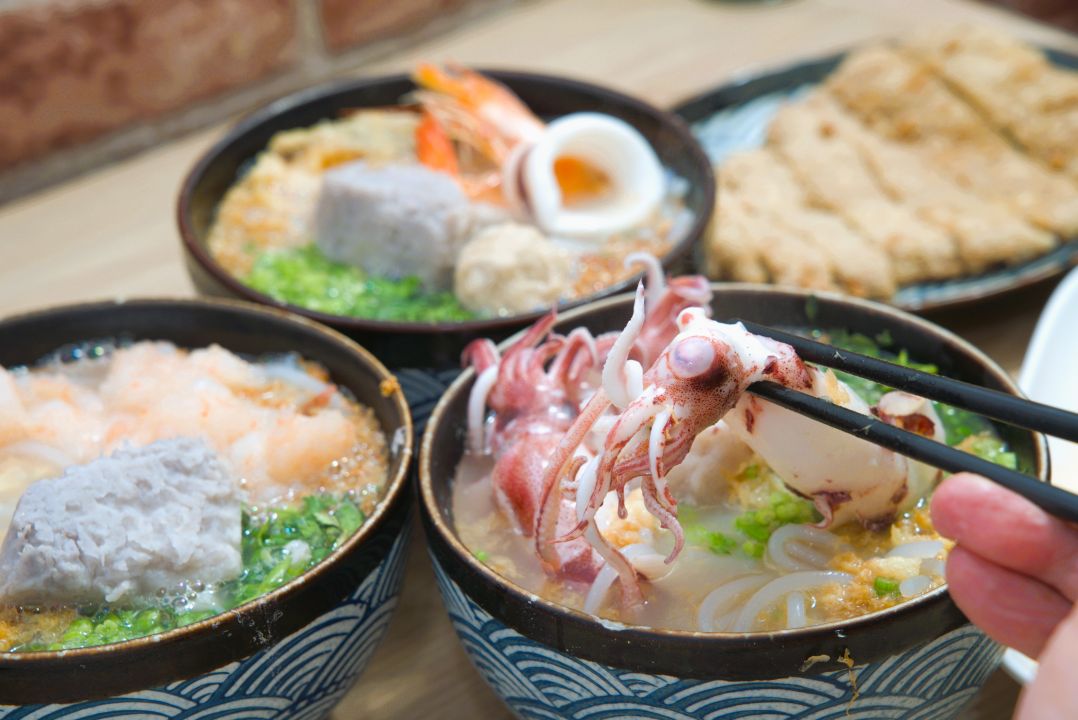
市場的重生,也孕育出新的味道。2025年「東門米粉攤」以其獨特的米粉香飄進了國際視野,一舉摘下了米其林必比登推薦。老闆娘的另一半曾任職飯店廚師,夫妻倆聯手將這道尋常小吃,提升至精緻佳餚的層次。一碗熱氣蒸騰的海鮮綜合米粉湯,匯聚了入口即化的鬆綿芋頭、香酥鱸魚塊與彈牙虱目魚丸,佐以Q軟的粗米粉,湯頭更是鮮甜醇厚。此外「東門小籠包」以皮薄、餡豐、汁多聞名;「阿城號」的滷味則以滷汁濃厚入味著稱,是許多老饕的心頭好。這些新舊攤商共同構築了東門市場豐富多元的飲食光譜。
從老攤商的世代堅守,到青年創業者的活力創新,東門市場以新舊共融之姿,再度成為這座城市的靈魂地標。它早已超越單純販售食材的場所,升華為一座活生生的「風城記憶博物館」。