


◤Text and Images / iSee Taiwan Foundation Editorial Team
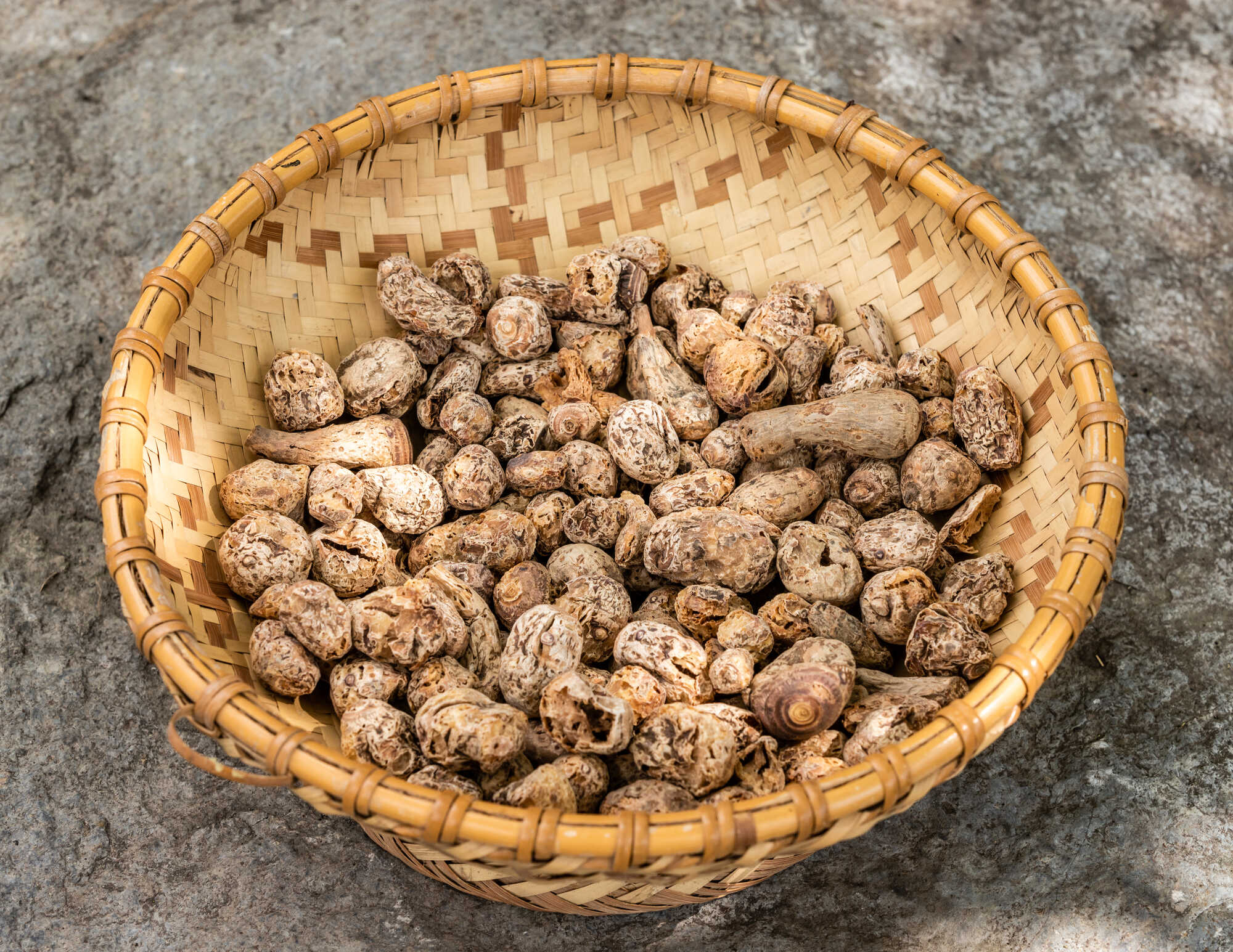
Taro (vasa in Paiwan)-the small cormels that cluster around the base of the taro plant, distinct from the large central corm-has long been one of the Paiwan people's most important staple foods. To extend its shelf life, fresh taro was traditionally smoked and dried-a preservation method developed over generations. Once ground into flour, it becomes a versatile ingredient in several classic dishes, among them cinavu, pinuljacengan, and pigeon pea soup. Cinavu is a traditional preparation in which taro flour or millet is wrapped around a filling and steamed; it appears at both ceremonial gatherings and everyday meals.
The community of Xinlayi in Laiyi Township, Pingtung County, has cultivated taro for generations. Xinlayi was established after Typhoon Morakot displaced several Paiwan communities from their ancestral grounds-among them Tjalja'avus, Tjana'asiya, Tjuwaqau, and Siljevavav-who were resettled together on lower-lying land. In recent years, community members have returned to those ancestral grounds to revive traditional crops and rebuild the taro kilns, restoring their bond with the land and keeping the art of dried taro-making alive. Xinlayi remains one of the few communities in southern Taiwan where this culinary tradition persists.
From Community Vegetable Shop to Contemporary Table
Growers here assign different taro varieties to different uses according to their distinct qualities: avasan, a firm-fleshed variety that holds up well to prolonged smoking, is the preferred choice for drying; uljayljay, soft and starchy, is suited to everyday cooking; and valja, mild and sweet, lends itself well to soups. The drying process is labor-intensive, requiring sustained wood-fire smoking. Early records describe the taro being peeled, cut, and repeatedly smoked over multiple days; community members would tend the fire through the night, turning the pieces every thirty minutes to prevent scorching and ensure even heat.
The finished dried taro weighs roughly one-sixth of the original, and is then hand-peeled and sieved-work traditionally carried out collectively by the women of the community. In traditional Paiwan society, dried taro served as a vital food reserve and a medium of exchange and sharing, reflecting its central role in both the community's economy and community bonds. Though electric ovens are now available as an alternative, wood-fired production in a traditional earthen kiln is still regarded as the method that best captures the flavor and cultural spirit of the Paiwan people.
As dietary habits shift and outside influences grow, some traditional practices have faded. Yet in recent years the community has taken matters into its own hands, driving a cultural revival that has returned dried taro to the center of daily life. The Tribal Vegetable Shop ("Paiwan a lami i Tjana'asiya") in Yilin Village, Laiyi Township sells taro, pigeon peas, millet, and other produce grown by smallholders in the community. It also offers dried taro-making experiences and taro cooking classes, inviting visitors into the living culture of Paiwan food.