
'%20fill='%23a9976d'/%3e%3cpath%20id='Path_251'%20data-name='Path%20251'%20d='M8,35a1,1,0,0,1,1-1H23a1,1,0,0,1,0,2H9A1,1,0,0,1,8,35Z'%20transform='translate(-8%20-22)'%20fill='%23a9976d'/%3e%3cpath%20id='Path_252'%20data-name='Path%20252'%20d='M9,22a1,1,0,0,0,0,2h8a1,1,0,0,0,0-2Z'%20transform='translate(-8%20-16)'%20fill='%23a9976d'/%3e%3c/svg%3e)
'%20fill='%23a9976d'/%3e%3c/g%3e%3c/svg%3e)
茭白筍─俗稱美人腿,其實是生了病
地方探索
時令探索
中部
秋
分享
'%3e%3cg%20id='Ellipse_27'%20data-name='Ellipse%2027'%20transform='translate(813%20250)'%20fill='none'%20stroke='%23ccac89'%20stroke-width='1'%3e%3ccircle%20cx='16'%20cy='16'%20r='16'%20stroke='none'/%3e%3ccircle%20cx='16'%20cy='16'%20r='15.5'%20fill='none'/%3e%3c/g%3e%3cg%20id='facebook'%20transform='translate(824.105%20258.296)'%3e%3cpath%20id='Path_243'%20data-name='Path%20243'%20d='M8.894.111V2.556H7.441a1.361,1.361,0,0,0-1.074.333,1.534,1.534,0,0,0-.278,1v1.75H8.8L8.441,8.38H6.089v7.028H3.255V8.38H.894V5.639H3.255V3.62A3.582,3.582,0,0,1,4.218.949,3.5,3.5,0,0,1,6.783,0,15.317,15.317,0,0,1,8.894.111Z'%20transform='translate(0%200)'%20fill='%23ccac89'/%3e%3c/g%3e%3c/g%3e%3c/svg%3e)

'%3e%3cg%20id='Ellipse_29'%20data-name='Ellipse%2029'%20transform='translate(901%20250)'%20fill='none'%20stroke='%23ccac89'%20stroke-width='1'%3e%3ccircle%20cx='16'%20cy='16'%20r='16'%20stroke='none'/%3e%3ccircle%20cx='16'%20cy='16'%20r='15.5'%20fill='none'/%3e%3c/g%3e%3cg%20id='link-45deg'%20transform='translate(902.607%20253.105)'%3e%3cg%20id='Group_479'%20data-name='Group%20479'%20transform='translate(7.393%205.896)'%3e%3cpath%20id='Path_241'%20data-name='Path%20241'%20d='M10.246,17.821,8.507,19.56a3.8,3.8,0,0,0,5.378,5.378L16.2,22.62a3.8,3.8,0,0,0-1.05-6.12l-.743.743a1.27,1.27,0,0,0-.2.252,2.535,2.535,0,0,1,1.091,4.23L12.99,24.042A2.536,2.536,0,0,1,9.4,20.455l1.005-1a5.093,5.093,0,0,1-.162-1.631Z'%20transform='translate(-7.393%20-12.02)'%20fill='%23ccac89'/%3e%3cpath%20id='Path_242'%20data-name='Path%20242'%20d='M18.236,9.327a3.8,3.8,0,0,0,1.05,6.12l.982-.984a2.535,2.535,0,0,1-1.136-4.241L21.448,7.9a2.536,2.536,0,1,1,3.587,3.587l-1.005,1a5.1,5.1,0,0,1,.162,1.631l1.739-1.739A3.8,3.8,0,1,0,20.553,7.01Z'%20transform='translate(-13.011%20-5.896)'%20fill='%23ccac89'/%3e%3c/g%3e%3c/g%3e%3c/g%3e%3c/svg%3e)
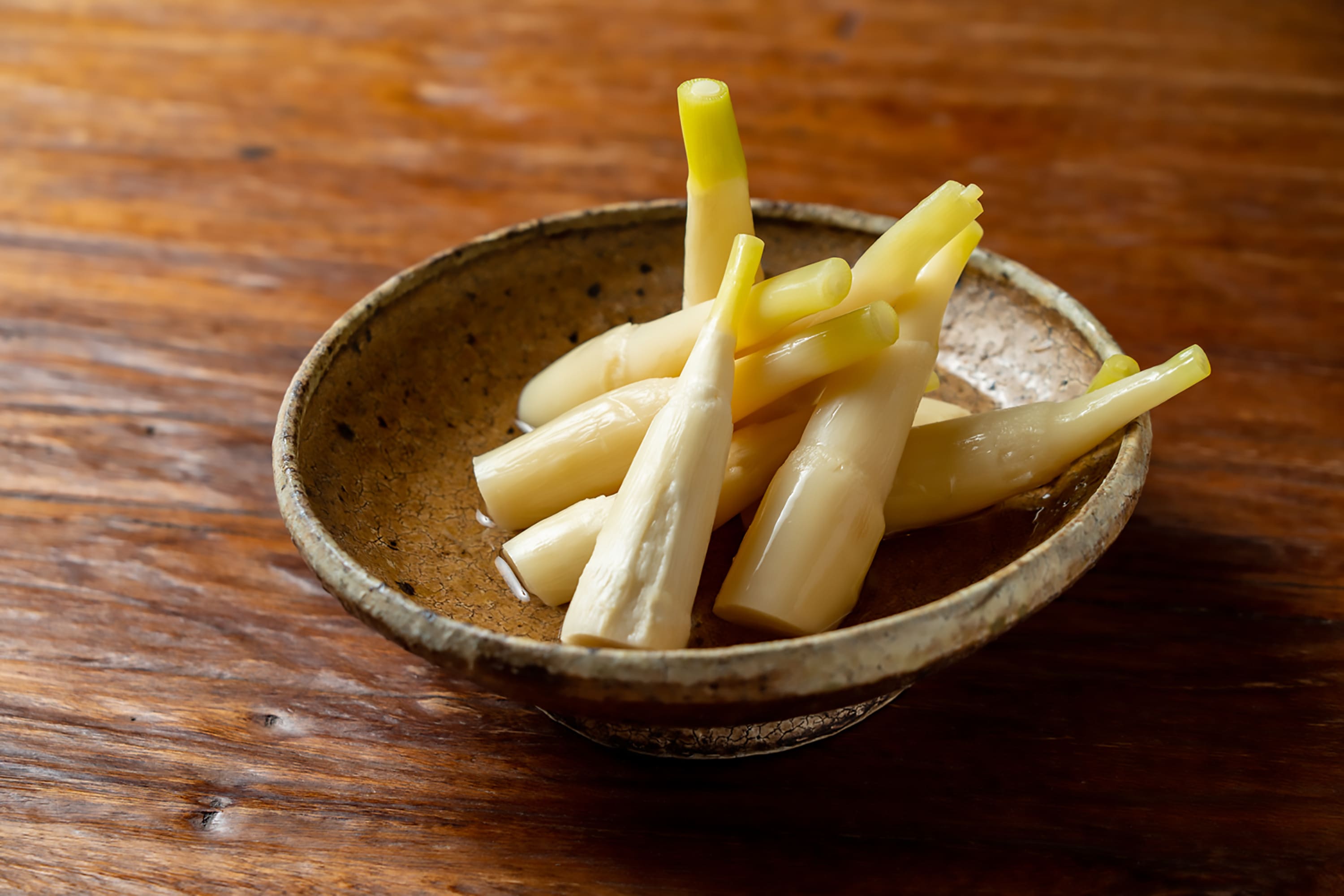
茭白筍為多年生水生禾本科菰屬植物,由於肥大化的嫩莖形如小腿,且色澤白皙,在台灣又稱為「美人腿」,以南投埔里為主要產區,占了9成。
◤文.圖/看見台灣基金會編輯群
茭
白筍,或作「筊白筍」原生於東亞,原稱「菰」,中國古代六穀之一,夏秋開花,種子稱菰米,本作糧食作物栽種,其後發現染上菰黑粉菌寄生的菰並不抽穗結實,且分生組織迅速蔓生,導致幼嫩莖部膨大成紡錘型。
切開看見的黑點點,就是菰黑粉菌的殘餘,但這不是病象,可安心食用。茭白筍可行無性繁殖,農家便改繁殖這種獨特型態的菰作為蔬菜食用。茭白筍約於清領時期自中國傳入台灣,成為春、秋季常見之家常蔬菜。
▋埔里出美人也出美人腿
南投埔里地勢較高,氣候涼爽,水源潔淨充足適宜生長,一年二收,每年可創造約20億產值,占全台9成;新北市三芝區、金山區、桃園市龍潭區及宜蘭縣礁溪鄉是次要產地。茭白筍嫩莖厚實肥大,水分充足,煮熟後有股天然甘甜,帶殼汆燙、文火慢烤皆宜,也適合切塊拌炒鹹蛋,帶出鹹甜交織的風味。
茭白筍熱量低,富含蛋白質以及纖維素,且可刺激腸胃蠕動,有改善便秘功效。由於秋季為其盛產期,茭白筍亦為台灣中秋節家戶烤肉賞月時的好選擇,清烤茭白筍不須特別調味,入口甘甜生津,便是與味道濃厚的烤肉相宜的蔬菜之一。
探索更多
肉鬆─成吉思汗的秘密軍糧?
肉鬆在包含東南亞的大華人世界是日常食品,《世界食物博覽》(World Atlas of Food)表示,應是源於中國。源於中國大致可信,2011年,大陸江蘇省的太倉肉鬆甚至通過非物質文化遺產的申請。
梅子─青梅外銷轉內需,找到新生命力
梅原產於中國,台灣的梅樹也是300多年前從中國福建、廣東等地引入,主要栽種在高雄、南投、台東、台南等縣市的中低海拔山區。
刈包─虎咬豬諧音「福咬住」
問:如何向台灣人介紹漢堡?答:「美國的刈包。」問:如何向美國人形容刈包?答:「台灣的漢堡。」