
'%20fill='%23a9976d'/%3e%3cpath%20id='Path_251'%20data-name='Path%20251'%20d='M8,35a1,1,0,0,1,1-1H23a1,1,0,0,1,0,2H9A1,1,0,0,1,8,35Z'%20transform='translate(-8%20-22)'%20fill='%23a9976d'/%3e%3cpath%20id='Path_252'%20data-name='Path%20252'%20d='M9,22a1,1,0,0,0,0,2h8a1,1,0,0,0,0-2Z'%20transform='translate(-8%20-16)'%20fill='%23a9976d'/%3e%3c/svg%3e)
'%20fill='%23a9976d'/%3e%3c/g%3e%3c/svg%3e)
'%3e%3cg%20id='Ellipse_27'%20data-name='Ellipse%2027'%20transform='translate(813%20250)'%20fill='none'%20stroke='%23ccac89'%20stroke-width='1'%3e%3ccircle%20cx='16'%20cy='16'%20r='16'%20stroke='none'/%3e%3ccircle%20cx='16'%20cy='16'%20r='15.5'%20fill='none'/%3e%3c/g%3e%3cg%20id='facebook'%20transform='translate(824.105%20258.296)'%3e%3cpath%20id='Path_243'%20data-name='Path%20243'%20d='M8.894.111V2.556H7.441a1.361,1.361,0,0,0-1.074.333,1.534,1.534,0,0,0-.278,1v1.75H8.8L8.441,8.38H6.089v7.028H3.255V8.38H.894V5.639H3.255V3.62A3.582,3.582,0,0,1,4.218.949,3.5,3.5,0,0,1,6.783,0,15.317,15.317,0,0,1,8.894.111Z'%20transform='translate(0%200)'%20fill='%23ccac89'/%3e%3c/g%3e%3c/g%3e%3c/svg%3e)

'%3e%3cg%20id='Ellipse_29'%20data-name='Ellipse%2029'%20transform='translate(901%20250)'%20fill='none'%20stroke='%23ccac89'%20stroke-width='1'%3e%3ccircle%20cx='16'%20cy='16'%20r='16'%20stroke='none'/%3e%3ccircle%20cx='16'%20cy='16'%20r='15.5'%20fill='none'/%3e%3c/g%3e%3cg%20id='link-45deg'%20transform='translate(902.607%20253.105)'%3e%3cg%20id='Group_479'%20data-name='Group%20479'%20transform='translate(7.393%205.896)'%3e%3cpath%20id='Path_241'%20data-name='Path%20241'%20d='M10.246,17.821,8.507,19.56a3.8,3.8,0,0,0,5.378,5.378L16.2,22.62a3.8,3.8,0,0,0-1.05-6.12l-.743.743a1.27,1.27,0,0,0-.2.252,2.535,2.535,0,0,1,1.091,4.23L12.99,24.042A2.536,2.536,0,0,1,9.4,20.455l1.005-1a5.093,5.093,0,0,1-.162-1.631Z'%20transform='translate(-7.393%20-12.02)'%20fill='%23ccac89'/%3e%3cpath%20id='Path_242'%20data-name='Path%20242'%20d='M18.236,9.327a3.8,3.8,0,0,0,1.05,6.12l.982-.984a2.535,2.535,0,0,1-1.136-4.241L21.448,7.9a2.536,2.536,0,1,1,3.587,3.587l-1.005,1a5.1,5.1,0,0,1,.162,1.631l1.739-1.739A3.8,3.8,0,1,0,20.553,7.01Z'%20transform='translate(-13.011%20-5.896)'%20fill='%23ccac89'/%3e%3c/g%3e%3c/g%3e%3c/g%3e%3c/svg%3e)
◤文.圖 / 看見台灣基金會編輯群
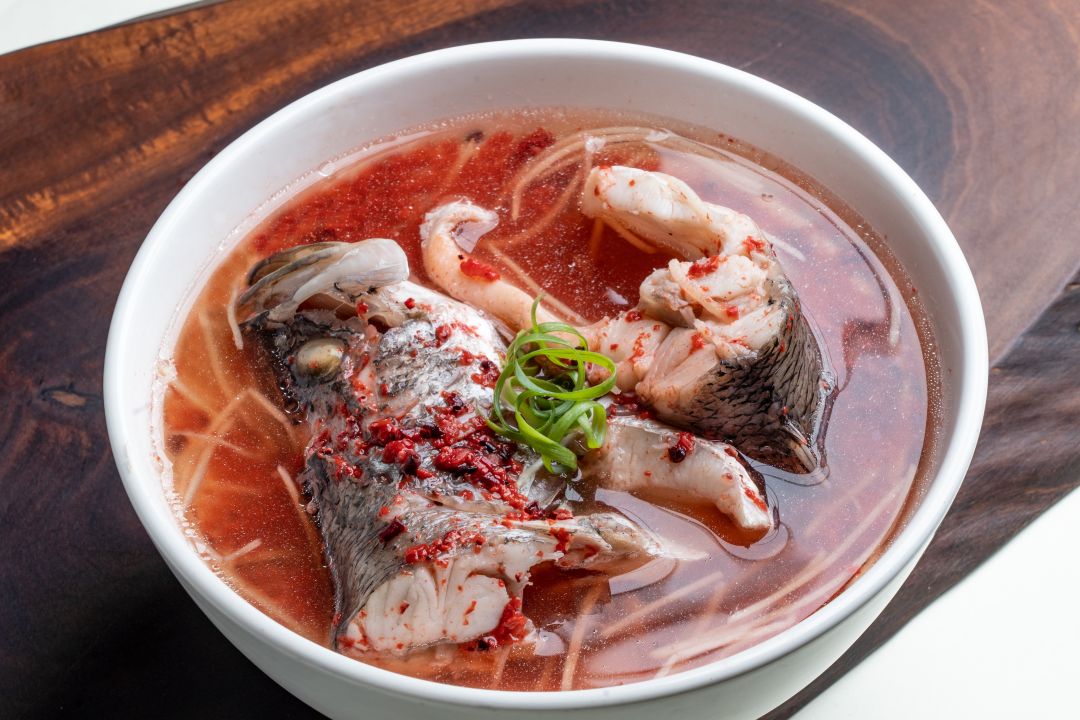
位於台灣最北端的離島馬祖,有一種獨特的湯品,無需倚賴繁複的中藥材,卻同樣能達到驅寒暖身的功效,那便是源自閩東文化的「紅糟魚湯」。 馬祖多數居民的祖籍為福建的連江與長樂,同屬閩東文化圈。由於地處海島,居民們以捕魚為生,海鮮自然成了餐桌上的主角。因海島資源有限,福州菜的精緻風格難以在馬祖完整復刻。然而,福州人釀酒的傳統與運用酒糟入菜的智慧,卻在此地被完整保留並發揚光大。
「紅糟」是釀造馬祖老酒時產生的珍貴副產物。每年12月到隔年清明節前,馬祖人用糯米與紅麴發酵,先釀出醇厚的老酒,也得到了 有獨特香氣和色澤的紅糟。它不僅是調味料,在過往物資匱乏的年代,更是保存食物、增添風味的生活智慧結晶。
獨有傳統美味,養身又暖心
紅糟魚湯正是此一智慧的完美體現。在馬祖海風凜冽的寒冬,這碗湯以其溫潤滋養的特性,成為當地居民驅寒暖胃的首選。其藥膳風味並非來自多種中藥材的堆疊,而是純然源自紅糟這項發酵產物。 紅糟含多種胺基酸、微量元素(如鉀、鈣、鐵)及紅麴菌素K、γ-胺基丁酸、有機酸,被視為天然養生聖品。製作紅糟魚湯,經驗豐富的馬祖人總在湯品烹煮末段才加入糟泥,使湯汁更溫潤,並融入醇厚酒香。
湯裡使用的魚種也很講究,冬季盛產的海鰻、油脂豐厚的黃魟,都是滋味醇厚的上選。儘管傳統釀酒技藝面臨傳承危機,馬祖人仍盡力讓這份傳統持續傳承與創新,從紅糟肉、紅糟炒飯到紅糟披薩、紅糟冰淇淋,透過多元的產品和體驗,不僅守住了閩東的釀酒智慧,更讓這抹豔紅在海島風中持續飄香。