
'%20fill='%23a9976d'/%3e%3cpath%20id='Path_251'%20data-name='Path%20251'%20d='M8,35a1,1,0,0,1,1-1H23a1,1,0,0,1,0,2H9A1,1,0,0,1,8,35Z'%20transform='translate(-8%20-22)'%20fill='%23a9976d'/%3e%3cpath%20id='Path_252'%20data-name='Path%20252'%20d='M9,22a1,1,0,0,0,0,2h8a1,1,0,0,0,0-2Z'%20transform='translate(-8%20-16)'%20fill='%23a9976d'/%3e%3c/svg%3e)
'%20fill='%23a9976d'/%3e%3c/g%3e%3c/svg%3e)
芒果冰─全球10大最佳甜點
地方探索
時令探索
主題探索
北部
夏
文化美食
分享
'%3e%3cg%20id='Ellipse_27'%20data-name='Ellipse%2027'%20transform='translate(813%20250)'%20fill='none'%20stroke='%23ccac89'%20stroke-width='1'%3e%3ccircle%20cx='16'%20cy='16'%20r='16'%20stroke='none'/%3e%3ccircle%20cx='16'%20cy='16'%20r='15.5'%20fill='none'/%3e%3c/g%3e%3cg%20id='facebook'%20transform='translate(824.105%20258.296)'%3e%3cpath%20id='Path_243'%20data-name='Path%20243'%20d='M8.894.111V2.556H7.441a1.361,1.361,0,0,0-1.074.333,1.534,1.534,0,0,0-.278,1v1.75H8.8L8.441,8.38H6.089v7.028H3.255V8.38H.894V5.639H3.255V3.62A3.582,3.582,0,0,1,4.218.949,3.5,3.5,0,0,1,6.783,0,15.317,15.317,0,0,1,8.894.111Z'%20transform='translate(0%200)'%20fill='%23ccac89'/%3e%3c/g%3e%3c/g%3e%3c/svg%3e)

'%3e%3cg%20id='Ellipse_29'%20data-name='Ellipse%2029'%20transform='translate(901%20250)'%20fill='none'%20stroke='%23ccac89'%20stroke-width='1'%3e%3ccircle%20cx='16'%20cy='16'%20r='16'%20stroke='none'/%3e%3ccircle%20cx='16'%20cy='16'%20r='15.5'%20fill='none'/%3e%3c/g%3e%3cg%20id='link-45deg'%20transform='translate(902.607%20253.105)'%3e%3cg%20id='Group_479'%20data-name='Group%20479'%20transform='translate(7.393%205.896)'%3e%3cpath%20id='Path_241'%20data-name='Path%20241'%20d='M10.246,17.821,8.507,19.56a3.8,3.8,0,0,0,5.378,5.378L16.2,22.62a3.8,3.8,0,0,0-1.05-6.12l-.743.743a1.27,1.27,0,0,0-.2.252,2.535,2.535,0,0,1,1.091,4.23L12.99,24.042A2.536,2.536,0,0,1,9.4,20.455l1.005-1a5.093,5.093,0,0,1-.162-1.631Z'%20transform='translate(-7.393%20-12.02)'%20fill='%23ccac89'/%3e%3cpath%20id='Path_242'%20data-name='Path%20242'%20d='M18.236,9.327a3.8,3.8,0,0,0,1.05,6.12l.982-.984a2.535,2.535,0,0,1-1.136-4.241L21.448,7.9a2.536,2.536,0,1,1,3.587,3.587l-1.005,1a5.1,5.1,0,0,1,.162,1.631l1.739-1.739A3.8,3.8,0,1,0,20.553,7.01Z'%20transform='translate(-13.011%20-5.896)'%20fill='%23ccac89'/%3e%3c/g%3e%3c/g%3e%3c/g%3e%3c/svg%3e)
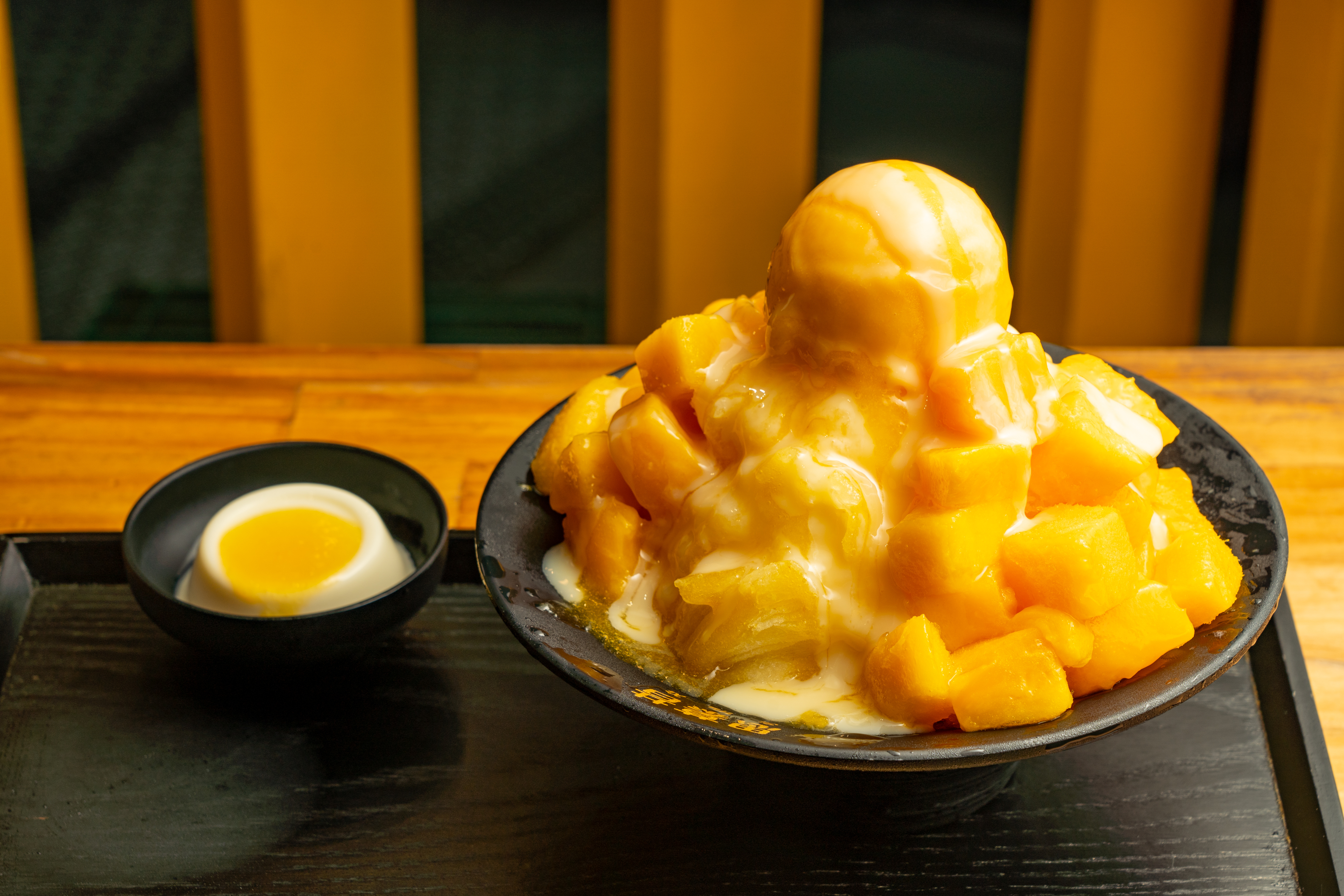
2013年,CNN和旅遊雜誌聯手評選,台灣的芒果冰被評選為全球最好吃的甜點之一,同時入列的有維也納的水果餡餅、柏林的黑森林櫻桃蛋糕。
◤文.圖∕看見台灣基金會編輯群
芒
果冰很早就出現在台灣冰店,但從「烏鴉變鳳凰」的功勞,要歸功於位於台北美食區永康街轉角的「冰館」,是帶起全台、甚至全球芒果冰風潮的始祖。
芒果起源於印度,是熱帶水果中滋味豐美的代表之一。農試所及台灣農民不斷改良育種,開發出愛文、金煌、西施、凱特、烏香等優秀品種,加上台灣特定地區的風土適合芒果展現其最佳風味,一旦集結一起,豪華版芒果冰產生巨大能量,躍上全球主舞台。
▋台灣各種芒果組成的「超級國家隊」
1997年,冰館推出的芒果冰爆紅,簡直是台灣「優質芒果的國家隊」,秘訣是集合了各種芒果的特色優點,在味道上呈現甜、酸、香的複雜層次,加上冰品內容物包含新鮮芒果、芒果果醬、芒果雪磚及芒果冰淇淋四大型式層次,以一盤160元的「冰品天價」問市後,人潮還是擠爆了5坪大的店面,外國觀光客大排長龍。
綜觀台灣,由於氣候濕熱,夏日「呷涼」消暑的歷史已久,日治時期因日本人不耐台灣高溫,引入製冰技術後即開始發展。1970年後,台灣經濟飛躍成長,各式新穎小吃、冰品陸續出現,方有其後芒果冰的橫空出世。
芒果冰陸續出現各種變化型式,加奶酪、布丁,和草莓混搭等,全台各地已四處可見豪華版芒果冰,價錢從150到250元都有,賣不賣得動,就看店家有沒有認真研究不同台灣芒果的優點,呈現其最美味的狀態。
探索更多
紅棗─苗栗為主產地,鮮食、曬乾皆可
紅棗別名大棗、華棗,品種與產區多樣,環境適應力強且耐貧瘠土地。台灣業者行銷海外時,以「台灣紅寶石」稱呼做賣點,大陸民眾則以「活的維生素丸」形容紅棗的功效。
鳳梨─台灣鳳梨品種,世界第一
無論是鮮果、加工食品,或是鳳梨酥,台灣鳳梨正以它的獨特風味,征服全球市場。
夜市─東南亞旅客最有熟悉感的台灣街頭饗宴
對東南亞的旅客而言,夜市與街頭小吃並不陌生;但台灣夜市的魅力,在於把地方食材、廟口文化、庶民生活與觀光體驗,濃縮在一條燈火通明的街道裡。從蚵仔煎、豆花、鹽酥雞到冰品,夜市不只是滿足味蕾的地方,也是外國旅客最容易感受台灣日常活力的現場。