


◤Text and Images / iSee Taiwan Foundation Editorial Team
The suan cai, fu cai, and mei gan cai so common in Hakka cooking, in fact, all come from the same mustard green, just taken through different degrees of drying and fermentation.
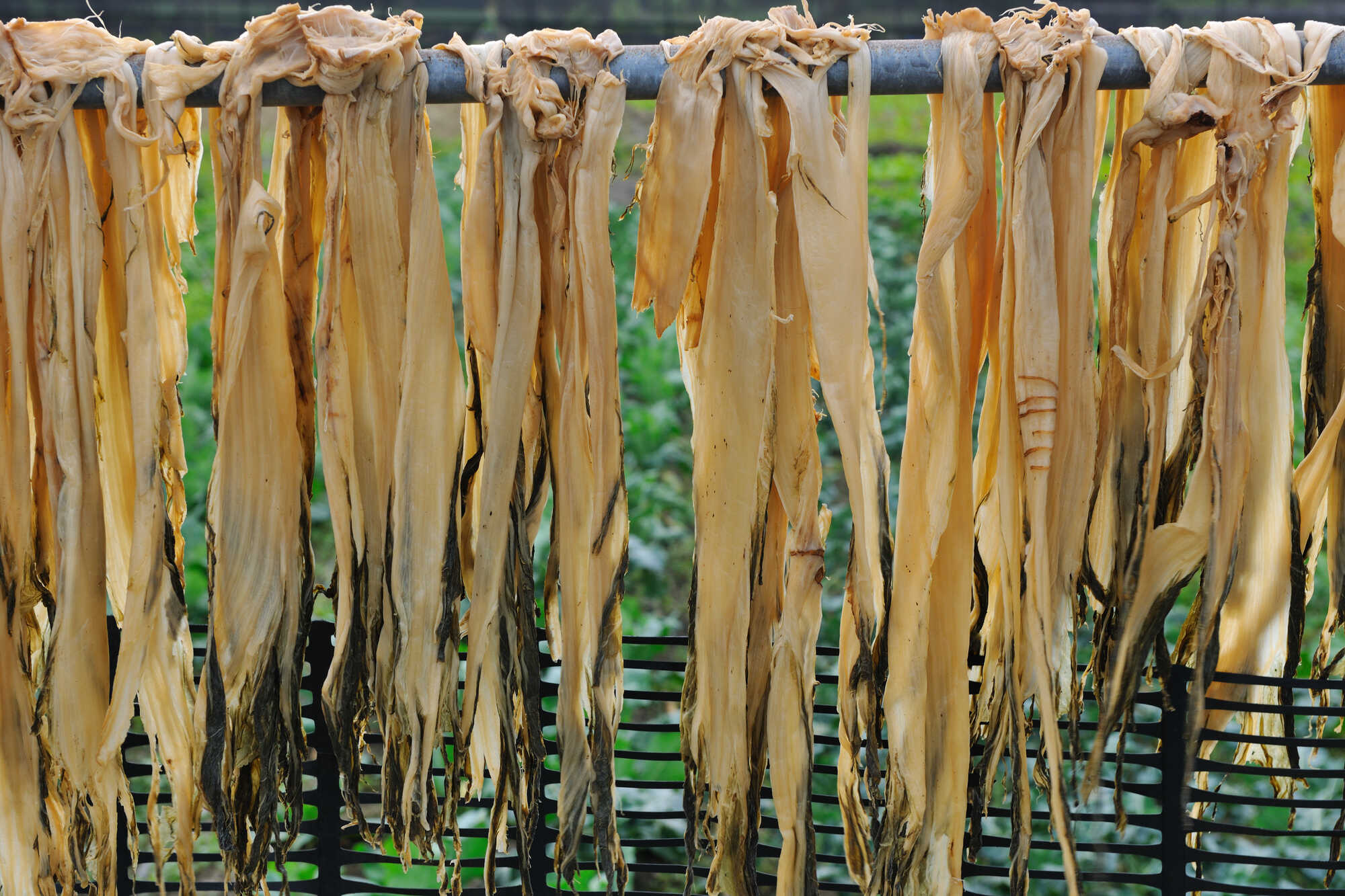
First to be born is xian cai (suan cai). The mustard greens are softened in the sun, salted with coarse salt, trodden to press out the water, then set in a crock to ferment, taking on a crisp texture and a lactic tang; they turn up in dishes like Hakka duck soup with pickled mustard and stir-fried shredded pork with pickled mustard. Next, the suan cai is taken out and sun-dried until half-dry, torn into strips, packed upside-down into a jar, and sealed to mature-and so becomes fu cai. Because in Hakka the word 覆 (to turn upside-down) sounds the same as 福 (fortune), it also came to be written 福菜, "fortune vegetable"; it loses the sharp sourness of suan cai and gains a mellow sweetness and a chewy resilience. If the half-dried fu cai is then sun-dried thoroughly, until nearly all its moisture is gone and the leaves turn deep brown, it becomes mei gan cai. After long maturing, it takes on a rich, aged fragrance, and its most classic dish is the Hakka steamed pork belly with preserved mustard greens (mei gan kou rou).
Sunlight, Microbes, and the Wisdom of Thrift
The most classic way to eat finished fu cai is to shred it and simmer it slowly with pork into fu cai and sliced-pork soup, sour and fragrant with a sweet finish; it is also often stewed gently with pork ribs, pork tripe, or other meats to draw out a hearty, savory depth. At home, fu cai may be chopped and stir-fried with minced meat and firm tofu, or braised with pork tripe, so that its fermented savoriness melds with the fat into a deeper flavor.
Making fu cai looks simple, yet it holds a deep Hakka understanding of nature. From sun-drying and treading in salt to weighting with stones and packing into jars, every step must be adjusted to the weather and to experience. In an age without refrigeration, people used sunlight, the monsoon winds, and lactic acid bacteria to keep vegetables for months, even years. The method not only extends an ingredient's life but also embodies the Hakka spirit of cherishing resources-and, seen through a modern lens, it is a model of low-carbon eating and sustainable living.
From fresh, crisp green to mellow and gentle, and on to a deep, aged fragrance, the transformation of a single mustard green mirrors the Hakka philosophy of following the seasons and honoring food. These plain-looking pickles are not just everyday tastes on the table-they are a history of Hakka flavor passed down through the generations.