
'%20fill='%23a9976d'/%3e%3cpath%20id='Path_251'%20data-name='Path%20251'%20d='M8,35a1,1,0,0,1,1-1H23a1,1,0,0,1,0,2H9A1,1,0,0,1,8,35Z'%20transform='translate(-8%20-22)'%20fill='%23a9976d'/%3e%3cpath%20id='Path_252'%20data-name='Path%20252'%20d='M9,22a1,1,0,0,0,0,2h8a1,1,0,0,0,0-2Z'%20transform='translate(-8%20-16)'%20fill='%23a9976d'/%3e%3c/svg%3e)
'%20fill='%23a9976d'/%3e%3c/g%3e%3c/svg%3e)
'%3e%3cg%20id='Ellipse_27'%20data-name='Ellipse%2027'%20transform='translate(813%20250)'%20fill='none'%20stroke='%23ccac89'%20stroke-width='1'%3e%3ccircle%20cx='16'%20cy='16'%20r='16'%20stroke='none'/%3e%3ccircle%20cx='16'%20cy='16'%20r='15.5'%20fill='none'/%3e%3c/g%3e%3cg%20id='facebook'%20transform='translate(824.105%20258.296)'%3e%3cpath%20id='Path_243'%20data-name='Path%20243'%20d='M8.894.111V2.556H7.441a1.361,1.361,0,0,0-1.074.333,1.534,1.534,0,0,0-.278,1v1.75H8.8L8.441,8.38H6.089v7.028H3.255V8.38H.894V5.639H3.255V3.62A3.582,3.582,0,0,1,4.218.949,3.5,3.5,0,0,1,6.783,0,15.317,15.317,0,0,1,8.894.111Z'%20transform='translate(0%200)'%20fill='%23ccac89'/%3e%3c/g%3e%3c/g%3e%3c/svg%3e)

'%3e%3cg%20id='Ellipse_29'%20data-name='Ellipse%2029'%20transform='translate(901%20250)'%20fill='none'%20stroke='%23ccac89'%20stroke-width='1'%3e%3ccircle%20cx='16'%20cy='16'%20r='16'%20stroke='none'/%3e%3ccircle%20cx='16'%20cy='16'%20r='15.5'%20fill='none'/%3e%3c/g%3e%3cg%20id='link-45deg'%20transform='translate(902.607%20253.105)'%3e%3cg%20id='Group_479'%20data-name='Group%20479'%20transform='translate(7.393%205.896)'%3e%3cpath%20id='Path_241'%20data-name='Path%20241'%20d='M10.246,17.821,8.507,19.56a3.8,3.8,0,0,0,5.378,5.378L16.2,22.62a3.8,3.8,0,0,0-1.05-6.12l-.743.743a1.27,1.27,0,0,0-.2.252,2.535,2.535,0,0,1,1.091,4.23L12.99,24.042A2.536,2.536,0,0,1,9.4,20.455l1.005-1a5.093,5.093,0,0,1-.162-1.631Z'%20transform='translate(-7.393%20-12.02)'%20fill='%23ccac89'/%3e%3cpath%20id='Path_242'%20data-name='Path%20242'%20d='M18.236,9.327a3.8,3.8,0,0,0,1.05,6.12l.982-.984a2.535,2.535,0,0,1-1.136-4.241L21.448,7.9a2.536,2.536,0,1,1,3.587,3.587l-1.005,1a5.1,5.1,0,0,1,.162,1.631l1.739-1.739A3.8,3.8,0,1,0,20.553,7.01Z'%20transform='translate(-13.011%20-5.896)'%20fill='%23ccac89'/%3e%3c/g%3e%3c/g%3e%3c/g%3e%3c/svg%3e)
◤文.圖/看見台灣基金會編輯群
在台灣,飲食往往不只是果腹之物,更是歷史與身分的隱喻。2024年11月21日,台灣文學在國際舞台迎來重要時刻:作家楊双子所著、由台美譯者金翎翻譯的《臺灣漫遊錄》,榮獲美國國家圖書獎翻譯文學大獎。這部作品,讓世界透過文學與飲食,看見台灣身分認同的複雜與深層美感。
《臺灣漫遊錄》以日本時代為背景,描寫日本作家青山千鶴子在台灣通譯王千鶴陪同下,沿著縱貫鐵路展開一場結合美食與文化的旅行。小說透過兩位女性之間細膩的對話與互動,鋪陳台、日女性在時代夾縫中的處境,以及對台灣在地身分的探問。全書十二個章節,以十二道台灣食物為題(分別為:瓜子、米篩目、麻薏湯、生魚片、肉臊、冬瓜茶、咖哩、壽喜燒、菜尾湯、兜麵、鹹蛋糕、蜜豆冰),讓飲食成為解讀歷史與文化的關鍵線索。
文學與美食的縱貫線之旅
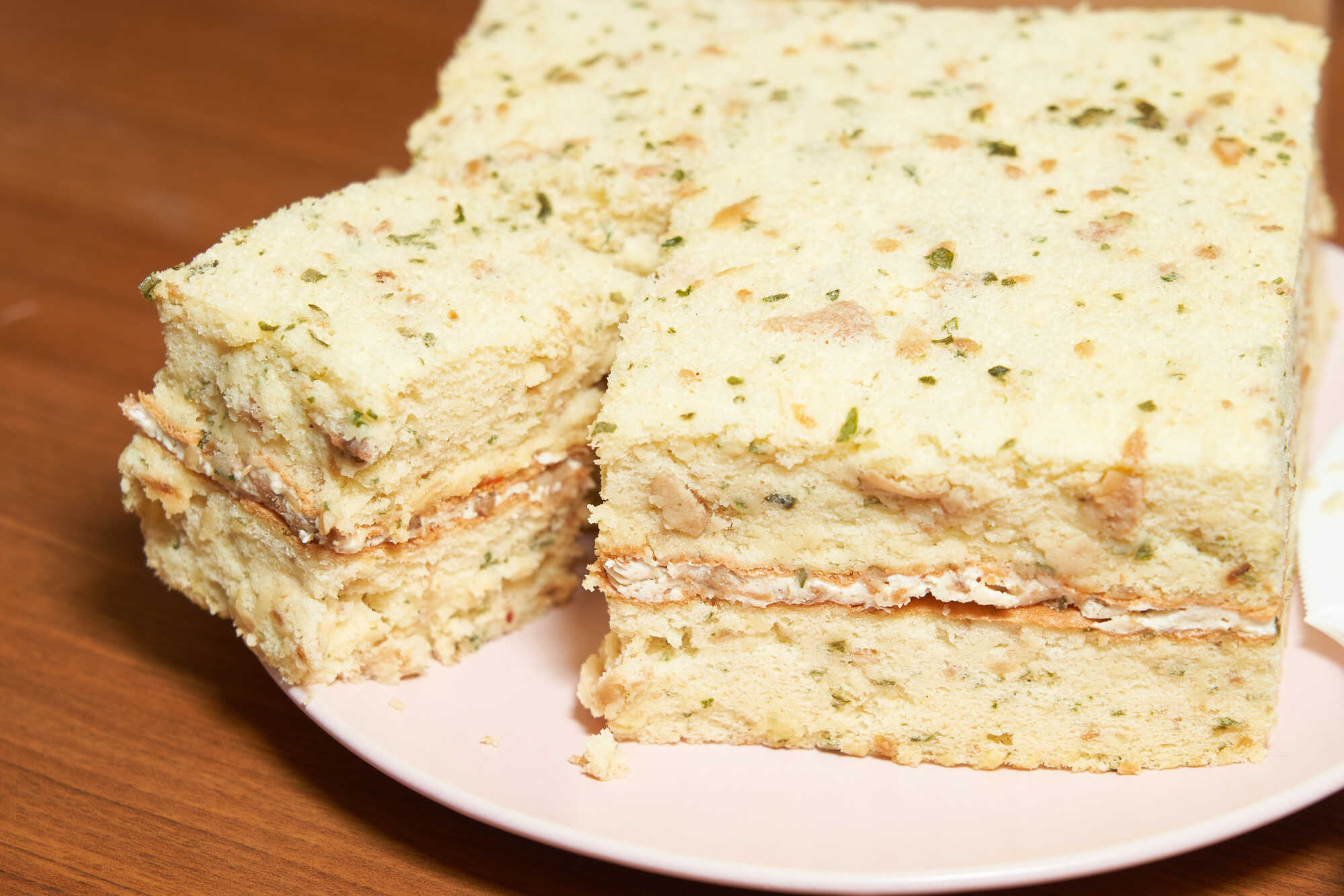
在眾多料理之中,「鹹蛋糕」是一道格外醒目的存在。台灣鹹蛋糕起源於日本時代1908年台灣縱貫鐵路通車典禮,由台中豐原糕餅師傅呂水(雪花齋老闆)所創。當時接待日本閑院宮載仁親王,因廚房缺糖,呂水以肉燥代替做成鹹餡蛋糕,獲得親王的讚賞,從此發揚光大成為地方名產。現今一般做法為以鬆軟的戚風蛋糕基底,將油蔥酥、竹筍、香菇、蝦米等食材納入餡料,發展出甜中帶鹹、鬆軟卻不膩口的獨特風味。
這道承載歷史傳奇的點心,在《臺灣漫遊錄》中則被賦予了更深層的文化隱喻。在小說中,鹹蛋糕不只是食物,更成為文化張力的引信。當青山千鶴子讚歎「本島的滋味」時隨即被質疑,這樣的欣賞是否隱含著知識階層對異地風味的消費式凝視──將台灣味視為新奇標本,而非真正理解其生成的歷史與脈絡。於是,鹹蛋糕的甜與鹹不只在舌尖上碰撞,也在語言與權力之間激盪。這樣的書寫,使鹹蛋糕成為台灣文化的象徵性載體:它展現了在日本時代中,台灣社會如何以自身的生活智慧,將外來形式轉化為屬於自己的味道。