


◤Text and Images / iSee Taiwan Foundation Editorial Team
Whenever the tide draws back, the mudflats on the western shore of Lukang Township, Changhua County, quietly reveal a fine scatter of tiny holes. Unremarkable as they look, these little openings hide a fresh taste Lukang locals know well: the mud shrimp. This intertidal crustacean thrives on the town's sandy coastal flats, which suit it perfectly, and it has given rise to a local food culture rarely found elsewhere in Taiwan.
The mud shrimp's scientific name is Austinogebia edulis, of the family Upogebiidae; its other Chinese name, 螻蛄蝦, literally means "mole-cricket shrimp." Shaped rather like a shrimp, it is skilled at digging Y-shaped burrows in the mud, which both protect it and keep water circulating through the flats. Traditional catching relies on watching for bubbles and burrow mouths after the tide ebbs, then carefully turning the mud with an iron rake-experience built up over long years of fishers living with the tides.
The Settlers' Thrift: "One Mud Shrimp to Three Bowls of Congee"
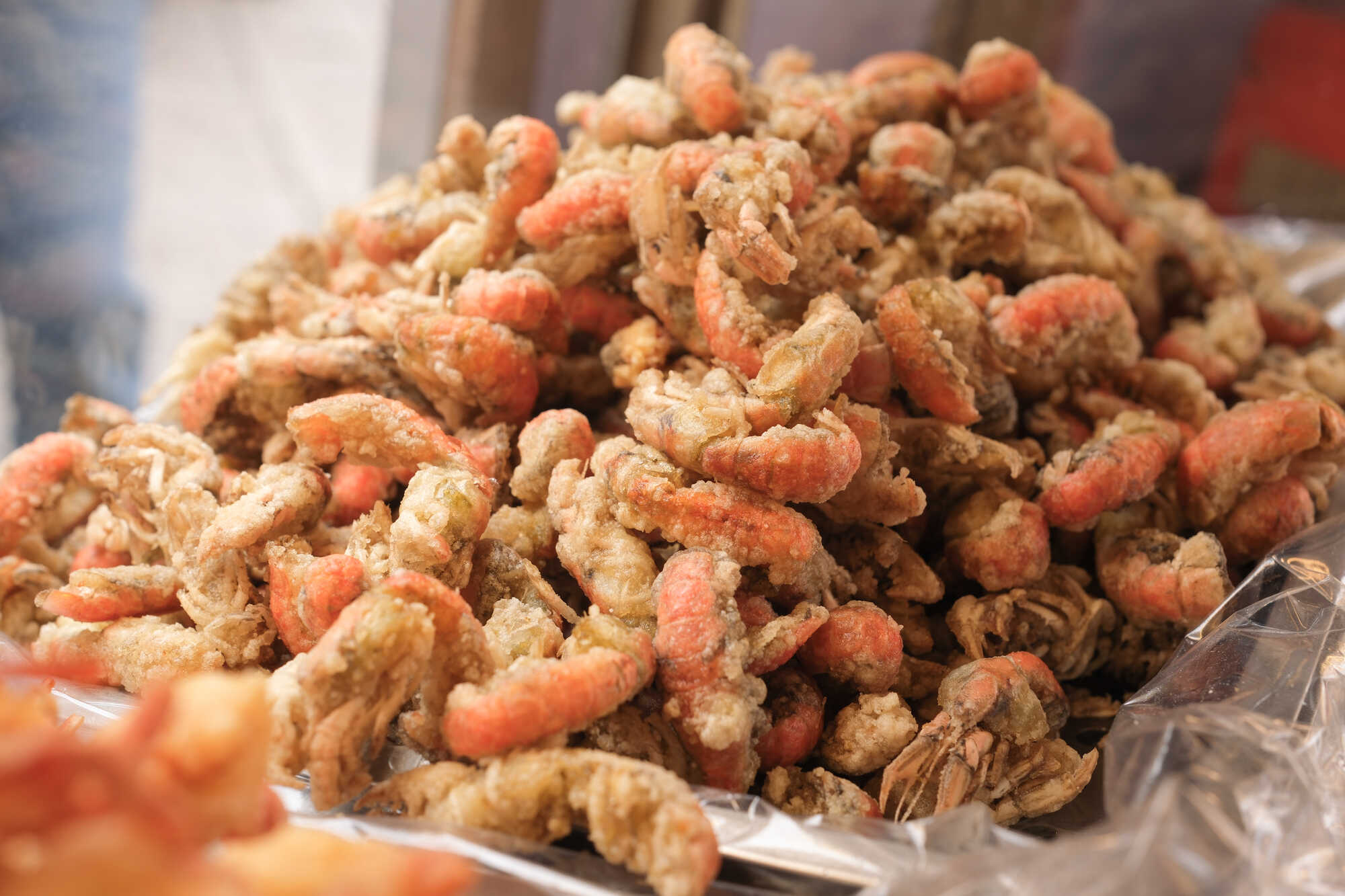
Wander the lanes around Lukang Tianhou Temple and the salty fragrance of freshly fried mud shrimp always stops passersby-an unforgettable taste for travelers. In earlier days, Lukang people often preserved mud shrimp by salting or brine-braising them, as a small side dish to go with congee, giving rise to the saying "one mud shrimp to three bowls of congee." Because the repeatedly salted and braised shrimp taste so strongly savory, a single one is enough for several bowls of congee; the saying describes not only the mud shrimp's bold flavor but also the food-cherishing wisdom of coastal residents in the old days.
With today's more comfortable living, the ways of cooking mud shrimp have grown more varied. The most common is to dredge them in flour, fry them crisp, and dust them with pepper salt-thin-shelled and crunchy, the sea's freshness filling the mouth. Some shops flash-fry them with scallion, garlic, and chili, or sizzle them with Basil, for a boldly flavored local dish. Traditional households, meanwhile, often cure the shrimp and serve them with congee, keeping the most direct taste of the tide. In recent years, creative mud-shrimp dishes have appeared as well, giving this once-humble seafood many new forms.
Lately, however, some harvesting has switched to using pumps to blast the mudflats and nets to gather the shrimp in bulk; efficient as this is, it may damage the habitat, and mud-shrimp numbers have fallen year by year. If this crisp, fragrant taste from the intertidal zone is to be carried on for generations, it depends not only on the palates of gourmets but on people's wisdom in protecting the tides and the land. To hold on to the mudflats is to hold on to a taste of home in Lukang.