


◤Text and Images / iSee Taiwan Foundation Editorial Team
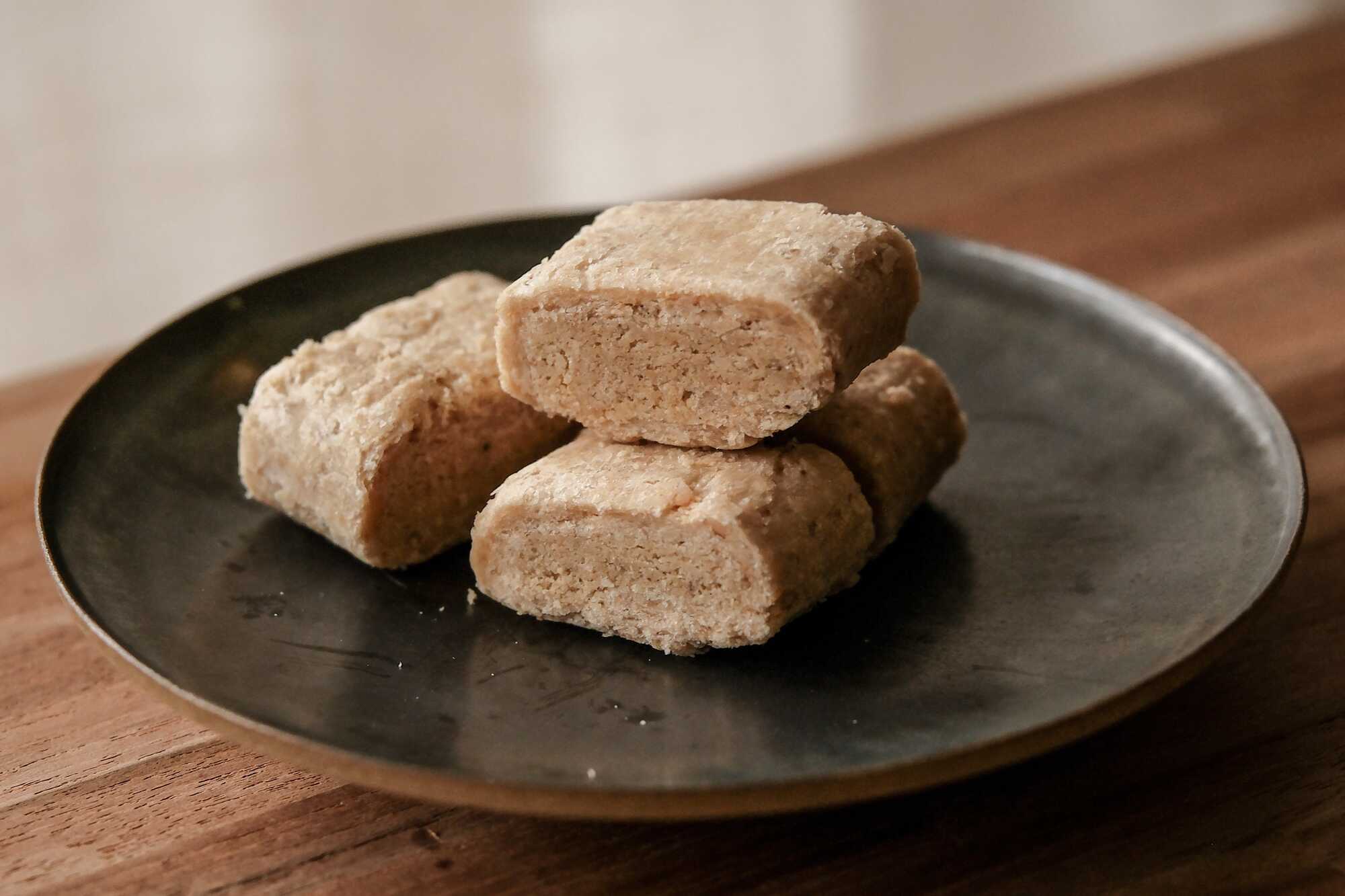
Kinmen gongtang is said to descend from the "gongtang" (摃糖) or tribute-sweet culture of the Minnan region, later taking on its own local character in Kinmen alongside migrants and local food traditions. "Gongtang" comes from the Minnan word 摃 (kòng), to pound or strike-a reference to the technique of pounding the sugar mass over and over during making to render it light and crisp. Kinmen residents made it from the peanuts that grow abundantly on the island, adding granulated sugar and maltose, and it gradually became the fragrant, delicate, melt-in-the-mouth Kinmen gongtang of today, one of the island's most emblematic souvenirs.
Kinmen peanuts are small but oily and intensely fragrant. Poor soil, a dry climate, and strong sea winds make them grow slowly, concentrating their oil and aroma. Each year farmers work for months from sowing and weeding to harvest; these peanuts are not only an important local crop but the key source of gongtang's flavor.
Pounding and Shaping: The Details of a Century-Old Craft
Traditional gongtang-making is elaborate. The peanuts must first be roasted, cooled, skinned, and sorted, keeping only kernels of even quality; granulated sugar and maltose are then boiled into a syrup, mixed quickly with the peanuts, and pounded and stretched again and again until the mass turns light and crisp, before finally being cut into strips, shaped, and wrapped. Today, though machines help with mixing and cutting, the final shaping and wrapping still rely on an artisan's touch, preserving the fine warmth of a century-old craft.
Gongtang is not only Kinmen's signature dessert but was once a symbol of prosperity. A Kinmen saying goes, "Red tobacco and foreign matches; gongtang, fried dough, and rice cake." Here, "red tobacco" means imported cigarettes, "foreign matches" the pricier imported matches of the day, and "gongtang, fried dough, and rice cake" describes eating gongtang together with youtiao (fried dough sticks) and rice cakes. The whole saying paints the refined life of well-off households in the past, reflecting gongtang's special place in Kinmen's food culture.
The island's old gongtang houses each have their own character. Chen Jin Fu runs a gongtang sightseeing factory where visitors watch the process through a transparent production line and taste gongtang fresh off the line; Sheng Zu Foods makes it on-site daily at its sightseeing factory, a key stop for travelers getting to know Kinmen's sweets; and Jin Rui Cheng, a long-established shop in Lieyu Township, Kinmen County, is known for its bamboo-leaf gongtang, whose wrapper releases a delicate bamboo fragrance the moment it is opened. There is also "pig's-trotter gongtang," shaped like a braised pork knuckle, its traditional peanut brittle wrapped in a sugar coating for an inventive sweet-and-savory flavor. With the times, Kinmen gongtang has brought in modern equipment and developed varied flavors such as sesame, seaweed, and savory.