
'%20fill='%23a9976d'/%3e%3cpath%20id='Path_251'%20data-name='Path%20251'%20d='M8,35a1,1,0,0,1,1-1H23a1,1,0,0,1,0,2H9A1,1,0,0,1,8,35Z'%20transform='translate(-8%20-22)'%20fill='%23a9976d'/%3e%3cpath%20id='Path_252'%20data-name='Path%20252'%20d='M9,22a1,1,0,0,0,0,2h8a1,1,0,0,0,0-2Z'%20transform='translate(-8%20-16)'%20fill='%23a9976d'/%3e%3c/svg%3e)
'%20fill='%23a9976d'/%3e%3c/g%3e%3c/svg%3e)
'%3e%3cg%20id='Ellipse_27'%20data-name='Ellipse%2027'%20transform='translate(813%20250)'%20fill='none'%20stroke='%23ccac89'%20stroke-width='1'%3e%3ccircle%20cx='16'%20cy='16'%20r='16'%20stroke='none'/%3e%3ccircle%20cx='16'%20cy='16'%20r='15.5'%20fill='none'/%3e%3c/g%3e%3cg%20id='facebook'%20transform='translate(824.105%20258.296)'%3e%3cpath%20id='Path_243'%20data-name='Path%20243'%20d='M8.894.111V2.556H7.441a1.361,1.361,0,0,0-1.074.333,1.534,1.534,0,0,0-.278,1v1.75H8.8L8.441,8.38H6.089v7.028H3.255V8.38H.894V5.639H3.255V3.62A3.582,3.582,0,0,1,4.218.949,3.5,3.5,0,0,1,6.783,0,15.317,15.317,0,0,1,8.894.111Z'%20transform='translate(0%200)'%20fill='%23ccac89'/%3e%3c/g%3e%3c/g%3e%3c/svg%3e)

'%3e%3cg%20id='Ellipse_29'%20data-name='Ellipse%2029'%20transform='translate(901%20250)'%20fill='none'%20stroke='%23ccac89'%20stroke-width='1'%3e%3ccircle%20cx='16'%20cy='16'%20r='16'%20stroke='none'/%3e%3ccircle%20cx='16'%20cy='16'%20r='15.5'%20fill='none'/%3e%3c/g%3e%3cg%20id='link-45deg'%20transform='translate(902.607%20253.105)'%3e%3cg%20id='Group_479'%20data-name='Group%20479'%20transform='translate(7.393%205.896)'%3e%3cpath%20id='Path_241'%20data-name='Path%20241'%20d='M10.246,17.821,8.507,19.56a3.8,3.8,0,0,0,5.378,5.378L16.2,22.62a3.8,3.8,0,0,0-1.05-6.12l-.743.743a1.27,1.27,0,0,0-.2.252,2.535,2.535,0,0,1,1.091,4.23L12.99,24.042A2.536,2.536,0,0,1,9.4,20.455l1.005-1a5.093,5.093,0,0,1-.162-1.631Z'%20transform='translate(-7.393%20-12.02)'%20fill='%23ccac89'/%3e%3cpath%20id='Path_242'%20data-name='Path%20242'%20d='M18.236,9.327a3.8,3.8,0,0,0,1.05,6.12l.982-.984a2.535,2.535,0,0,1-1.136-4.241L21.448,7.9a2.536,2.536,0,1,1,3.587,3.587l-1.005,1a5.1,5.1,0,0,1,.162,1.631l1.739-1.739A3.8,3.8,0,1,0,20.553,7.01Z'%20transform='translate(-13.011%20-5.896)'%20fill='%23ccac89'/%3e%3c/g%3e%3c/g%3e%3c/g%3e%3c/svg%3e)
◤文.圖/看見台灣基金會編輯群
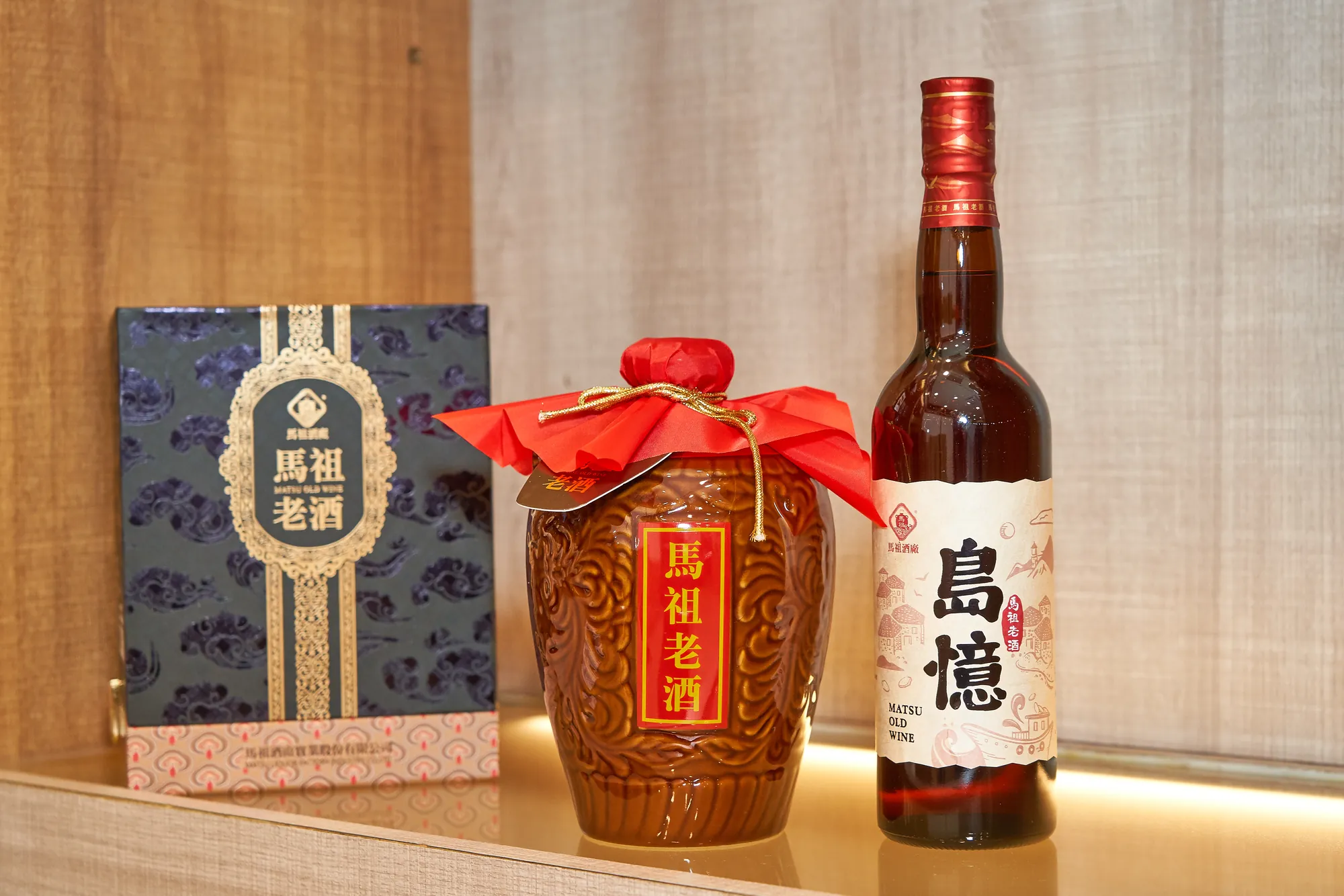
馬祖老酒誕生於時間與微生物的共舞。傳統製法選用糯米,經浸泡、蒸煮與冷卻後,拌入紅麴與井水,在冬季低溫、穩定的氣候中緩慢發酵。馬祖冬季氣溫約攝氏十度,最適合紅麴與酵母作用,使米粒逐步糖化、轉色,形成略帶紅色或琥珀色的酒液。酒液再經蒸煮「殺菌過夏」,裝罈熟成數月到一年,轉為深琥珀色,風味趨於溫潤柔和,不若高粱辛烈,而呈現厚實、帶有淡淡果乾香與米香的層次。 老酒深植於馬祖人的日常與生命節奏之中。早期漁民出海前會飲上一碗,以暖身抵禦海風;婦女坐月子時,則以老酒炒麵線、搭配荷包蛋與紅糟提味,形成「月內補身」的代表性飲食習俗。老酒廣泛運用於料理,成為福州菜系的核心元素,如老酒蛋、老酒雞、老酒麵線,以及紅糟雞、紅糟鰻、紅糟肉等,展現鹹香微甜、溫和甘潤的風味;亦常用於燉煮海鮮,去腥提鮮,使魚貝類更顯甘甜。這些料理不僅是日常餐桌的滋味,也承載節慶與身體調養的飲食智慧。在戰地政務時期,物資匱乏,家釀老酒更成為維繫家庭情感與分享人情的重要媒介。
從家釀甕罈到坑道窖藏
馬祖老酒之所以能延續至今,關鍵在於民間釀造傳統與當代產業的接續。過去家家戶戶皆有酒甕,冬季小雪、冬至前後是家釀老酒的旺季,鄰里間常交流紅麴色澤、酒體風味。隨著時代演變,馬祖酒廠將這項技藝制度化與商品化,使老酒成為馬祖代表性的地方產業。