


◤Text and Images / iSee Taiwan Foundation Editorial Team
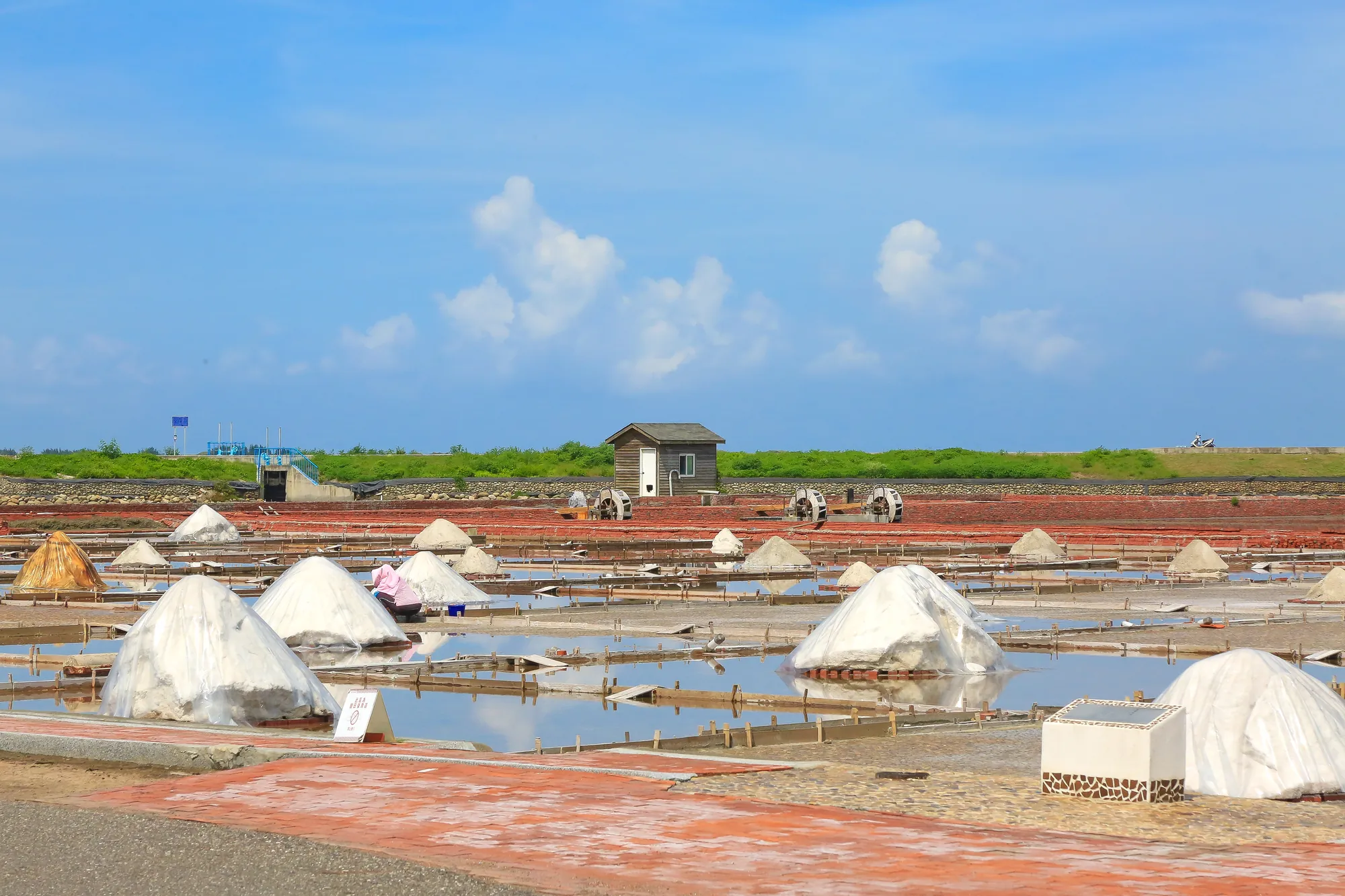
Jingzaijiao Tile-Paved Salt Fields, in Beimen District, Tainan, ranks among the area's most visited destinations. At dusk, red roof tiles and glittering white salt crystals compose a scene of quiet beauty. What many visitors may not realize is that this site preserves the oldest tile-paved salt fields in Taiwan-a witness to the development of island's salt industry.
In the early 17th century, Taiwan's indigenous peoples produced salt primarily through boiling, yielding a bitter, harsh product. In 1648, during the period of Dutch rule, the Dutch established a salt farm at Laikou in Tainan, inaugurating the era of sun-dried salt production. After Koxinga established Zheng rule in Taiwan in 1661, the Qing dynasty's maritime embargo forced the new administration to pursue self-sufficiency. In 1665, Chen Yonghua, the Zheng regime's chief strategist and advisor, known as their "Zhuge Liang"-championed a shift from boiling to sun-drying. He rebuilt the Laikou salt farm and taught local residents the brine-sprinkling method, in which concentrating seawater before spreading it to crystallize under the sun.
From decline to revival: a model of sustainability
Jingzaijiao stands as one of the enduring achievements of that salt-making revolution. The Laidong Salt Farm, originally sited at Dalinpu in historical Fengshan, relocated several times due to flooding before settling at Beimen's Jingzaijiao. The site continued the sun-drying method introduced by Chen Yonghua, with broken roof tiles laid across the salt pans to accelerate heat absorption, promote crystallization, and prevent seepage-preserving the production techniques handed down from the Zheng period. As Taiwan's salt industry declined, the fields fell idle. It was not until 2003, driven by local advocacy, that production resumed and the site began its transformation into a destination balancing tourism, cultural heritage, and ecological value.
That transformation brought Jingzaijiao to international attention. The revival gave new life to an ancient craft while weaving together heritage tourism and environmental education, opening a path toward sustainable development rooted in local identity. These efforts earned the 2021 Green Destinations Top 100 Sustainability Stories Award and the 2021 Pacific Asia Travel Association Gold Award-affirming its success in cultural preservation and ecological stewardship, and establishing Jingzaijiao as an internationally recognized sustainable tourism destination.