


◤Text and Images / iSee Taiwan Foundation Editorial Team
In its early days, Taiwan was primarily an agricultural society, where cattle bore the work of plowing and haulage; people generally held draft oxen in respectful regard, and eating beef was uncommon, though not entirely absent. During the Japanese era, as Japanese food culture and dishes such as sukiyaki were introduced, beef dishes gradually appeared in the urban dining and social life of some Taiwanese. After the war, Chaoshan immigrants brought dishes such as shacha beef and Shantou beef hotpot, further shaping the beef-eating culture of southern Taiwan.
The Tainan beef soup familiar today spread gradually from the mid-1990s onward, and after official beef-themed events promoted it beginning in 2004, it became one of Tainan's signature foods. Shops such as A Cun Beef Soup on Bao'an Road in Tainan's West Central District, known for its sweet Tainan-style broth, and Liu Qian Beef Soup, famous for its pre-dawn queues, have become important starting points for many travelers getting to know Tainan's beef soup culture.
A Slaughter-and-Delivery Chain Racing the Clock
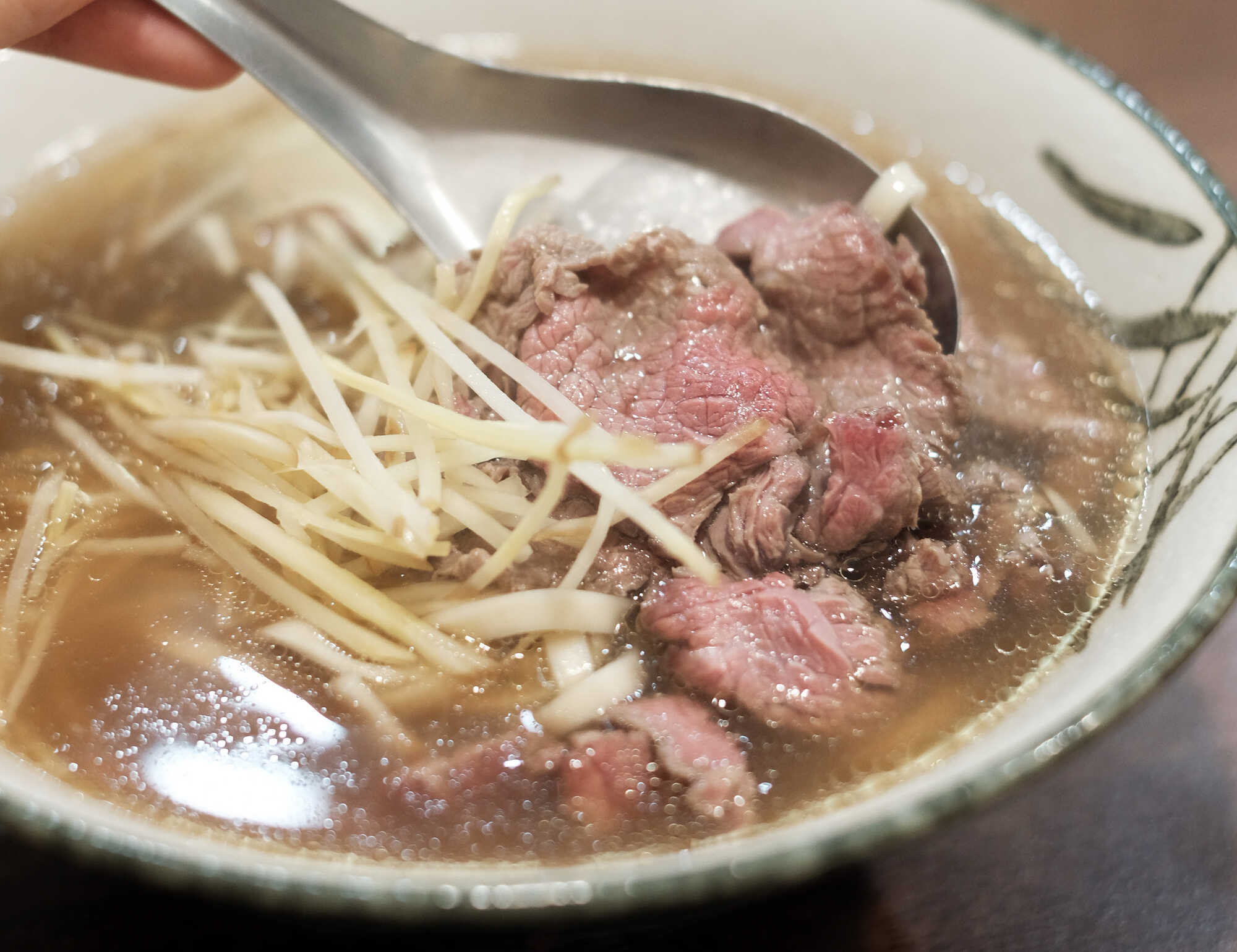
What sets Tainan beef soup apart is its reliance on domestic, fresh, never-frozen beef delivered quickly on the same day. This supply system is closely tied to Tainan's long history of cattle trading. The Cow Market of Shanhua had been an important cattle-trading site in southern Taiwan since the Qing dynasty; though it later fell out of use with agricultural mechanization and industrial change, it laid the groundwork for today's Tainan beef industry and meat distribution. After fresh beef from Tainan's meat supply chain, such as the Shanhua meat market, reaches shops in town, the vendors briefly blanch thinly sliced beef in rolling-hot broth, keeping the slices tender and pink while preserving the beef's own fresh sweetness. Wen Zhang Beef Soup, in the Anping area, is known for its bone broth and fresh, never-frozen beef.
Unlike the soy milk and rice balls common across most of Taiwan, Tainan has a set of early risers who make a habit of walking into a beef soup shop before daybreak to begin the day with a bowl of hot soup. Piping-hot beef soup paired with plain rice or braised pork rice has gradually formed a signature Tainan breakfast culture. This eating habit also reflects a civic rhythm closely bound to the market. From the cattle-market culture of the past to today's slaughter-and-delivery from the meat market and the broth-simmering and prep work at the shops, beef soup is not just a local dish but a culinary chain linking place of origin, market, and everyday life.