
'%20fill='%23a9976d'/%3e%3cpath%20id='Path_251'%20data-name='Path%20251'%20d='M8,35a1,1,0,0,1,1-1H23a1,1,0,0,1,0,2H9A1,1,0,0,1,8,35Z'%20transform='translate(-8%20-22)'%20fill='%23a9976d'/%3e%3cpath%20id='Path_252'%20data-name='Path%20252'%20d='M9,22a1,1,0,0,0,0,2h8a1,1,0,0,0,0-2Z'%20transform='translate(-8%20-16)'%20fill='%23a9976d'/%3e%3c/svg%3e)
'%20fill='%23a9976d'/%3e%3c/g%3e%3c/svg%3e)
洋蔥─不靠顏值,台灣洋蔥憑口味實力外銷
地方探索
時令探索
主題探索
南部
春
文化美食
分享
'%3e%3cg%20id='Ellipse_27'%20data-name='Ellipse%2027'%20transform='translate(813%20250)'%20fill='none'%20stroke='%23ccac89'%20stroke-width='1'%3e%3ccircle%20cx='16'%20cy='16'%20r='16'%20stroke='none'/%3e%3ccircle%20cx='16'%20cy='16'%20r='15.5'%20fill='none'/%3e%3c/g%3e%3cg%20id='facebook'%20transform='translate(824.105%20258.296)'%3e%3cpath%20id='Path_243'%20data-name='Path%20243'%20d='M8.894.111V2.556H7.441a1.361,1.361,0,0,0-1.074.333,1.534,1.534,0,0,0-.278,1v1.75H8.8L8.441,8.38H6.089v7.028H3.255V8.38H.894V5.639H3.255V3.62A3.582,3.582,0,0,1,4.218.949,3.5,3.5,0,0,1,6.783,0,15.317,15.317,0,0,1,8.894.111Z'%20transform='translate(0%200)'%20fill='%23ccac89'/%3e%3c/g%3e%3c/g%3e%3c/svg%3e)

'%3e%3cg%20id='Ellipse_29'%20data-name='Ellipse%2029'%20transform='translate(901%20250)'%20fill='none'%20stroke='%23ccac89'%20stroke-width='1'%3e%3ccircle%20cx='16'%20cy='16'%20r='16'%20stroke='none'/%3e%3ccircle%20cx='16'%20cy='16'%20r='15.5'%20fill='none'/%3e%3c/g%3e%3cg%20id='link-45deg'%20transform='translate(902.607%20253.105)'%3e%3cg%20id='Group_479'%20data-name='Group%20479'%20transform='translate(7.393%205.896)'%3e%3cpath%20id='Path_241'%20data-name='Path%20241'%20d='M10.246,17.821,8.507,19.56a3.8,3.8,0,0,0,5.378,5.378L16.2,22.62a3.8,3.8,0,0,0-1.05-6.12l-.743.743a1.27,1.27,0,0,0-.2.252,2.535,2.535,0,0,1,1.091,4.23L12.99,24.042A2.536,2.536,0,0,1,9.4,20.455l1.005-1a5.093,5.093,0,0,1-.162-1.631Z'%20transform='translate(-7.393%20-12.02)'%20fill='%23ccac89'/%3e%3cpath%20id='Path_242'%20data-name='Path%20242'%20d='M18.236,9.327a3.8,3.8,0,0,0,1.05,6.12l.982-.984a2.535,2.535,0,0,1-1.136-4.241L21.448,7.9a2.536,2.536,0,1,1,3.587,3.587l-1.005,1a5.1,5.1,0,0,1,.162,1.631l1.739-1.739A3.8,3.8,0,1,0,20.553,7.01Z'%20transform='translate(-13.011%20-5.896)'%20fill='%23ccac89'/%3e%3c/g%3e%3c/g%3e%3c/g%3e%3c/svg%3e)
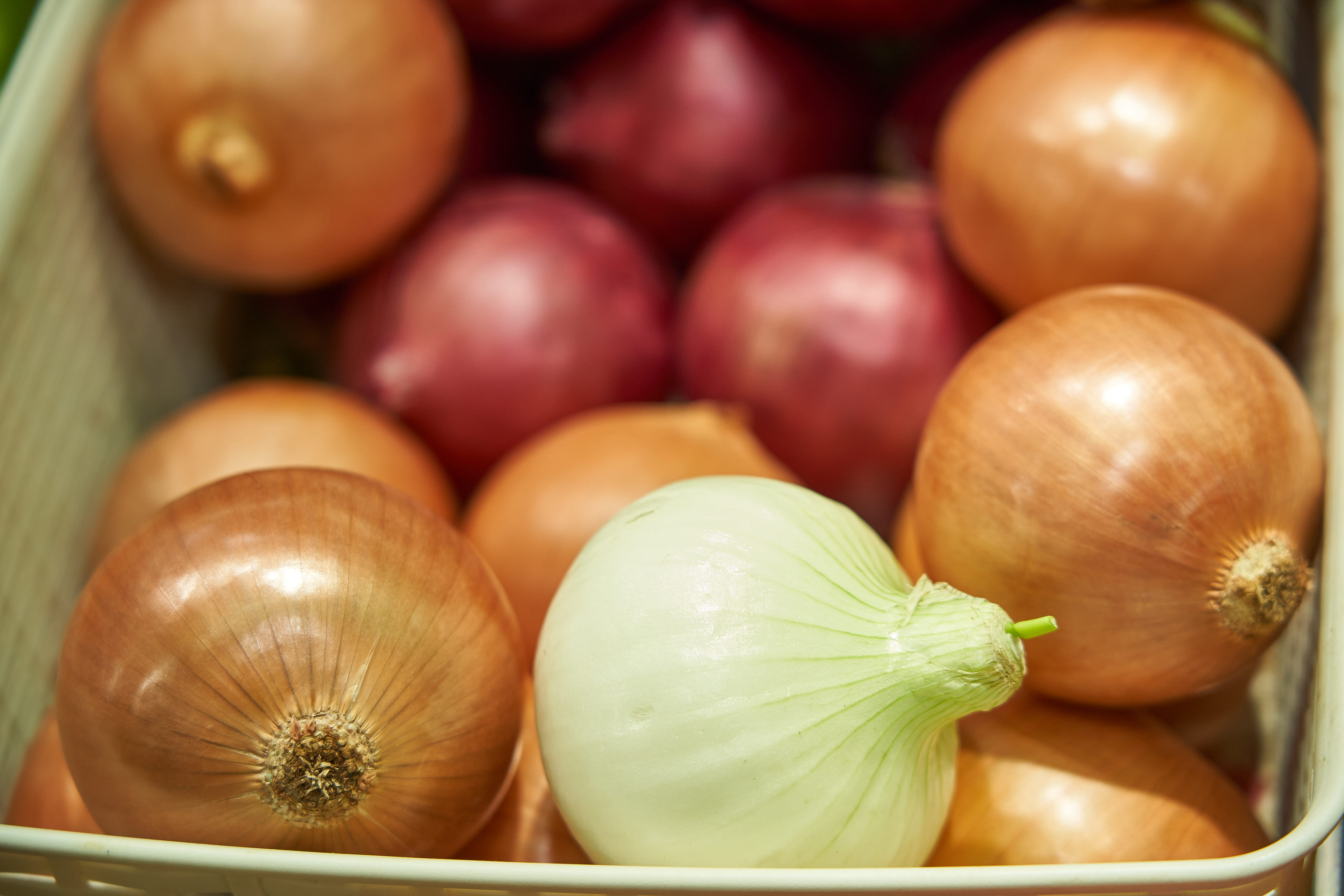
從日治時期的引進、種植失敗,到如今在屏東成功種植,並成為當地的重要農產,台灣洋蔥已逐漸走向國際市場,成為外銷的潛力商品。
◤文.圖/看見台灣基金會編輯群
日
治時期,洋蔥由日本人引進台灣,於台灣各地測試,但成效不佳。日治時期結束,農業試驗所持續引進各式品種再度試種,在台灣南部種植成功!
如今,屏東縣車城鄉是台灣洋蔥最大產地,每年3月是屏東洋蔥的盛產季節,從高雄往墾丁的屏鵝公路上兩旁一大袋、一大袋橘色網袋裡裝著滿滿金黃色的洋蔥攤販,是台灣人對於「春天到墾丁玩」鮮明的回憶。
屏東流行的諺語:「恆春有三寶:瓊麻、洋蔥、港口茶;恆春有三怪:落山風、吃檳榔、恆春民謠。」恆春氣候的「怪」,卻恰恰為洋蔥這個「寶」,提供了優異的生長條件。
▋鮮嫩、味甜,成美食家首選
洋蔥炒蛋、洋蔥湯、洋蔥炒飯、洋蔥炒牛肉……,許多台式料理都少不了洋蔥,可惜國產洋蔥不足,需靠美國、日本進口洋蔥來補足。
日本北海道洋蔥品質好、賣相佳,雖然價格較高,但外型好看、完整、大顆,有一定的客群。台灣洋蔥雖然沒有一等一的顏值,但皮薄、質地細緻、多汁、味甜。
許多美食家都知道:「如果有國產洋蔥,一定是首選,比進口的好吃很多。」
2024年,在農業部農糧署輔導下,屏東洋蔥終於成功外銷日本沖繩、韓國、馬來西亞等地,有朝一日將讓洋蔥成為賺取外匯的生力軍。
探索更多
山蘇─台灣蕨類王國中的熱門菜
在可食用的蕨類植物中,山蘇,在一般菜市場都買得到了,配上小魚乾一炒,很家常的一道菜;過溝菜蕨(俗稱「過貓」)多半只在山產店吃得到。
大蒜─不可一日沒有它
蒜,又稱大蒜。原生於中亞或西亞地區,4000多年的埃及文明即有人工栽種大蒜的記載。蒜自漢朝由張騫自西域傳入中國,約於18世紀時自中國傳至台灣,並於同一世紀間由歐洲傳至北美。
楊桃─做成蜜餞加冰,是古早味
楊桃原產於亞洲熱帶地區,別稱眾多,又名陽桃、五斂子等,因果實橫切面呈現星形,英語系國家談楊桃,比起正式的英文名Carambole,可愛的Starfruit(星星水果)反而廣為人知。