
'%20fill='%23a9976d'/%3e%3cpath%20id='Path_251'%20data-name='Path%20251'%20d='M8,35a1,1,0,0,1,1-1H23a1,1,0,0,1,0,2H9A1,1,0,0,1,8,35Z'%20transform='translate(-8%20-22)'%20fill='%23a9976d'/%3e%3cpath%20id='Path_252'%20data-name='Path%20252'%20d='M9,22a1,1,0,0,0,0,2h8a1,1,0,0,0,0-2Z'%20transform='translate(-8%20-16)'%20fill='%23a9976d'/%3e%3c/svg%3e)
'%20fill='%23a9976d'/%3e%3c/g%3e%3c/svg%3e)
牛肉麵──融合多方滋味,成就國民美食
地方探索
主題探索
南部
文化美食
分享
'%3e%3cg%20id='Ellipse_27'%20data-name='Ellipse%2027'%20transform='translate(813%20250)'%20fill='none'%20stroke='%23ccac89'%20stroke-width='1'%3e%3ccircle%20cx='16'%20cy='16'%20r='16'%20stroke='none'/%3e%3ccircle%20cx='16'%20cy='16'%20r='15.5'%20fill='none'/%3e%3c/g%3e%3cg%20id='facebook'%20transform='translate(824.105%20258.296)'%3e%3cpath%20id='Path_243'%20data-name='Path%20243'%20d='M8.894.111V2.556H7.441a1.361,1.361,0,0,0-1.074.333,1.534,1.534,0,0,0-.278,1v1.75H8.8L8.441,8.38H6.089v7.028H3.255V8.38H.894V5.639H3.255V3.62A3.582,3.582,0,0,1,4.218.949,3.5,3.5,0,0,1,6.783,0,15.317,15.317,0,0,1,8.894.111Z'%20transform='translate(0%200)'%20fill='%23ccac89'/%3e%3c/g%3e%3c/g%3e%3c/svg%3e)

'%3e%3cg%20id='Ellipse_29'%20data-name='Ellipse%2029'%20transform='translate(901%20250)'%20fill='none'%20stroke='%23ccac89'%20stroke-width='1'%3e%3ccircle%20cx='16'%20cy='16'%20r='16'%20stroke='none'/%3e%3ccircle%20cx='16'%20cy='16'%20r='15.5'%20fill='none'/%3e%3c/g%3e%3cg%20id='link-45deg'%20transform='translate(902.607%20253.105)'%3e%3cg%20id='Group_479'%20data-name='Group%20479'%20transform='translate(7.393%205.896)'%3e%3cpath%20id='Path_241'%20data-name='Path%20241'%20d='M10.246,17.821,8.507,19.56a3.8,3.8,0,0,0,5.378,5.378L16.2,22.62a3.8,3.8,0,0,0-1.05-6.12l-.743.743a1.27,1.27,0,0,0-.2.252,2.535,2.535,0,0,1,1.091,4.23L12.99,24.042A2.536,2.536,0,0,1,9.4,20.455l1.005-1a5.093,5.093,0,0,1-.162-1.631Z'%20transform='translate(-7.393%20-12.02)'%20fill='%23ccac89'/%3e%3cpath%20id='Path_242'%20data-name='Path%20242'%20d='M18.236,9.327a3.8,3.8,0,0,0,1.05,6.12l.982-.984a2.535,2.535,0,0,1-1.136-4.241L21.448,7.9a2.536,2.536,0,1,1,3.587,3.587l-1.005,1a5.1,5.1,0,0,1,.162,1.631l1.739-1.739A3.8,3.8,0,1,0,20.553,7.01Z'%20transform='translate(-13.011%20-5.896)'%20fill='%23ccac89'/%3e%3c/g%3e%3c/g%3e%3c/g%3e%3c/svg%3e)
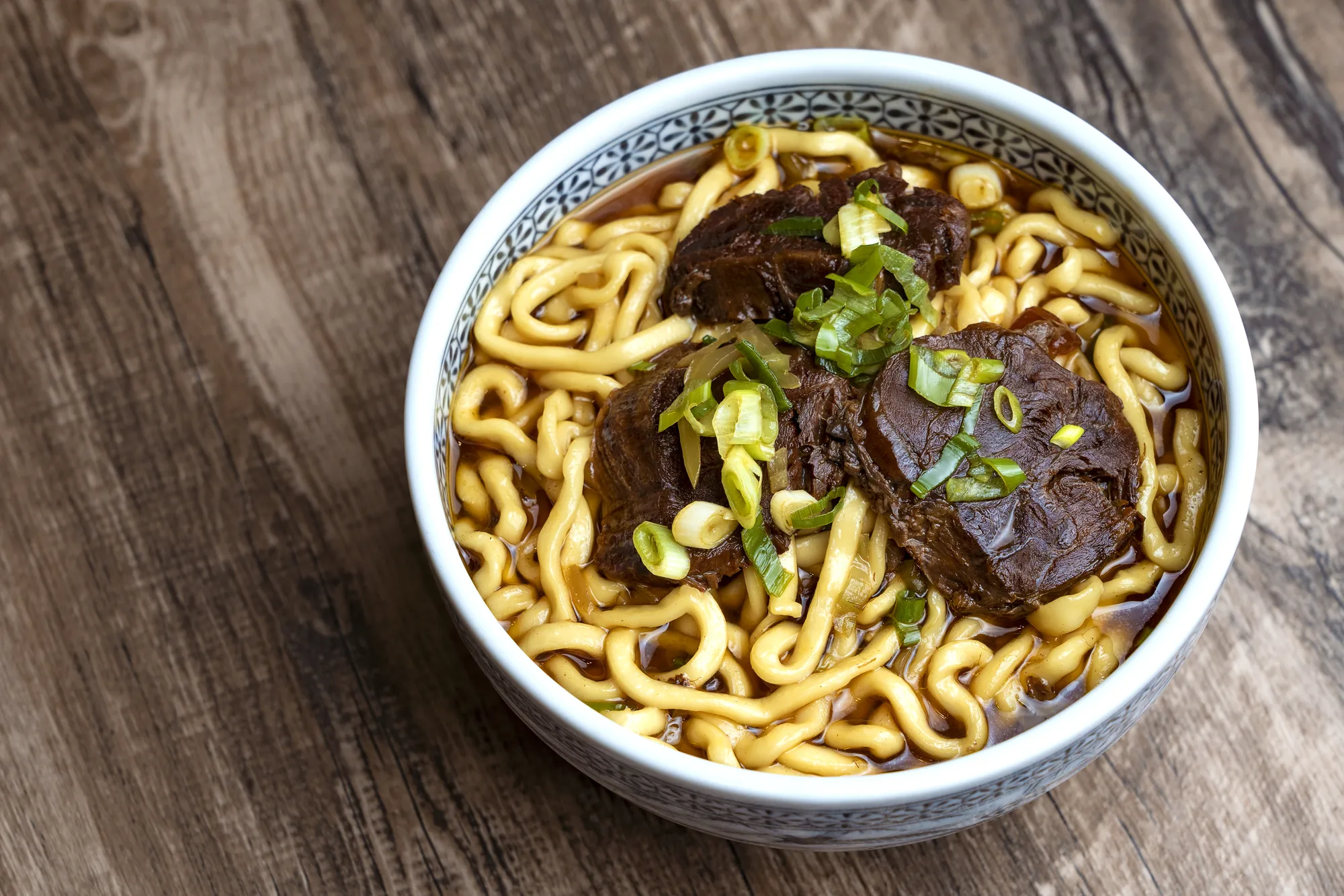
台灣超商的密度,全球第二,次於南韓;雖然缺乏正式統計,但台灣提供牛肉麵店家的密度,應該可以拿下全球第一的寶座。牛肉麵是數一數二的常民美食,大飯店、餐廳、專賣店家、路邊攤販加上超商,綿密的供應網絡正是為了滿足市場需求。
◤文.圖/看見台灣基金會編輯群
回
顧台灣早期農業社會,牛是工作夥伴,民間習俗上不吃牛肉,甚至有「食了牛犬,地獄難免」的說法。不過數十年間,隨著台灣進入工業、資訊社會,美國援助提供了牛肉及麵粉兩個關鍵食材,加上習慣食用牛肉的一、兩百萬戰後新移民來到台灣,局面完全翻轉。
▋四川郫縣豆瓣醬是關鍵元素
牛肉麵於台灣之起源雖無明確定論,但以逯耀東的說法最廣被接受,他曾任教於台大歷史系,認為牛肉麵源於高雄的岡山空軍眷村,由四川移民以記憶中的四川郫縣豆瓣醬製作,成就爾後「川味紅燒牛肉麵」的招牌。
這一味扎扎實實是台灣創造的,四川餐館只有紅燒牛肉湯,加入麵條和豆瓣醬不知是哪位台灣思鄉老兵(一般認為,省籍為四川的可能性最高)在某一個再普通不過日子的隨興之作:大陸北方嗜吃麵食、從美國進口的麵粉、牛肉罐頭及冷凍牛肉,加入辣豆瓣醬提味,加總一起後,美味香氣安慰了腸胃、也解了鄉愁。
台灣牛肉麵口味多元,川味、清燉、紅燒、番茄、麻辣最受歡迎。2005年起台北市舉行「國際牛肉麵節」,轟動一時,台北市成為台灣牛肉麵的「首都」,和大陸牛肉麵之都「蘭州」分庭抗禮。
探索更多
鹹水雞──配料百搭的熱門宵夜選擇
在台灣的夜市與街頭巷尾,「鹹水雞」幾乎是隨處可見的熟食攤位。這道以雞肉為主、搭配多樣配料與調味的料理,看似簡單,卻因風味清爽、變化多元,逐漸從地方小吃發展為全台普及的國民美食。(圖片來源:iStock)
鴨─升級版的品牌鴨問市
家禽中,鴨肉不及雞肉普及,在一般的大超市中很難買到。然而,特定食材卻非牠不可:冬天進補要吃薑母鴨;蛋黃酥、皮蛋要用鴨蛋;炒菜中的各種「金沙」系列也是非鴨不可。
來宜蘭迺菜市場──重拾風土與人情的味道
一度沒落的宜蘭南北館市場,成功轉型為國際知名的文化景點。背後推手方子維透過故事導覽、市場學校和永續農遊的創新行動,讓這座百年市場重現往日繁華。