
'%20fill='%23a9976d'/%3e%3cpath%20id='Path_251'%20data-name='Path%20251'%20d='M8,35a1,1,0,0,1,1-1H23a1,1,0,0,1,0,2H9A1,1,0,0,1,8,35Z'%20transform='translate(-8%20-22)'%20fill='%23a9976d'/%3e%3cpath%20id='Path_252'%20data-name='Path%20252'%20d='M9,22a1,1,0,0,0,0,2h8a1,1,0,0,0,0-2Z'%20transform='translate(-8%20-16)'%20fill='%23a9976d'/%3e%3c/svg%3e)
'%20fill='%23a9976d'/%3e%3c/g%3e%3c/svg%3e)
芭樂─國民水果,國宴、米其林都現蹤
地方探索
主題探索
南部
文化美食
分享
'%3e%3cg%20id='Ellipse_27'%20data-name='Ellipse%2027'%20transform='translate(813%20250)'%20fill='none'%20stroke='%23ccac89'%20stroke-width='1'%3e%3ccircle%20cx='16'%20cy='16'%20r='16'%20stroke='none'/%3e%3ccircle%20cx='16'%20cy='16'%20r='15.5'%20fill='none'/%3e%3c/g%3e%3cg%20id='facebook'%20transform='translate(824.105%20258.296)'%3e%3cpath%20id='Path_243'%20data-name='Path%20243'%20d='M8.894.111V2.556H7.441a1.361,1.361,0,0,0-1.074.333,1.534,1.534,0,0,0-.278,1v1.75H8.8L8.441,8.38H6.089v7.028H3.255V8.38H.894V5.639H3.255V3.62A3.582,3.582,0,0,1,4.218.949,3.5,3.5,0,0,1,6.783,0,15.317,15.317,0,0,1,8.894.111Z'%20transform='translate(0%200)'%20fill='%23ccac89'/%3e%3c/g%3e%3c/g%3e%3c/svg%3e)

'%3e%3cg%20id='Ellipse_29'%20data-name='Ellipse%2029'%20transform='translate(901%20250)'%20fill='none'%20stroke='%23ccac89'%20stroke-width='1'%3e%3ccircle%20cx='16'%20cy='16'%20r='16'%20stroke='none'/%3e%3ccircle%20cx='16'%20cy='16'%20r='15.5'%20fill='none'/%3e%3c/g%3e%3cg%20id='link-45deg'%20transform='translate(902.607%20253.105)'%3e%3cg%20id='Group_479'%20data-name='Group%20479'%20transform='translate(7.393%205.896)'%3e%3cpath%20id='Path_241'%20data-name='Path%20241'%20d='M10.246,17.821,8.507,19.56a3.8,3.8,0,0,0,5.378,5.378L16.2,22.62a3.8,3.8,0,0,0-1.05-6.12l-.743.743a1.27,1.27,0,0,0-.2.252,2.535,2.535,0,0,1,1.091,4.23L12.99,24.042A2.536,2.536,0,0,1,9.4,20.455l1.005-1a5.093,5.093,0,0,1-.162-1.631Z'%20transform='translate(-7.393%20-12.02)'%20fill='%23ccac89'/%3e%3cpath%20id='Path_242'%20data-name='Path%20242'%20d='M18.236,9.327a3.8,3.8,0,0,0,1.05,6.12l.982-.984a2.535,2.535,0,0,1-1.136-4.241L21.448,7.9a2.536,2.536,0,1,1,3.587,3.587l-1.005,1a5.1,5.1,0,0,1,.162,1.631l1.739-1.739A3.8,3.8,0,1,0,20.553,7.01Z'%20transform='translate(-13.011%20-5.896)'%20fill='%23ccac89'/%3e%3c/g%3e%3c/g%3e%3c/g%3e%3c/svg%3e)
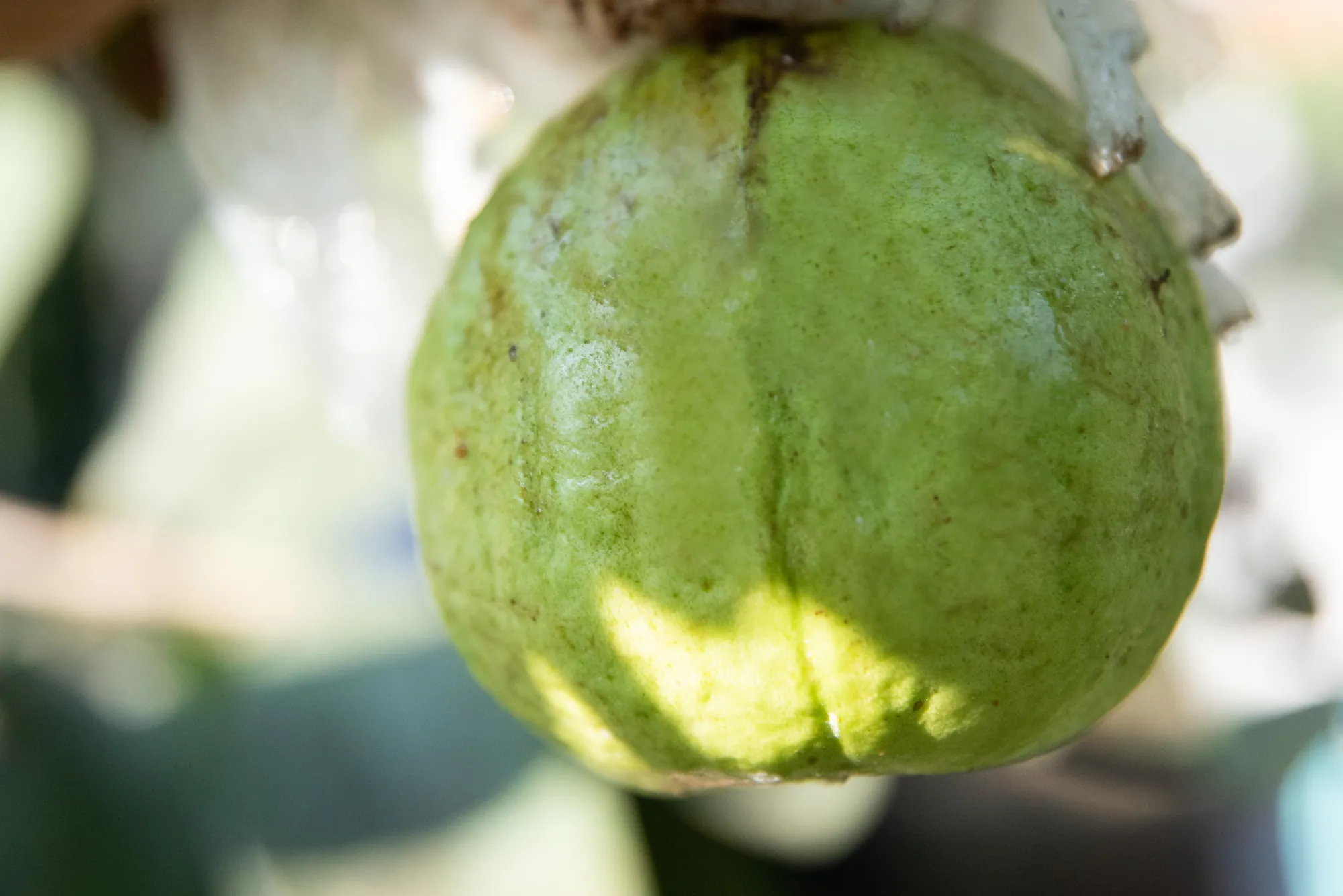
芭樂,台灣國民水果代表之一,原產於熱帶美洲,地理大發現時期引入台灣。台灣四季皆產芭樂,夜市、街邊到處有賣,主要產區為高雄大社、燕巢及彰化社頭。
◤文.圖/看見台灣基金會編輯群
早
在17世紀末,郁永河《裨海紀遊》曾記載台灣早期野生芭樂品種「獨番石榴不種自生,臭不可耐,而味又甚惡」,這是因為芭樂早期品種較小、易軟爛,成熟時氣味濃郁,喜惡兩極。
為了滿足大眾對口感和甜度的要求,1990年代開始,果農育成多樣品種:珍珠芭樂成為市場主流,市占率8、9成,還有牛奶發酵製成液肥灌溉的牛奶芭樂,以及改良珍珠芭樂使果型更大、肉厚、口感清脆的帝王芭樂。
市場需求大,農民爭相育種,芭樂品種百花齊放,有肉色呈現珊瑚紅色澤的紅心芭樂、幾乎沒有籽、口感清脆、肉質細緻的「紅寶石芭樂」,還有口感像水梨的「水蜜芭樂」。
▋芭樂開始插旗海外
2011年版的《米其林台灣綠色指南》推薦芭樂為台灣特色水果之一。2016年蔡英文總統就職國宴的「花園寶島繽紛拼盤」裡也有芭樂。2023年,西班牙名廚David Yárnoz為他在台北的米其林餐廳設計菜單時,也端出以芭樂為主角的甜點。
2019年,台灣成為繼墨西哥之後第二個美國的芭樂進口國。2022年底,第一個載滿芭樂的40呎冷鏈貨櫃運至美國西岸,越洋打響台灣芭樂名號。
亞洲市場則以新加坡、馬來西亞為大宗。高雄市農業局統計,2023年1至5月高雄芭樂有46.6公噸外銷到新加坡、馬來西亞。從先天條件不良,到能風光輸出,芭樂是又一個台灣價值的展現。
探索更多
柑橘─全世界、台灣都是產量最大水果
柑橘,泛指各種芸香科柑橘屬水果,包括橘、柚、檸檬、葡萄柚等,彼此雜交出的品種約200種,台灣民眾俗稱的柑橘,其實只涉及「橘」這一類。
硫磺仙境,啜飲酒家文化─值得專程造訪的米其林三星景點北投
曾獲普立茲突發新聞獎的《紐約時報》記者Andrew Jacobs,曾經非常寫實的以「臭雞蛋」三個字形容北投空氣中瀰漫的硫磺味。但,這可不是貶抑,而是提示——當你聞到這股氣味時,歡迎來到法國《米其林綠色指南》評選為「值得專程造訪」的三星景點──北投。(圖片來源:臺北市政府觀光傳播局)
番茄─2014年起外銷多國市場
清康熙年間的《臺灣府志》有一段對於番茄的描述:「甘仔蜜,形似柿,細如橘,初生青,熟紅,味濃,肉多細子,亦不堪充果品,可或糖煮成茶品。」「甘仔蜜」即為番茄的台語,描述當時的番茄並不好吃,還得加糖熬煮。