


◤Text and Images / iSee Taiwan Foundation Editorial Team
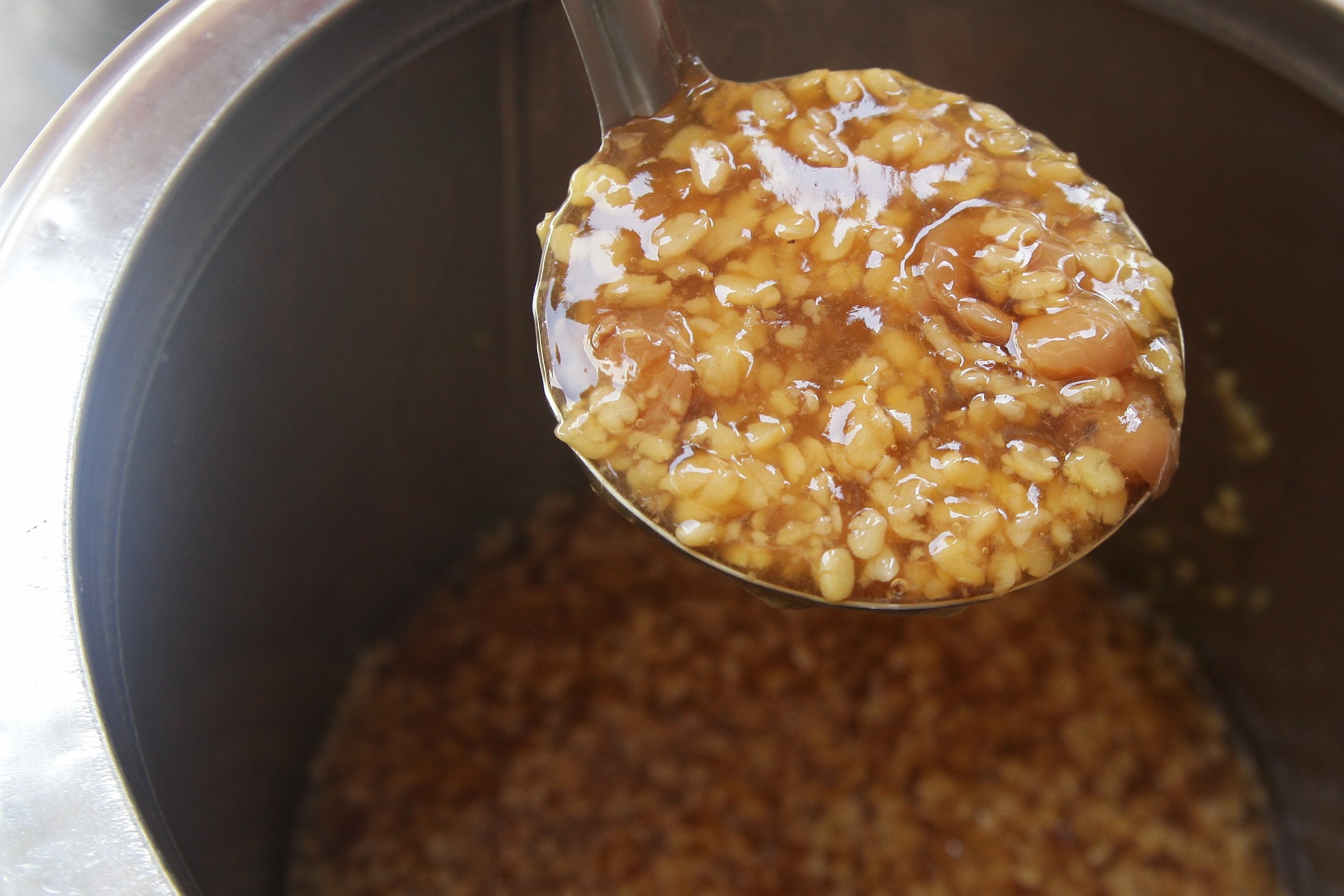
The main ingredient in mung bean kernel soup (li̍k-tāu suàn, in Taiwanese, literally "mung bean garlic") is hulled mung beans. After washing and soaking, the beans are boiled or steamed until they soften and split apart-their appearance resembling minced or crushed garlic cloves, which is how this dessert got its name. Found throughout the Hengchun Peninsula, it is most closely associated with Checheng. Local records suggest that in earlier times, mung bean kernel soup was served as the final sweet course at traditional southern Taiwanese banquets and Pān-Toh outdoor feasts; over time, it became one of Checheng's most distinctive local snacks.
In the agricultural era, farmers who needed to rebuild their strength after long days in the field would combine hulled mung beans with sugar water to make a sweet soup-a simple, sustaining between-meal snack. Its smooth, sweet texture not only provided quick energy but also became a shared childhood memory for many. Li̍k-tāu suàn can be enjoyed warm, with soft, pillowy mung beans served in their sugar broth; a chilled version is equally popular today, with shaved ice mounded over the beans and finished with starch noodles, tapioca pearls, and other toppings. It is now a signature summer dessert in Pingtung's Checheng.
From a Temple Community to a Local Culinary Attraction
Checheng's Fu an Palace draws a steady stream of worshippers and has long served as the community's spiritual and social heart. The lanes surrounding the temple are lined with mung bean kernel soup vendors, and many visitors make a point of stopping for a bowl after paying their respects-a custom that has gradually made this traditional dessert one of Checheng's defining culinary symbols.
Multiple mung bean kernel soup shops still operate along Checheng's streets today, each developing its own identity through variations in syrup, thickness, and toppings. Mama Lin's is known for its malt-caramel syrup, which gives the dessert a distinctive caramelized aroma; Huang Family's is celebrated for its time-honored recipe-soft mung beans paired with starch noodles-beloved by locals and visitors alike. Beyond Checheng, li̍k-tāu suàn has been spreading across Taiwan; 人算不如綠豆蒜 (a punning riff on the idiom "man proposes, God disposes") on Jinhua Street in Taipei is a well-known example, demonstrating that this Hengchun Peninsula specialty has grown from a regional staple into a widely beloved treat.
In recent years, some vendors have begun pairing mung bean kernel with douhua (tofu pudding) and other dessert formats, expanding the ways it can be enjoyed. From farmhand snack to tourist attraction, this unassuming bowl preserves the culinary memory of the Hengchun Peninsula-and through a single sweet soup, offers visitors a taste of Checheng's distinctive character and culture.