
'%20fill='%23a9976d'/%3e%3cpath%20id='Path_251'%20data-name='Path%20251'%20d='M8,35a1,1,0,0,1,1-1H23a1,1,0,0,1,0,2H9A1,1,0,0,1,8,35Z'%20transform='translate(-8%20-22)'%20fill='%23a9976d'/%3e%3cpath%20id='Path_252'%20data-name='Path%20252'%20d='M9,22a1,1,0,0,0,0,2h8a1,1,0,0,0,0-2Z'%20transform='translate(-8%20-16)'%20fill='%23a9976d'/%3e%3c/svg%3e)
'%20fill='%23a9976d'/%3e%3c/g%3e%3c/svg%3e)
'%3e%3cg%20id='Ellipse_27'%20data-name='Ellipse%2027'%20transform='translate(813%20250)'%20fill='none'%20stroke='%23ccac89'%20stroke-width='1'%3e%3ccircle%20cx='16'%20cy='16'%20r='16'%20stroke='none'/%3e%3ccircle%20cx='16'%20cy='16'%20r='15.5'%20fill='none'/%3e%3c/g%3e%3cg%20id='facebook'%20transform='translate(824.105%20258.296)'%3e%3cpath%20id='Path_243'%20data-name='Path%20243'%20d='M8.894.111V2.556H7.441a1.361,1.361,0,0,0-1.074.333,1.534,1.534,0,0,0-.278,1v1.75H8.8L8.441,8.38H6.089v7.028H3.255V8.38H.894V5.639H3.255V3.62A3.582,3.582,0,0,1,4.218.949,3.5,3.5,0,0,1,6.783,0,15.317,15.317,0,0,1,8.894.111Z'%20transform='translate(0%200)'%20fill='%23ccac89'/%3e%3c/g%3e%3c/g%3e%3c/svg%3e)

'%3e%3cg%20id='Ellipse_29'%20data-name='Ellipse%2029'%20transform='translate(901%20250)'%20fill='none'%20stroke='%23ccac89'%20stroke-width='1'%3e%3ccircle%20cx='16'%20cy='16'%20r='16'%20stroke='none'/%3e%3ccircle%20cx='16'%20cy='16'%20r='15.5'%20fill='none'/%3e%3c/g%3e%3cg%20id='link-45deg'%20transform='translate(902.607%20253.105)'%3e%3cg%20id='Group_479'%20data-name='Group%20479'%20transform='translate(7.393%205.896)'%3e%3cpath%20id='Path_241'%20data-name='Path%20241'%20d='M10.246,17.821,8.507,19.56a3.8,3.8,0,0,0,5.378,5.378L16.2,22.62a3.8,3.8,0,0,0-1.05-6.12l-.743.743a1.27,1.27,0,0,0-.2.252,2.535,2.535,0,0,1,1.091,4.23L12.99,24.042A2.536,2.536,0,0,1,9.4,20.455l1.005-1a5.093,5.093,0,0,1-.162-1.631Z'%20transform='translate(-7.393%20-12.02)'%20fill='%23ccac89'/%3e%3cpath%20id='Path_242'%20data-name='Path%20242'%20d='M18.236,9.327a3.8,3.8,0,0,0,1.05,6.12l.982-.984a2.535,2.535,0,0,1-1.136-4.241L21.448,7.9a2.536,2.536,0,1,1,3.587,3.587l-1.005,1a5.1,5.1,0,0,1,.162,1.631l1.739-1.739A3.8,3.8,0,1,0,20.553,7.01Z'%20transform='translate(-13.011%20-5.896)'%20fill='%23ccac89'/%3e%3c/g%3e%3c/g%3e%3c/g%3e%3c/svg%3e)
◤文.圖 / 看見台灣基金會編輯群
在陽光與山風交織的高雄杉林區日光小林,大武壠族(Taivoan,又稱大滿族,是台灣原住民族的一支,原鄉位於台南玉井盆地)重新搭建家屋,也重建了文化的根基。自2009年莫拉克風災重創高雄甲仙小林村以來,族人面臨的不僅是家園的重建,更是文化脈絡斷裂的嚴峻考驗。如今,族人在新聚落成立了「大武壠文化事務所」,以土地為師,從飲食、農作到歌舞,讓族群的文化靈魂在日光小林重新生根發芽。
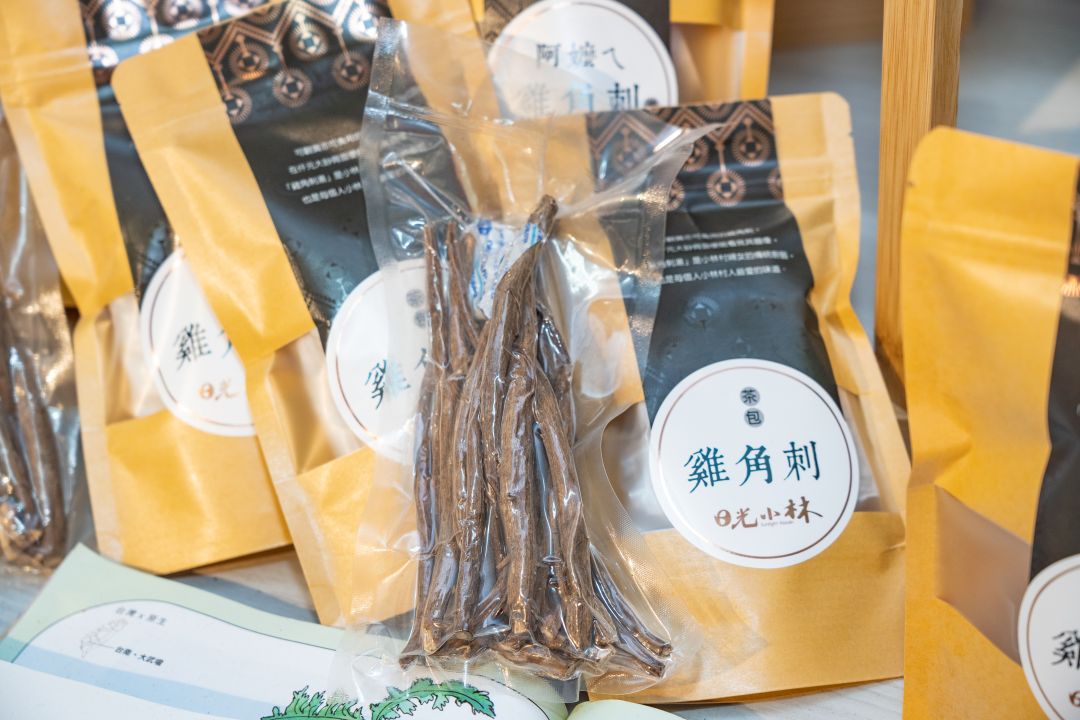
走進日光小林,最先感受到的是那股與土地共生的生命力。園中錯落生長著薑黃、雞角刺、梅子、昭和菜等植物,它們既是食材,更是活生生的文化記憶。這些作物過去在原鄉山林間自生自長,如今已轉化為族人重建家園、認同與希望的重要象徵。日光小林社區發展協會總幹事、大滿舞團團長王民亮表示:「我們將家鄉的味道,重新種回土地,也種進心裡。」這些在地作物被巧妙地融入部落餐飲與伴手禮中,無論是清爽的梅子氣泡飲或創意的薑黃臭豆腐,無一不是族人用雙手將文化融入當代生活的具體實踐。
大滿酒與柴燒年糕:傳統的味道與祝福
大武壠族人延續祖先的釀造智慧,用傳統植物製成酒麴,以糯米釀出象徵生命循環的「大滿酒」,在祭典中敬靈、節慶時共飲。製作柴燒年糕時,以荔枝木生火、慢工細蒸,炊製過程中長輩不斷誦念吉祥話,為家族祈求昌隆。這些飲食儀式,不僅是味覺的傳承,更深刻蘊含著族人對土地與祖靈的敬畏與感恩。
如今,族人以農作滋養身體,更以舞維繫靈魂。王民亮強調,由老中青三代組成的大滿舞團,不僅曾代表社區登上國際舞台,赴日本、馬來西亞、韓國等地演出,更是凝聚族群認同的重要象徵。文化事務所亦積極推動族語復振課程與傳統手作體驗,讓文化底蘊自然而然地融入日常脈動。大武壠族正以最貼近生活的方式,實踐文化的永續傳承,讓族群的故事在日光小林持續閃耀。