

◤Text and Images / iSee Taiwan Foundation Editorial Team
Taitung County lies in southeastern Taiwan and has a population of about 210,000. It borders Hualien County to the north, Kaohsiung City and Pingtung County to the west, and the Pacific Ocean to the east, and it also administers Green Island and Lanyu. Covering roughly 3,515 square kilometers, it is the third-largest county in Taiwan, after Hualien and Nantou. Lying south of the Tropic of Cancer, Taitung is warm overall, and its coastline and outlying islands carry a distinctly southern air.
Before the 19th century, walled off by mountains and hampered by poor transport, eastern Taiwan was long seen by Han settlers in the west as all but unreachable. After the Mudan Incident of 1874, the Qing court began to strengthen its governance and development of the east; during the Guangxu reign, administrative units such as Beinan Subprefecture gradually took shape, bringing the Taitung area into a more direct system of state rule. Under Japanese rule, Taitung's administrative divisions were reorganized several times, steadily forming the framework of modern local governance.
Taitung is ethnically diverse. Alongside Han residents, its Indigenous peoples include the Amis, Pinuyumayan, Bunun, Paiwan, Rukai, and Kavalan, as well as the Tao of Lanyu. The Baosang area of Taitung City was one of the important sites of early settlement and street life, and it still preserves memories of local life and religious activity. The “Bombing of Master Handan,” a ritual in which the deity is carried through a barrage of firecrackers, during the Lantern Festival each year, together with the birthday of Mazu at Taitung Tianhou Temple and the processions of the deities, are among Taitung City's major folk events.
From Valley Produce to Mountain-and-Sea Pursuits
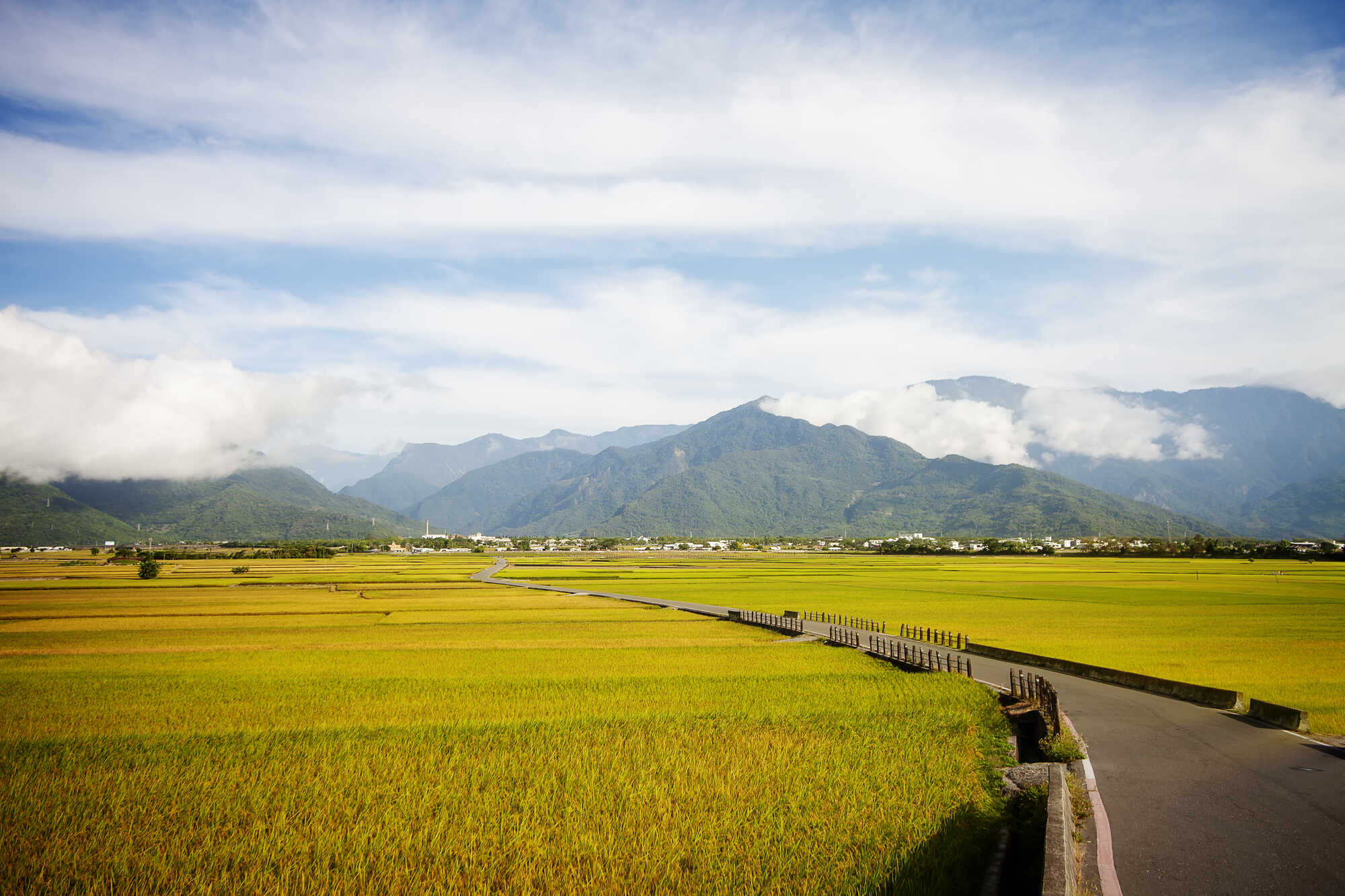
Taitung is rich in produce. The valley is famed for its rice—Chishang rice and Guanshan rice have built strong reputations over the years—while the daylilies and roselle around Taimali Township and Jinfeng Township show the distinctive character of hill-slope farming. The Taitung sugar apple is another signature crop, its flesh fine, fragrant, and sweet, and it is often regarded as Taitung's most recognizable fruit. Places such as Luye Township and Guanshan Township have also developed tea, red oolong, and processed farm goods, so Taitung is not just a scenic destination but also an important source of branded farm produce.
The East Coast's fishing harbors teem with catch thanks to the passing Kuroshio Current, and sailfish, mahi-mahi (Coryphaena hippurus), and bonito around Chenggong Township are local specialties. Mahi-mahi is made into fish steaks, fish balls, and other dishes; sailfish appears in fish floss, fish balls, and seafood cooking; and bonito ties together Chenggong's fish-processing industry and the memory of the sea's flavors. In food culture, Taitung's meeting of ethnic groups and newcomers has produced a varied food scene in which Indigenous cooking, military dependents' village flavors, Hakka fare, and cuisines from across Taiwan sit side by side.
In recent years, outdoor pursuits in Taitung—paragliding, diving, surfing, cycling, and mountain-and-sea hiking—have drawn travelers and nature lovers from home and abroad. Taitung also hosts several international events each year: the Taiwan International Balloon Festival, held since 2011 and staged mostly in summer at Luye Highland, and the Taiwan Open of Surfing, held since 2011 at Jinzun Harbor, which draws top competitors from around the world.