


◤Text and Images / iSee Taiwan Foundation Editorial Team
Daxi sits along the Dahan River, formerly known as Takekan Creek, and once served as the uppermost port of the Tamsui River system. During the Qing Dynasty, with Tamsui—historically known as Huwei—serving as the treaty port, lumber, camphor, tea, and agricultural products from the mountains passed through Daxi before being shipped onward to Bangka and Dadaocheng. This made Daxi one of Taiwan's most important inland ports. When Japan implemented urban planning during the colonial era, Daxi's streets and buildings came to blend Baroque façades with Southern Fujian decorative elements, shaping the distinctive historical character of the old street today.
Commerce brought prosperity and population growth, creating demand for convenient local foods. Dried bean curd, rich in protein and easy to preserve, became an essential product. When river commerce declined and residents moved elsewhere, its portability and long shelf life transformed it into a taste of home. Today, walking through Daxi Old Street, visitors can still catch the aroma of dried bean curd drifting through the alleys—a defining marker of local memory.
Time, Place, and Craftsmanship
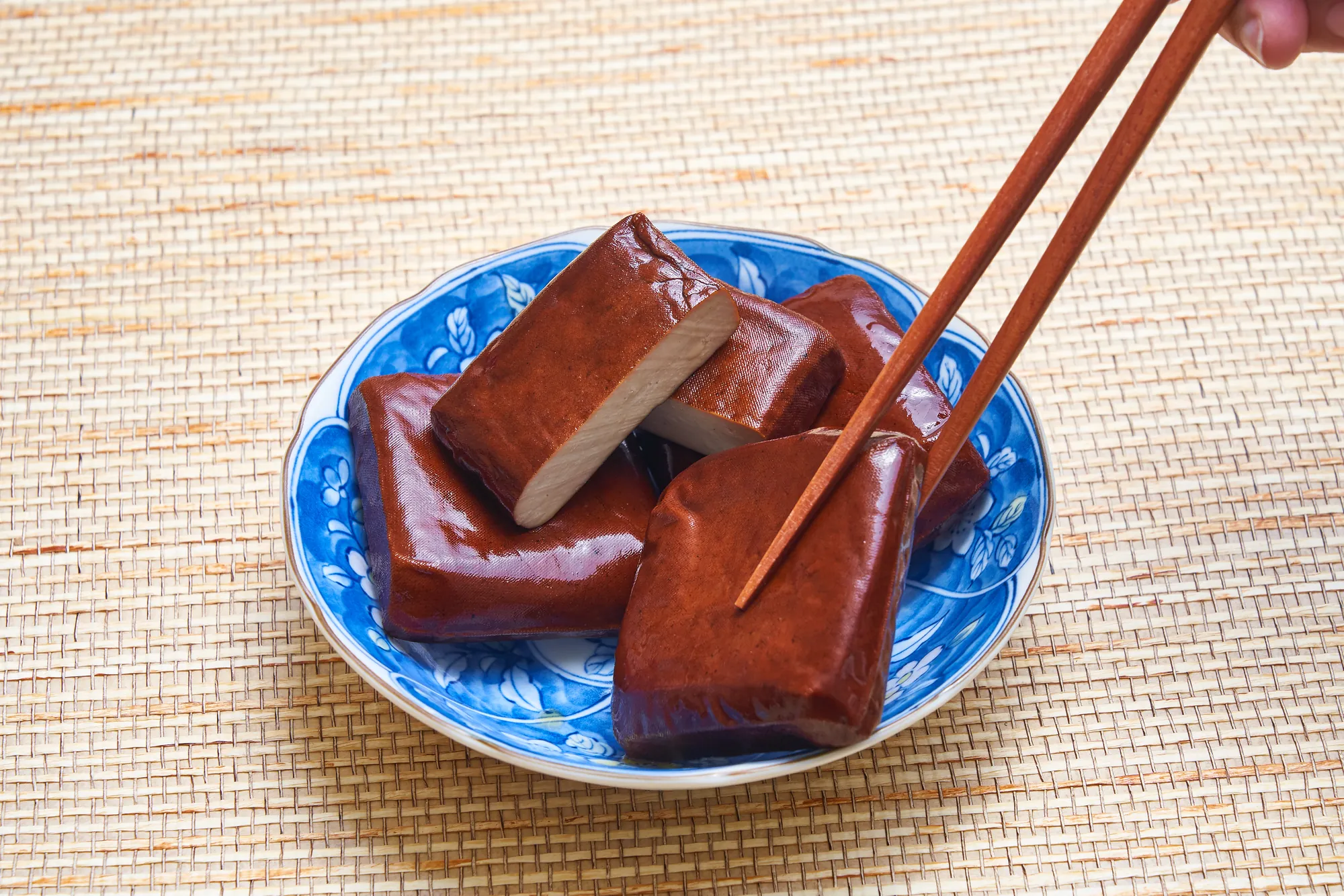
Daxi's black bean curd has several origin stories. Some say the techniques arrived from Zhangzhou, Fujian; others suggest the food developed locally as a method of preservation. Both accounts point to the same essential process: repeated braising and caramelization, which give the bean curd its dark color and complex, savory depth.
Local water quality further shapes the product. Daxi's soft water is considered well suited to tofu-making. From soy milk and silken tofu to pressed dried bean curd, each stage can produce a finer texture. Through repeated rounds of braising, seasoning penetrates layer by layer, creating Daxi's signature roasted aroma and satisfyingly chewy bite.
Different producers have developed their own distinctive styles. Lau-a-peh, a family-run business with more than fifty years of history, offers freshly braised assortments that regularly draw long queues. Huang Da Mu balances freshly prepared and packaged products; its black bean curd is known for a springy texture and deep aroma. Da Fang has developed into a branded operation, offering multiple flavors that carry traditional craftsmanship into modern retail.
The port's former bustle has long faded, and the old street has evolved into a tourism destination. Yet dried bean curd has transcended its humble role as everyday fare to become a cultural emblem. Each round of braising mirrors the passage of time itself: layer by layer, more than sauce seeps in. Local memory and the rhythms of community life accumulate within the bean curd's texture. This is the taste landscape unique to Daxi.