


◤Text and Images / iSee Taiwan Foundation Editorial Team
Lalashan refers broadly to the Shang Baling area of Taoyuan's Fuxing District, carved on three sides by the Dahan River and its tributaries into sweeping terrain. "Lala" comes from the Atayal word R'ra, meaning to stand on tiptoe and gaze into the distance. At an elevation of about 1,500 meters, the high mountains bring abundant daytime sun, afternoon mists that rise up the slopes, and sharp drops in temperature at night; the wide day-to-night temperature swing lets the peaches build up sugar slowly, while the stony, well-drained slopes help grow high-quality fruit.
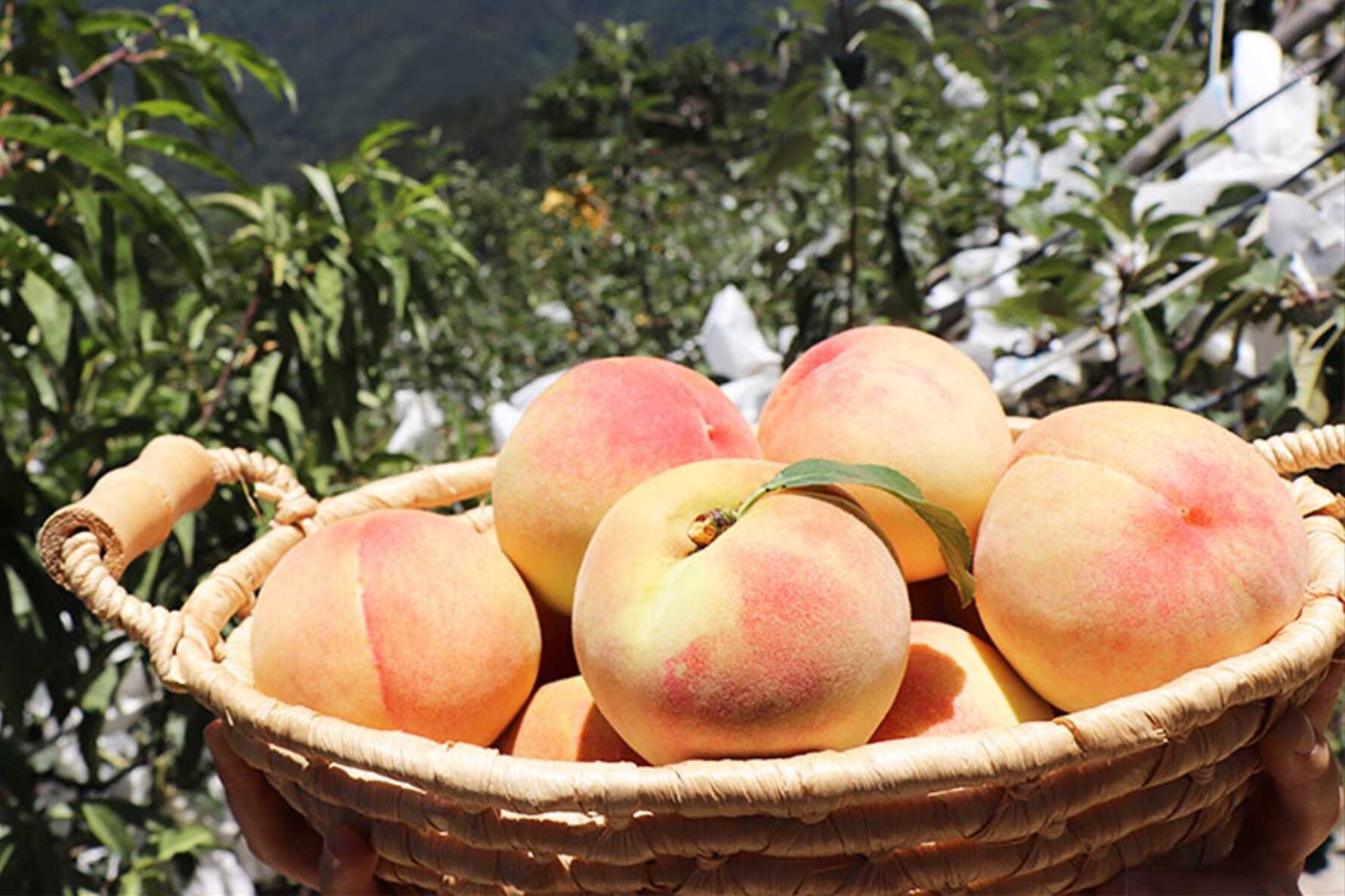
As a result, Lalashan peaches are round and full, their skin flushed a soft pink; part one gently and the juice runs down your fingers, the flesh soft and delicate on the tongue, its sweetness carrying a light, refined tartness and layers of aroma. Although Taiwan still relies on imported peaches for a fair share of the market, when it comes to aroma and fine texture, the fresh high-mountain fruit of Lalashan is hard to replace. Lalashan peaches are mostly in season from early June to late July, divided by ripening time into early, mid, and late varieties; the true local fresh-fruit season is short; miss it, and you wait another year.
Picked at Dawn, Sent Down the Mountain the Same Day
When the June harvest comes, Lalashan's growers often head up the mountain with their baskets before the morning mist has lifted. To keep the sun from harming the quality, most picking is done in the early morning; the fruit is then carefully graded, packed, and rushed down the mountain the same day. From bagging and pest control to fruit-thinning and picking, every peach depends on meticulous handwork, which is what makes it so precious.
Freshly picked fruit tastes truest after chilling, and it is also made into jam, fruit ice drink, fruit vinegar, and desserts-flavors no visitor to Lalashan should miss. In season, the orchards along the mountain open one after another for picking, and visitors wander the peach groves plucking the soft pink fruit from the branches themselves, the liveliest scene of Lalashan's summer.
In recent years, growers have also put more weight on eco-friendly farming and forest conservation, protecting the fragile high-mountain ecology through limited harvests, reduced pesticide use, and slope maintenance. The value of the Lalashan peach lies not only in its sweetness and aroma but in its being a seasonal gift brewed together by land, climate, and time.