
'%20fill='%23a9976d'/%3e%3cpath%20id='Path_251'%20data-name='Path%20251'%20d='M8,35a1,1,0,0,1,1-1H23a1,1,0,0,1,0,2H9A1,1,0,0,1,8,35Z'%20transform='translate(-8%20-22)'%20fill='%23a9976d'/%3e%3cpath%20id='Path_252'%20data-name='Path%20252'%20d='M9,22a1,1,0,0,0,0,2h8a1,1,0,0,0,0-2Z'%20transform='translate(-8%20-16)'%20fill='%23a9976d'/%3e%3c/svg%3e)
'%20fill='%23a9976d'/%3e%3c/g%3e%3c/svg%3e)
雞─本土/進口白肉雞各占一半
地方探索
主題探索
南部
文化美食
分享
'%3e%3cg%20id='Ellipse_27'%20data-name='Ellipse%2027'%20transform='translate(813%20250)'%20fill='none'%20stroke='%23ccac89'%20stroke-width='1'%3e%3ccircle%20cx='16'%20cy='16'%20r='16'%20stroke='none'/%3e%3ccircle%20cx='16'%20cy='16'%20r='15.5'%20fill='none'/%3e%3c/g%3e%3cg%20id='facebook'%20transform='translate(824.105%20258.296)'%3e%3cpath%20id='Path_243'%20data-name='Path%20243'%20d='M8.894.111V2.556H7.441a1.361,1.361,0,0,0-1.074.333,1.534,1.534,0,0,0-.278,1v1.75H8.8L8.441,8.38H6.089v7.028H3.255V8.38H.894V5.639H3.255V3.62A3.582,3.582,0,0,1,4.218.949,3.5,3.5,0,0,1,6.783,0,15.317,15.317,0,0,1,8.894.111Z'%20transform='translate(0%200)'%20fill='%23ccac89'/%3e%3c/g%3e%3c/g%3e%3c/svg%3e)

'%3e%3cg%20id='Ellipse_29'%20data-name='Ellipse%2029'%20transform='translate(901%20250)'%20fill='none'%20stroke='%23ccac89'%20stroke-width='1'%3e%3ccircle%20cx='16'%20cy='16'%20r='16'%20stroke='none'/%3e%3ccircle%20cx='16'%20cy='16'%20r='15.5'%20fill='none'/%3e%3c/g%3e%3cg%20id='link-45deg'%20transform='translate(902.607%20253.105)'%3e%3cg%20id='Group_479'%20data-name='Group%20479'%20transform='translate(7.393%205.896)'%3e%3cpath%20id='Path_241'%20data-name='Path%20241'%20d='M10.246,17.821,8.507,19.56a3.8,3.8,0,0,0,5.378,5.378L16.2,22.62a3.8,3.8,0,0,0-1.05-6.12l-.743.743a1.27,1.27,0,0,0-.2.252,2.535,2.535,0,0,1,1.091,4.23L12.99,24.042A2.536,2.536,0,0,1,9.4,20.455l1.005-1a5.093,5.093,0,0,1-.162-1.631Z'%20transform='translate(-7.393%20-12.02)'%20fill='%23ccac89'/%3e%3cpath%20id='Path_242'%20data-name='Path%20242'%20d='M18.236,9.327a3.8,3.8,0,0,0,1.05,6.12l.982-.984a2.535,2.535,0,0,1-1.136-4.241L21.448,7.9a2.536,2.536,0,1,1,3.587,3.587l-1.005,1a5.1,5.1,0,0,1,.162,1.631l1.739-1.739A3.8,3.8,0,1,0,20.553,7.01Z'%20transform='translate(-13.011%20-5.896)'%20fill='%23ccac89'/%3e%3c/g%3e%3c/g%3e%3c/g%3e%3c/svg%3e)
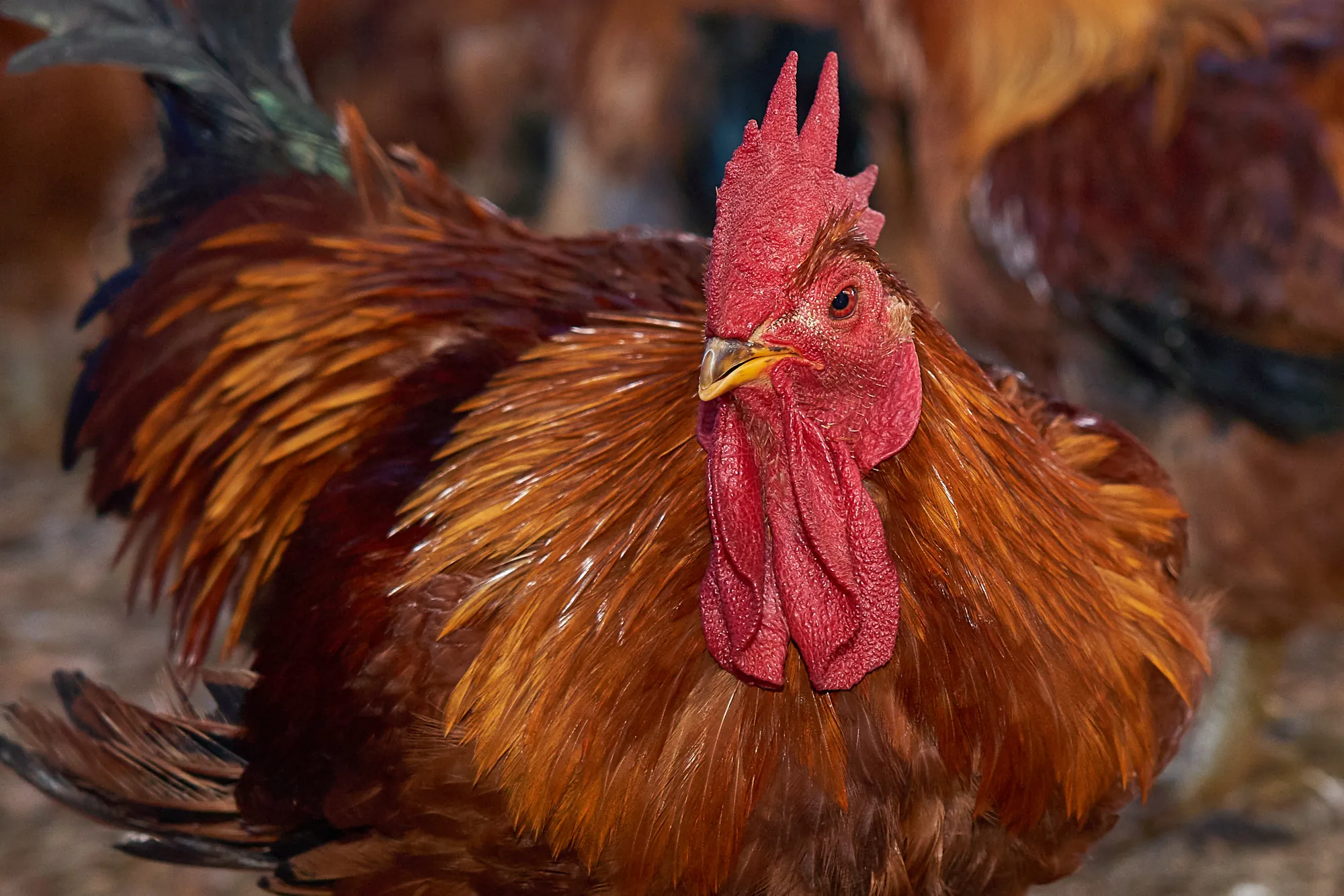
根據德國古生物學家澤納(F.E.Zeuner)的研究,考古學上最早被人類飼養的家雞化石,出土於印度,約4500年前,同步出土的還有鬥雞的陶俑,表示除了食用之外,人類可能已發展出娛樂甚至賭博的活動。
◤文.圖/看見台灣基金會編輯群
雞
,在台灣沒有發展成娛樂活動,單純是食材,台灣人口約2300萬,雞飼養數量卻高達4500 萬隻(2022年底),超越世界各國人、雞比;而且一年約食用超過6億隻白肉雞,比起豬肉愈來愈受到歡迎。
不過,從2019年起,進口白肉雞的供應量正式超過本土供應量,表示民眾買的雞肉,有一半的機率是進口的。
在常民文化中,雞是農村早期最常飼養的家禽之一,跟雞有關的四字成語就有數十個,例如雞飛狗跳、雞犬升天、殺雞取卵等,比起其他的家禽、家畜都多,表示雞在常民生活中的重要性。
雞肉相較其他肉類,其脂肪較少、瘦肉較多,是高質量蛋白質來源,雞是台灣重要的畜牧產業。在台灣,養雞產業可分為「蛋雞產業」與「肉雞產業」,可再進一步區分為白殼蛋雞與褐殼蛋雞;肉雞產業則可分為白肉雞與有色肉雞。蛋雞、肉雞產地有別,但主要都在南部。
▋白肉雞都是國外品種
白肉雞主要由國外育種公司所培育引入,羽色全白;土雞則為國內種雞場自行交配育成的雞種,因皆具非白羽因此統稱「有色雞」以別於「白肉雞」。
土雞名稱由來也是因為白肉雞為自國外所引進,故將其稱「土」雞,取其本土之意以別於「洋」雞。
目前除了進口的白肉雞之外,台灣的商用土雞養殖以紅羽土雞、黑羽土雞為最大宗。此外,市場上常見者尚有台灣第一隻由民間純品種土雞育成之「桂丁雞」;以及自中國引進後自行育種,烏皮、烏骨、烏肉的「烏骨雞」;以及桃竹地區客家特有,皮厚油花足的仿土雞「竹地雞」等,展現台灣雞的品種豐富多元。
探索更多
地瓜葉──從豬飼料晉升餐桌上的健康美食
從過去多用來餵養豬隻的枝葉,到現今備受青睞的健康食材,地瓜葉的角色轉變,反映了飲食觀念與農業利用方式的改變。(圖片來源:iStock)
埔里香菇──從「香菇之都」到「智慧香菇」
埔里香菇的故事,不僅是一場農業技術的革新,更是一段傳統農產業透過創新,在挑戰中尋得新生的傳奇篇章,讓這份菇香得以在土地上年年飄傳。
長濱手炒海鹽──即將失傳的阿美族古老技藝
在台東長濱,一位被稱為「海鹽爺爺」的阿美族長者,獨自守護一項瀕臨失傳的古老技藝——手炒海鹽。他炒的不只是鹽,更是原住民與海洋相連的文化與情感。