
'%20fill='%23a9976d'/%3e%3cpath%20id='Path_251'%20data-name='Path%20251'%20d='M8,35a1,1,0,0,1,1-1H23a1,1,0,0,1,0,2H9A1,1,0,0,1,8,35Z'%20transform='translate(-8%20-22)'%20fill='%23a9976d'/%3e%3cpath%20id='Path_252'%20data-name='Path%20252'%20d='M9,22a1,1,0,0,0,0,2h8a1,1,0,0,0,0-2Z'%20transform='translate(-8%20-16)'%20fill='%23a9976d'/%3e%3c/svg%3e)
'%20fill='%23a9976d'/%3e%3c/g%3e%3c/svg%3e)
荔枝─妃子笑與玉荷包
地方探索
時令探索
南部
夏
分享
'%3e%3cg%20id='Ellipse_27'%20data-name='Ellipse%2027'%20transform='translate(813%20250)'%20fill='none'%20stroke='%23ccac89'%20stroke-width='1'%3e%3ccircle%20cx='16'%20cy='16'%20r='16'%20stroke='none'/%3e%3ccircle%20cx='16'%20cy='16'%20r='15.5'%20fill='none'/%3e%3c/g%3e%3cg%20id='facebook'%20transform='translate(824.105%20258.296)'%3e%3cpath%20id='Path_243'%20data-name='Path%20243'%20d='M8.894.111V2.556H7.441a1.361,1.361,0,0,0-1.074.333,1.534,1.534,0,0,0-.278,1v1.75H8.8L8.441,8.38H6.089v7.028H3.255V8.38H.894V5.639H3.255V3.62A3.582,3.582,0,0,1,4.218.949,3.5,3.5,0,0,1,6.783,0,15.317,15.317,0,0,1,8.894.111Z'%20transform='translate(0%200)'%20fill='%23ccac89'/%3e%3c/g%3e%3c/g%3e%3c/svg%3e)

'%3e%3cg%20id='Ellipse_29'%20data-name='Ellipse%2029'%20transform='translate(901%20250)'%20fill='none'%20stroke='%23ccac89'%20stroke-width='1'%3e%3ccircle%20cx='16'%20cy='16'%20r='16'%20stroke='none'/%3e%3ccircle%20cx='16'%20cy='16'%20r='15.5'%20fill='none'/%3e%3c/g%3e%3cg%20id='link-45deg'%20transform='translate(902.607%20253.105)'%3e%3cg%20id='Group_479'%20data-name='Group%20479'%20transform='translate(7.393%205.896)'%3e%3cpath%20id='Path_241'%20data-name='Path%20241'%20d='M10.246,17.821,8.507,19.56a3.8,3.8,0,0,0,5.378,5.378L16.2,22.62a3.8,3.8,0,0,0-1.05-6.12l-.743.743a1.27,1.27,0,0,0-.2.252,2.535,2.535,0,0,1,1.091,4.23L12.99,24.042A2.536,2.536,0,0,1,9.4,20.455l1.005-1a5.093,5.093,0,0,1-.162-1.631Z'%20transform='translate(-7.393%20-12.02)'%20fill='%23ccac89'/%3e%3cpath%20id='Path_242'%20data-name='Path%20242'%20d='M18.236,9.327a3.8,3.8,0,0,0,1.05,6.12l.982-.984a2.535,2.535,0,0,1-1.136-4.241L21.448,7.9a2.536,2.536,0,1,1,3.587,3.587l-1.005,1a5.1,5.1,0,0,1,.162,1.631l1.739-1.739A3.8,3.8,0,1,0,20.553,7.01Z'%20transform='translate(-13.011%20-5.896)'%20fill='%23ccac89'/%3e%3c/g%3e%3c/g%3e%3c/g%3e%3c/svg%3e)
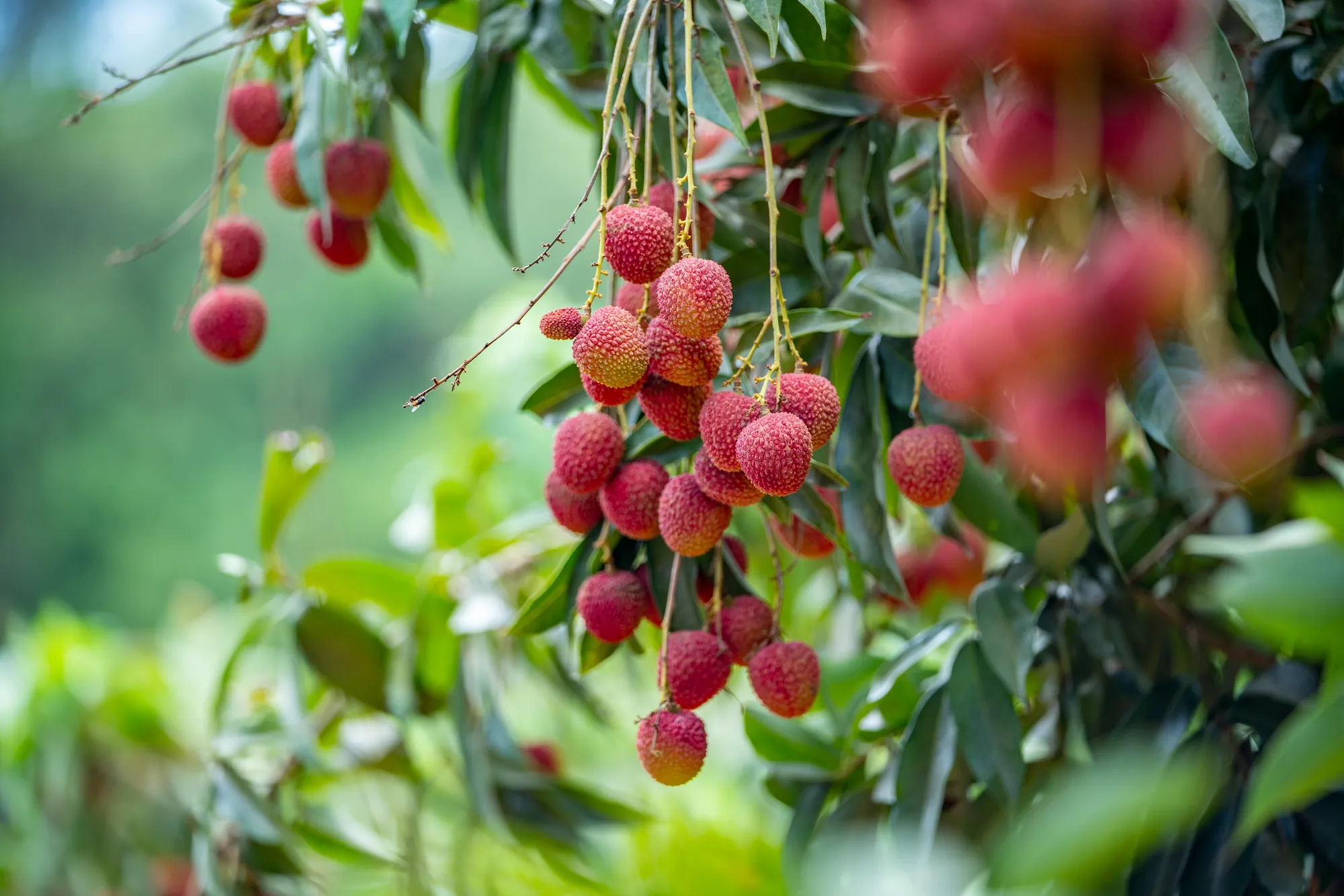
吃起荔枝,經常會跟唐明皇寵愛的楊貴妃聯想,杜甫還為它做了詩:「奔騰獻荔枝,百馬死山谷」。荔枝源於兩千多年前的中國,18世紀後,才陸續引進台灣栽種。
◤文 / 看見台灣基金會編輯群
在
中國有個荔枝品種叫「妃子笑」,據傳就是楊貴妃愛吃的,果核小、後勁帶點酸味,使果肉不至甜膩;這跟台灣的玉荷包口感很相近,玉荷包甜度19度,肉如白玉,狀似小錢包,因而得名。
玉荷包是台灣荔枝中的精品,是外銷主力,法國人還用以入菜,高雄大樹是主要產地;不過現在運輸不用累死馬了,搭飛機。上機前要做檢疫除蟲處理,一斤可以賣到400元。
▋詩人墨客歌頌荔枝
荔枝為夏季水果,以黑葉(占7成)、和玉荷包(占2成)為兩大品種,另外還有豔荔、糯米荔枝等品種。有的行家認為,甜度可達20度的糯米荔才是最佳品種。
荔枝為無患子科荔枝屬作物,文獻上早有紀錄。兩千多年前,西漢文學家司馬相如的〈上林賦〉已見蹤跡。荔枝木質地堅硬,適合作景觀、行道樹,亦常作上等建材運用,用途廣泛、價值高,每年可創造約50億元的產值。
荔枝滋味甜美,富含維生素C與鉀。除了果肉外,果核與果皮亦可作藥材,花朵所產花蜜更是有名的「荔枝蜜」;風味獨特的「荔枝酒」,更受許多品酒人士歡迎。
台灣荔枝在國際市場上表現卓越,日本是最大出口市場,紐西蘭迅速躍升為第二大市場。台灣荔枝以其甜美口感和優質贏得國際讚譽,供不應求,台灣民眾已愈來愈不容易在國內市場上買到。
探索更多
金針花─觀為花、食為菜、用為藥
盛夏之際,到台灣東部的金針花產地欣賞澄黃的壯闊花海,之後再享用產地限定的新鮮金針花湯、清炒金針花,是很夯的旅遊行程,尤其是台東的太麻里、花蓮富里的六十石山、玉里的赤科山,場面壯觀。
草莓─食用本體是花托、假果
草莓為冬季的代表性水果,產期自每年12月至隔年4月左右,香氣濃郁、風味酸甜,除作鮮果食用,亦為甜點蛋糕的好夥伴。
苦瓜─又名半生瓜,50歲後才懂它的好
人類馴化苦瓜的歷史很長,最早約於6000多年前便已區分為野生種與栽培種的苦瓜,歷史記載印度早已有人種植,600年前傳入中國,在南方落地生根。