


◤Text and Images / iSee Taiwan Foundation Editorial Team
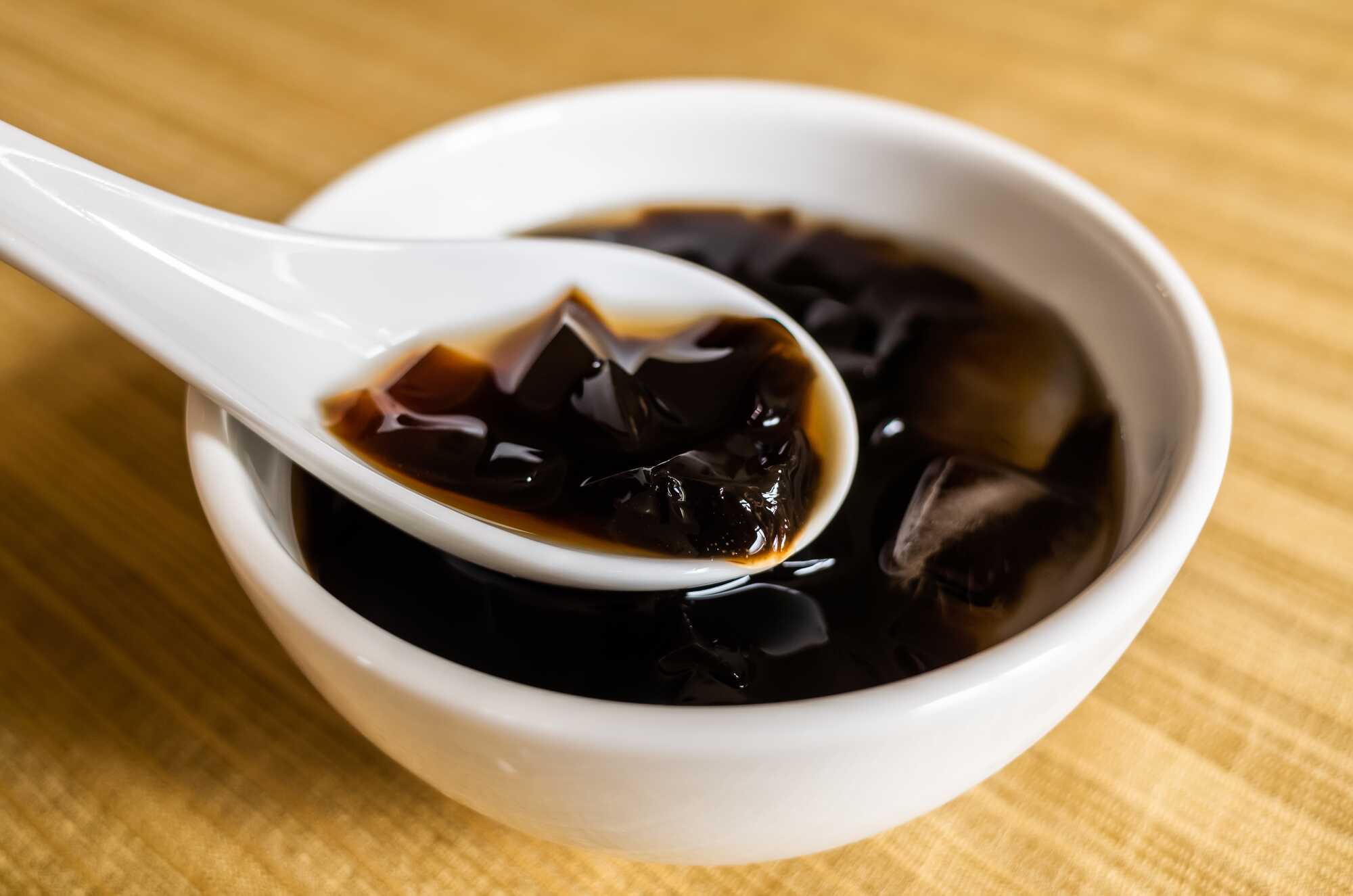
Grass jelly—also known in Chinese as tiancao, xicao, or xiancao jiu—was recorded as early as the Qing-dynasty Zhiwu mingshi tukao (An Illustrated Study of the Names and Facts of Plants), which describes it as sweet and cooling in nature and able to relieve summer heat; the Bencao gangmu shiyi (Supplement to Systematic Materia Medica) also notes its medicinal and culinary uses, crediting it with clearing heat and draining dampness from the body. In Taiwan, grass jelly is grown mainly on hilly slopes, and the most famous is Guanxi Township in Hsinchu County, where a wide day-to-night temperature range, well-drained sandy soil, and a favorable climate give the leaves an intense fragrance, earning the town its reputation as the “home of grass jelly.”
Freshly picked grass-jelly leaves are a tender emerald green with a delicate grassy scent; once sun-dried to a deep brown, their fragrance mellows and deepens. Slowly simmered in water, they yield a clean, sweet-finishing grass jelly tea; set with starch, they become the smooth, translucent jelly. In earlier times, households across Hakka villages would dry grass jelly at the height of summer, laying in a cooling staple for the turn of the seasons. This wisdom of following nature and making good use of a humble herb has made grass jelly one of the most emblematic summer flavors in Taiwanese food culture.
Pairs With Anything, Enjoyed Year-Round
Today, grass jelly is firmly part of everyday Taiwanese dining. Alongside the chilled, refreshing jelly and sweetened grass jelly drink, hot grass jelly is just as beloved in winter, served with taro balls, red beans, peanuts, Job's tears, and tapioca pearls to make a classic dessert for any season.
Modern research has found that grass jelly contains minerals such as potassium, calcium, magnesium, and iron, along with phytochemicals including polyphenols and caffeic acid. Animal studies have also explored its potential antioxidant, blood-pressure-regulating, and lipid-related effects. In traditional food therapy, grass jelly is regarded as cooling in nature, so those with a “cold” constitution or sensitive digestion are often advised to enjoy it in moderation. For Taiwanese, however, the value of grass jelly has never rested on health alone; it is also a way of eating in tune with the seasons.
From the leaves turned over in Guanxi's drying yards to that cooling, sweet-finishing bowl of black dessert at the corner ice shop, grass jelly—with its plain, herbal fragrance—has seen people through one sweltering summer after another, keeping the memory of the land alive on the tongue.