
'%20fill='%23a9976d'/%3e%3cpath%20id='Path_251'%20data-name='Path%20251'%20d='M8,35a1,1,0,0,1,1-1H23a1,1,0,0,1,0,2H9A1,1,0,0,1,8,35Z'%20transform='translate(-8%20-22)'%20fill='%23a9976d'/%3e%3cpath%20id='Path_252'%20data-name='Path%20252'%20d='M9,22a1,1,0,0,0,0,2h8a1,1,0,0,0,0-2Z'%20transform='translate(-8%20-16)'%20fill='%23a9976d'/%3e%3c/svg%3e)
'%20fill='%23a9976d'/%3e%3c/g%3e%3c/svg%3e)
黑鮪魚故鄉在屏東─行家看魚形、魚腹、魚鱗
'%3e%3cg%20id='Ellipse_27'%20data-name='Ellipse%2027'%20transform='translate(813%20250)'%20fill='none'%20stroke='%23ccac89'%20stroke-width='1'%3e%3ccircle%20cx='16'%20cy='16'%20r='16'%20stroke='none'/%3e%3ccircle%20cx='16'%20cy='16'%20r='15.5'%20fill='none'/%3e%3c/g%3e%3cg%20id='facebook'%20transform='translate(824.105%20258.296)'%3e%3cpath%20id='Path_243'%20data-name='Path%20243'%20d='M8.894.111V2.556H7.441a1.361,1.361,0,0,0-1.074.333,1.534,1.534,0,0,0-.278,1v1.75H8.8L8.441,8.38H6.089v7.028H3.255V8.38H.894V5.639H3.255V3.62A3.582,3.582,0,0,1,4.218.949,3.5,3.5,0,0,1,6.783,0,15.317,15.317,0,0,1,8.894.111Z'%20transform='translate(0%200)'%20fill='%23ccac89'/%3e%3c/g%3e%3c/g%3e%3c/svg%3e)

'%3e%3cg%20id='Ellipse_29'%20data-name='Ellipse%2029'%20transform='translate(901%20250)'%20fill='none'%20stroke='%23ccac89'%20stroke-width='1'%3e%3ccircle%20cx='16'%20cy='16'%20r='16'%20stroke='none'/%3e%3ccircle%20cx='16'%20cy='16'%20r='15.5'%20fill='none'/%3e%3c/g%3e%3cg%20id='link-45deg'%20transform='translate(902.607%20253.105)'%3e%3cg%20id='Group_479'%20data-name='Group%20479'%20transform='translate(7.393%205.896)'%3e%3cpath%20id='Path_241'%20data-name='Path%20241'%20d='M10.246,17.821,8.507,19.56a3.8,3.8,0,0,0,5.378,5.378L16.2,22.62a3.8,3.8,0,0,0-1.05-6.12l-.743.743a1.27,1.27,0,0,0-.2.252,2.535,2.535,0,0,1,1.091,4.23L12.99,24.042A2.536,2.536,0,0,1,9.4,20.455l1.005-1a5.093,5.093,0,0,1-.162-1.631Z'%20transform='translate(-7.393%20-12.02)'%20fill='%23ccac89'/%3e%3cpath%20id='Path_242'%20data-name='Path%20242'%20d='M18.236,9.327a3.8,3.8,0,0,0,1.05,6.12l.982-.984a2.535,2.535,0,0,1-1.136-4.241L21.448,7.9a2.536,2.536,0,1,1,3.587,3.587l-1.005,1a5.1,5.1,0,0,1,.162,1.631l1.739-1.739A3.8,3.8,0,1,0,20.553,7.01Z'%20transform='translate(-13.011%20-5.896)'%20fill='%23ccac89'/%3e%3c/g%3e%3c/g%3e%3c/g%3e%3c/svg%3e)
◤文/特約作家一高靜玉
東東港盛產人人皆知的東港三寶:櫻花蝦、油魚子與黑鮪魚,大家一定耳熟能詳。
東港人又稱櫻花蝦「花殼仔」,全球僅產於台灣東港及日本駿河灣,每年11月至翌年5月為產季,因屬深海蝦,故不易受污染且營養價值高,深受市場喜愛 。
油魚子的油脂含量豐富,魚卵纖細豐腴,鹽醃壓實晾乾,風味濃郁,入口有Q勁且鹹中帶甘,唇齒留香。
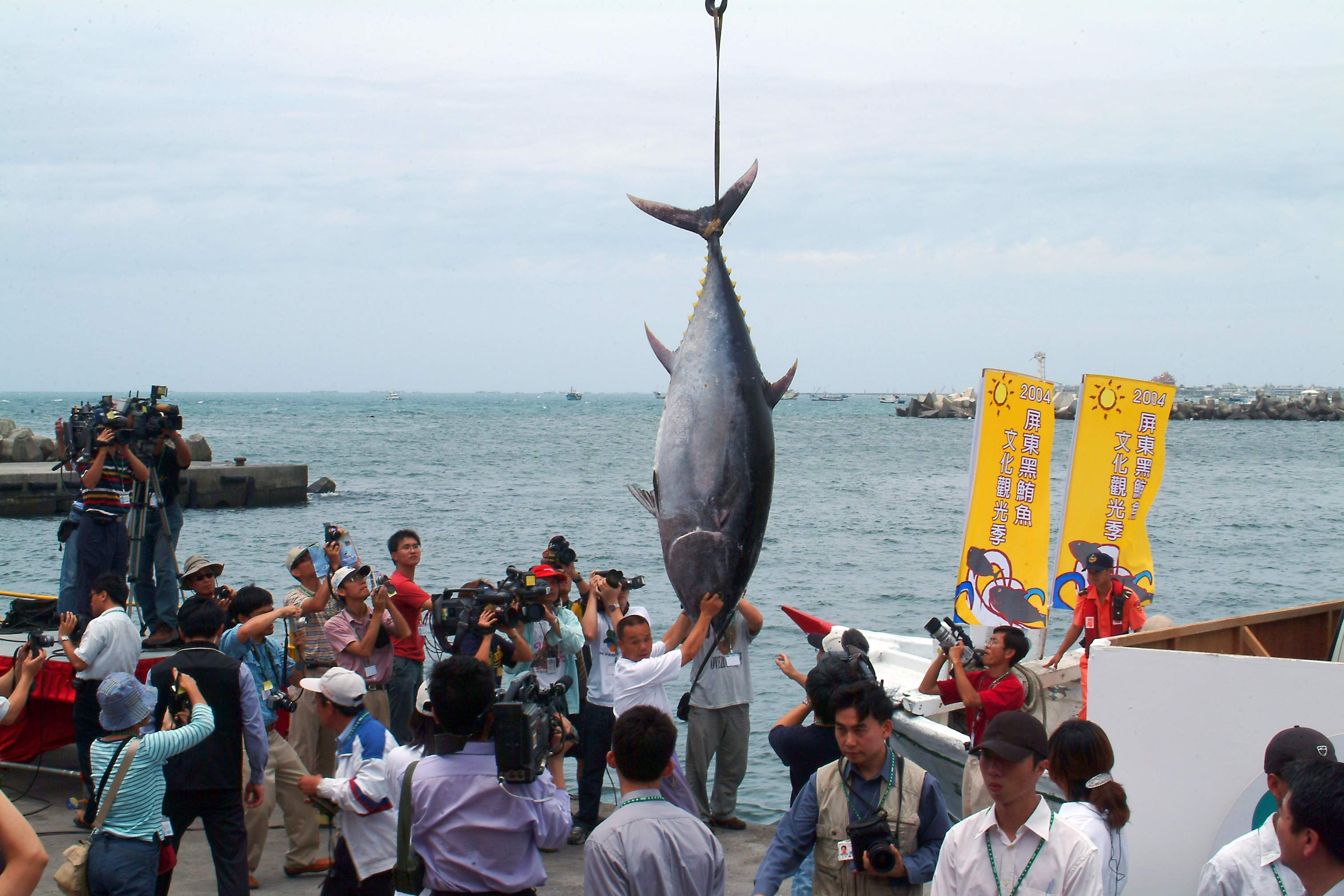
而三寶之最黑鮪魚,每年4至6月,黑鮪魚會隨著黑潮自赤道端向北洄游,黑潮洋流將黑鮪魚帶至台灣南端蘭嶼及綠島附近海域,在台灣東部及沖繩附近海域產卵。
正值交配期的黑鮪魚,活動力極強、肉質飽滿,油脂豐潤,身體狀態達顛峰。
台灣一共有三個黑鮪魚捕獲地,分別屏東東港、台東成功、宜蘭蘇澳。其中以東港黑鮪魚捕獲量最高,為全台第一。
因此,東港也被稱為黑鮪魚的故鄉,與櫻花蝦、油魚子並稱東港三寶。
▋獨特的漁業文化:漁獲拍賣過程
來到大型漁港,除了挑選、品嘗海鮮之外,也有不少人是專程到漁港來看拍賣。海象好的時候,凌晨三點多起,漁船就會紛紛進港靠岸,近中午時卸貨完畢,等待下午一點的漁獲拍賣。位於東港的「佳珍海產餐廳」,更以每年拍賣第一尾黑鮪魚而聞名,吸引了許多饕客和觀光客前來見證這一盛事。
漁獲買賣相當專業,且限定領有牌照的商家才能競標購買。黑鮪魚季時,豐收的鮪釣漁船將黑鮪魚經過吊掛、運送,進入漁市後,每條黑鮪魚均貼上捕獲的漁船商號或船主姓名,由漁會人員貼上賣魚單及登錄資料。
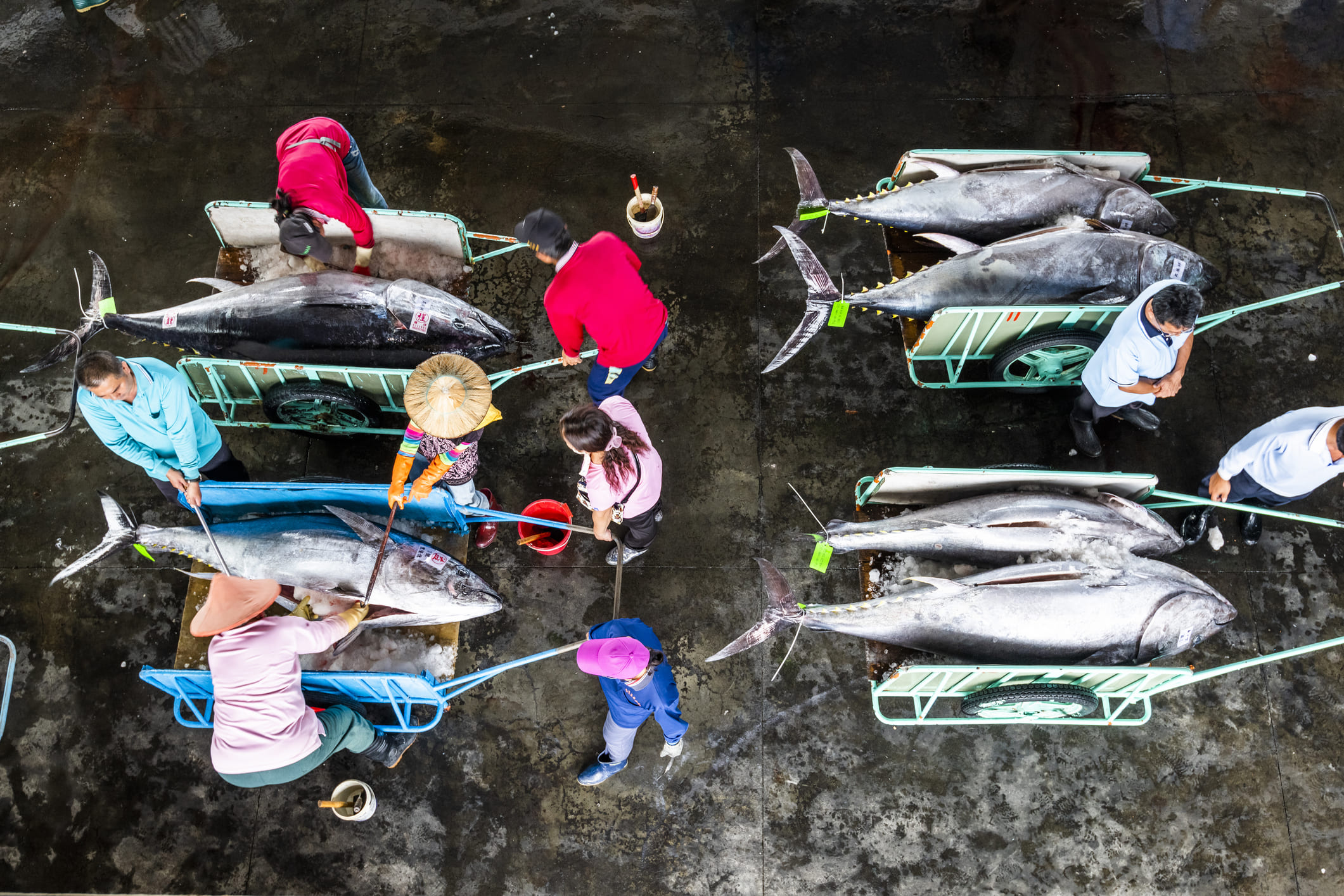 ▏貼上捕獲漁船商號或船主姓名的黑鮪魚,由領有牌照的商家競標購買,興起一股交易熱潮(圖片來源:高靜玉)。
期間,買主找到中意的黑鮪魚後,會以一小根中空鐵管刺入魚的尾巴部位,取出小塊魚肉來判斷油花及品質。一條黑鮪魚動輒數十萬元,買家必須精挑細選,審慎地挑選品質良好的黑鮪魚,若品質不好便損失慘重。
挑選黑鮪魚必須憑藉多年的經驗,才能挑出好魚。行家在挑選時會觀察魚肚是否油脂豐美、 外皮魚鱗是否有光澤以及魚形等。
外皮魚鱗部分,上岸的黑鮪魚若腹尾的外皮鱗片全部泛白,代表黑鮪魚釣起來時已經死亡;若腹尾外皮有明顯花紋,代表釣起來時仍是活體;第三種狀況是,腹尾魚鱗半白半有花紋,那表示釣起來之後仍是活體,才死亡沒多久。
魚形部分,尾部飽滿、腹部豐厚、體型圓滾滾是外型三大判斷基準,代表魚的品質不錯。
拍賣開始時,是一尾一尾進行。拍賣官會走到該條魚的位置,架勢十足、表情豐富並由其經驗決定起標價格,再由買家競標。拍賣官會由買家的眼神、小動作中決定拍賣的價格。
拍定後,得標者會在魚身貼上商號,拍賣官則貼上價錢(每公斤)。決標後,一旁會有工作人員立刻上前清空魚腹及魚鰓中的碎冰,然後送上磅秤過磅,拍賣員則記下重量、價格及買賣雙方資料,後由買家運回處理。
▋享受海中和牛的美味
通常繁殖期間的魚類,營養成分最高。黑鮪魚屬大型魚,可食用部分相當多,加上長時間在海中游動,需要儲存大量油脂作動力,肉質鮮美又有彈性,市場販售價格也因部位不同有差異。
最高級的部位是從腹部到鰓,稱「大腹」。大腹油脂豐潤、肉細嫩,呈淡粉紅色,雪白的油脂細密分布其中,美麗如大理石紋路,入口即化且香氣盈滿,同時也是整條魚最好吃、最貴的部位,餐廳多做成生魚片。
其次是中腹到尾部,稱「中腹」,油脂稍少,DHA含量亦高,屬中上等級。最後則是魚背肉,油脂少,肉色豔紅,含EPA,可說全身都是寶。
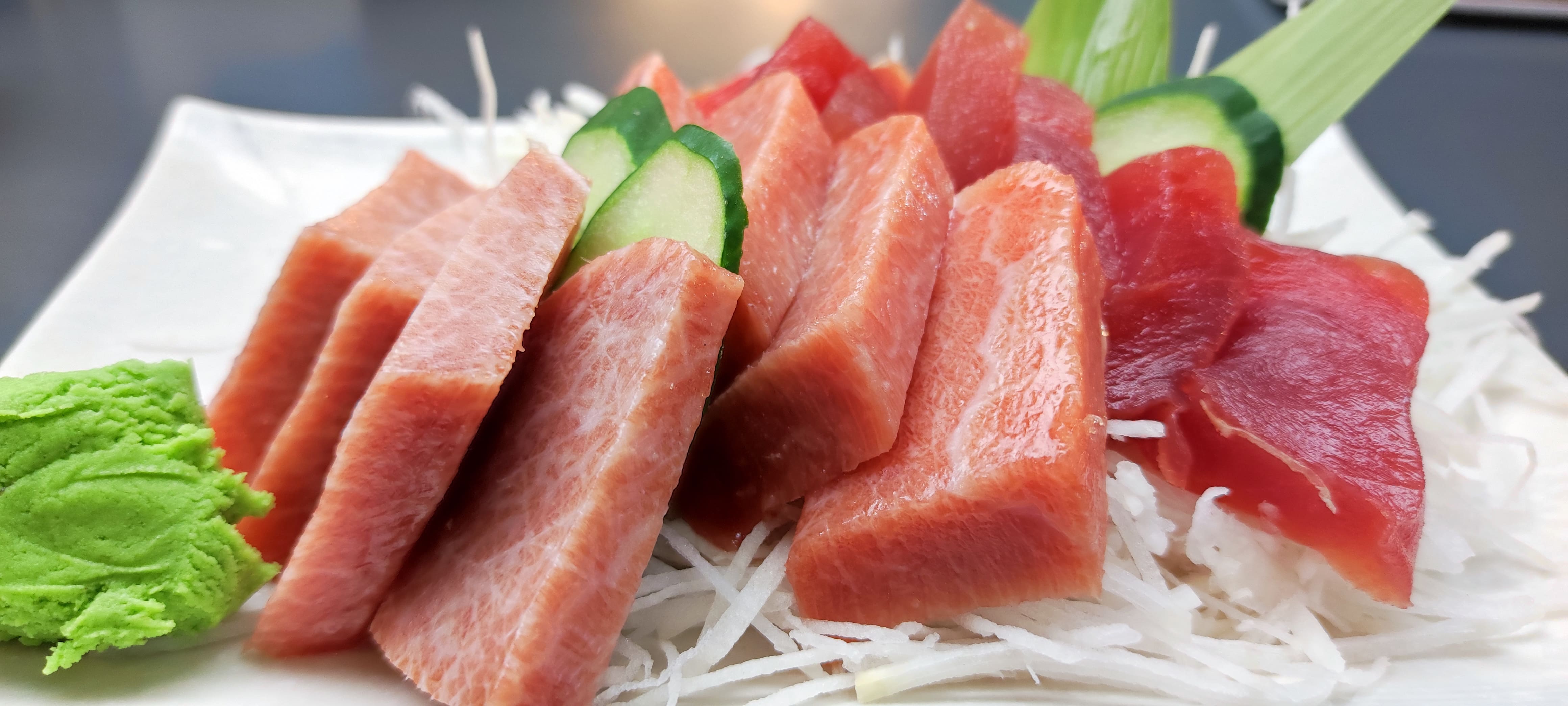 ▏油脂細密的黑鮪魚生魚片,是許多老饕們的最愛(圖片來源:高靜玉)。
每年黑鮪魚的產季一到,東港便會舉辦相當盛大的黑鮪魚祭活動,正式宣告黑鮪魚產季開始。
此時饕客們也會自各地造訪東港,為的是到產地一嘗傳說中的「海中和牛黑鮪魚」。東港當地的海鮮餐廳也紛紛捲起袖子,推出各種黑鮪魚料理法。其中,三十六吃的「黑鮪魚全餐」,將美味的在地黑鮪魚料理,推向世界美食之列。
▋漁市場、海產街,一親黑鮪魚魅力
到了東港,去哪裡能夠一親黑鮪魚美味的魅力?東港擁有一日多市的漁市場,東港人對於海鮮料理又特別刁,要能在東港鎮以「海鮮」兩字開家立店,勢必要有自己的獨門絕活,各自揮發料理特色,才能長久屹立。
當地「華僑市場」內的各家海鮮攤,除了有自家精選的海鮮,也可以代客烹煮遊客自漁港邊採買的海鮮,並自己挑選料理方式,較適合三五好友或家庭出遊,即興隨意的品味嘗鮮。
而東港當地知名的海產街,則是當地人會光臨的好地方。光復街鄰近漁港,當中午過後漁船陸續回港,許多新鮮漁獲就會直接在街上販售,動作慢一點就買不到。各店家都有熟識的漁船以及海釣客,來到光復街的餐廳,不時會遇見限時限量的高檔漁獲,到餐廳尋寶也是一種樂趣。
特別值得一提的是,黑鮪魚的捕撈由東港區漁會進行限量管控,這樣的措施不僅維護了漁業資源的永續發展,更與聯合國SDGs中永續海洋的目標相契合,為台灣在保護海洋環境上樹立典範。