
'%20fill='%23a9976d'/%3e%3cpath%20id='Path_251'%20data-name='Path%20251'%20d='M8,35a1,1,0,0,1,1-1H23a1,1,0,0,1,0,2H9A1,1,0,0,1,8,35Z'%20transform='translate(-8%20-22)'%20fill='%23a9976d'/%3e%3cpath%20id='Path_252'%20data-name='Path%20252'%20d='M9,22a1,1,0,0,0,0,2h8a1,1,0,0,0,0-2Z'%20transform='translate(-8%20-16)'%20fill='%23a9976d'/%3e%3c/svg%3e)
'%20fill='%23a9976d'/%3e%3c/g%3e%3c/svg%3e)
釋迦─台灣釋迦果品品質,世界第一
地方探索
時令探索
主題探索
東部
冬
文化美食
分享
'%3e%3cg%20id='Ellipse_27'%20data-name='Ellipse%2027'%20transform='translate(813%20250)'%20fill='none'%20stroke='%23ccac89'%20stroke-width='1'%3e%3ccircle%20cx='16'%20cy='16'%20r='16'%20stroke='none'/%3e%3ccircle%20cx='16'%20cy='16'%20r='15.5'%20fill='none'/%3e%3c/g%3e%3cg%20id='facebook'%20transform='translate(824.105%20258.296)'%3e%3cpath%20id='Path_243'%20data-name='Path%20243'%20d='M8.894.111V2.556H7.441a1.361,1.361,0,0,0-1.074.333,1.534,1.534,0,0,0-.278,1v1.75H8.8L8.441,8.38H6.089v7.028H3.255V8.38H.894V5.639H3.255V3.62A3.582,3.582,0,0,1,4.218.949,3.5,3.5,0,0,1,6.783,0,15.317,15.317,0,0,1,8.894.111Z'%20transform='translate(0%200)'%20fill='%23ccac89'/%3e%3c/g%3e%3c/g%3e%3c/svg%3e)

'%3e%3cg%20id='Ellipse_29'%20data-name='Ellipse%2029'%20transform='translate(901%20250)'%20fill='none'%20stroke='%23ccac89'%20stroke-width='1'%3e%3ccircle%20cx='16'%20cy='16'%20r='16'%20stroke='none'/%3e%3ccircle%20cx='16'%20cy='16'%20r='15.5'%20fill='none'/%3e%3c/g%3e%3cg%20id='link-45deg'%20transform='translate(902.607%20253.105)'%3e%3cg%20id='Group_479'%20data-name='Group%20479'%20transform='translate(7.393%205.896)'%3e%3cpath%20id='Path_241'%20data-name='Path%20241'%20d='M10.246,17.821,8.507,19.56a3.8,3.8,0,0,0,5.378,5.378L16.2,22.62a3.8,3.8,0,0,0-1.05-6.12l-.743.743a1.27,1.27,0,0,0-.2.252,2.535,2.535,0,0,1,1.091,4.23L12.99,24.042A2.536,2.536,0,0,1,9.4,20.455l1.005-1a5.093,5.093,0,0,1-.162-1.631Z'%20transform='translate(-7.393%20-12.02)'%20fill='%23ccac89'/%3e%3cpath%20id='Path_242'%20data-name='Path%20242'%20d='M18.236,9.327a3.8,3.8,0,0,0,1.05,6.12l.982-.984a2.535,2.535,0,0,1-1.136-4.241L21.448,7.9a2.536,2.536,0,1,1,3.587,3.587l-1.005,1a5.1,5.1,0,0,1,.162,1.631l1.739-1.739A3.8,3.8,0,1,0,20.553,7.01Z'%20transform='translate(-13.011%20-5.896)'%20fill='%23ccac89'/%3e%3c/g%3e%3c/g%3e%3c/g%3e%3c/svg%3e)
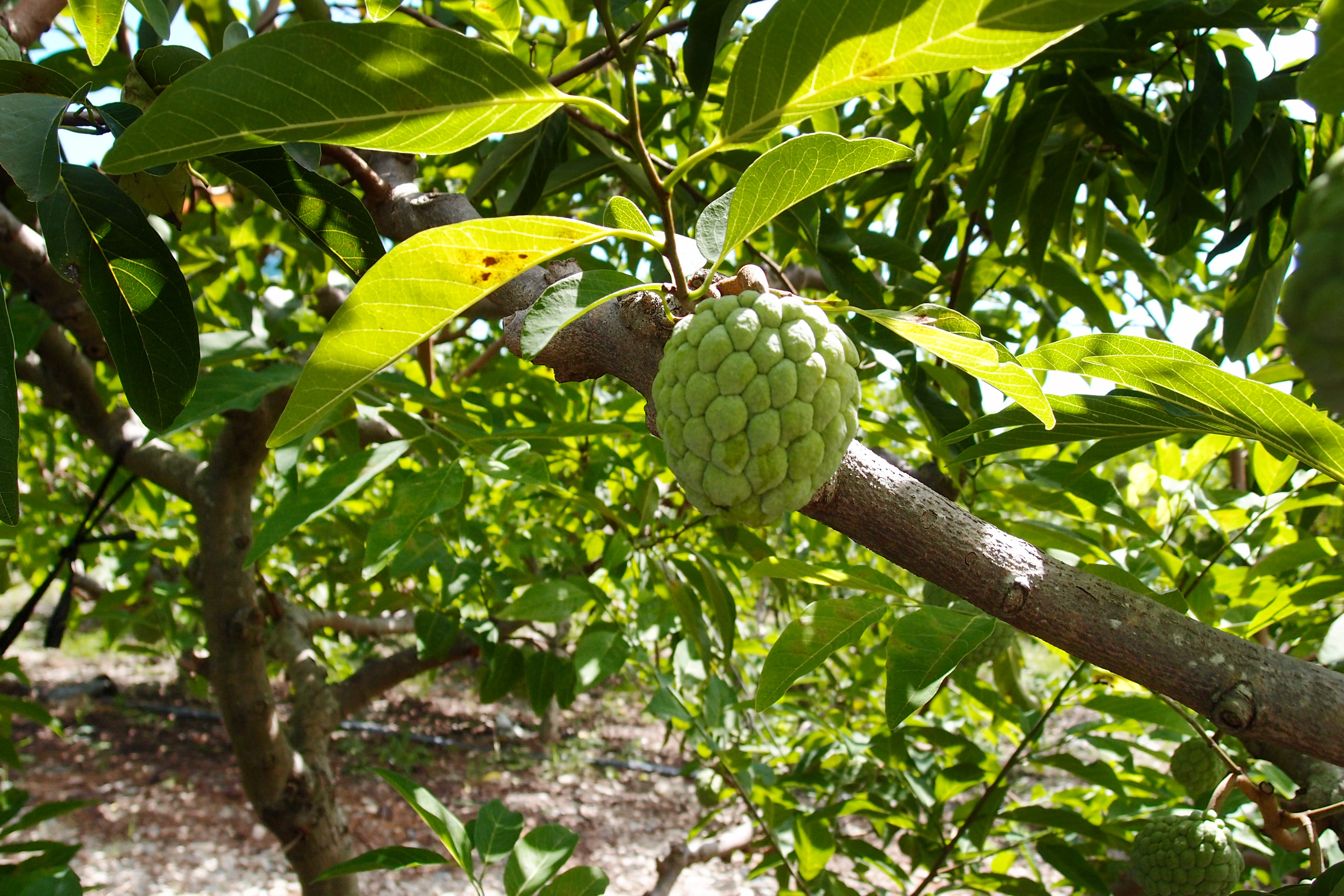
台灣是全球公認的水果王國,「釋迦」是主力戰將之一。
◤文.圖/看見台灣基金會編輯群
根
據農業部統計,台灣是目前全球釋迦栽培面積最大、果品品質最優的國家,也是台灣人最喜歡的水果之一。
台灣釋迦果實大、果肉多、口感滑嫩、甜而不膩,冷藏後口感清涼香甜、冷凍後口感像冰淇淋,怎麼樣都好吃。
根據《台灣府誌》,原產於熱帶美洲的釋迦,由荷蘭傳教士引入台灣;最初引進為粗鱗種,小小的果實和荔枝極為相似,所以被稱為「番荔枝」,也有一說認為果實就像釋迦牟尼佛的頭飾,所以俗稱「釋迦」。
台灣氣候適合釋迦生長,經過不斷改良後,台灣釋迦全球知名,主要產期自7月開始,至隔年3月結束。冬季因為溫度低、雨量少,更適合釋迦生長,一般認為冬天到初春的釋迦品質,比夏季來得好。
▋台東農會以冷凍技術,開拓歐美、東北亞市場
台灣釋迦產區大多分布於東部及南部,又以台東卑南鄉為最大產區。品種主要有大目釋迦及鳳梨釋迦二種。
鳳梨釋迦又名蜜釋迦、旺來釋迦;果肉潔白如玉、帶有淡雅果香,口感綿密清甜。雖然無法用手剝開,必須先用刀子去皮、切塊才能享用。但因為果實大、籽粒少,果肉口感扎實,還有淡淡的鳳梨香氣,是台灣釋迦外銷的主力。
大目釋迦的鱗目呈圓形,果肉Q彈、酸中帶甜,熟度足夠後可以直接剝下食用,或是拿一支湯匙挖果肉食用,口感香甜而軟綿,冰過之後猶如冰淇淋。
近年來台東農會結合外銷業者,以冷凍技術成功外銷美國及日本市場,甚至曾在東京、大阪的雙十節國慶酒會上露臉,開創台灣釋迦的外銷新商機。
探索更多
山苦瓜─從山產店熱炒到生技新星
山苦瓜是山產店常見的特色菜,顏色深、個頭迷你,30~50公克,一斤賣180元。山苦瓜「花蓮4號」富含三萜類、山苦瓜皂苷、苦瓜蛋白等營養成分,萃取出純度99.9%的苦瓜精華,白色粉末狀,則有機會轉為醫藥之用。
鵝─早期,養鵝是農家副業
台灣從17、18世紀起已有養鵝紀錄,飼養「華鵝」,主要是傳統農家副業。1974年自丹麥引進「白羅曼鵝」後,白羅曼鵝才成為飼養主流,至今占比逾97%。
高粱酒─世界烈酒競賽常勝軍
高粱酒的部分紀念酒款在收藏界中展現其投資價值,至少5000元一瓶,上萬的也有。而且是台灣白酒市占率最高的酒。