
'%20fill='%23a9976d'/%3e%3cpath%20id='Path_251'%20data-name='Path%20251'%20d='M8,35a1,1,0,0,1,1-1H23a1,1,0,0,1,0,2H9A1,1,0,0,1,8,35Z'%20transform='translate(-8%20-22)'%20fill='%23a9976d'/%3e%3cpath%20id='Path_252'%20data-name='Path%20252'%20d='M9,22a1,1,0,0,0,0,2h8a1,1,0,0,0,0-2Z'%20transform='translate(-8%20-16)'%20fill='%23a9976d'/%3e%3c/svg%3e)
'%20fill='%23a9976d'/%3e%3c/g%3e%3c/svg%3e)
'%3e%3cg%20id='Ellipse_27'%20data-name='Ellipse%2027'%20transform='translate(813%20250)'%20fill='none'%20stroke='%23ccac89'%20stroke-width='1'%3e%3ccircle%20cx='16'%20cy='16'%20r='16'%20stroke='none'/%3e%3ccircle%20cx='16'%20cy='16'%20r='15.5'%20fill='none'/%3e%3c/g%3e%3cg%20id='facebook'%20transform='translate(824.105%20258.296)'%3e%3cpath%20id='Path_243'%20data-name='Path%20243'%20d='M8.894.111V2.556H7.441a1.361,1.361,0,0,0-1.074.333,1.534,1.534,0,0,0-.278,1v1.75H8.8L8.441,8.38H6.089v7.028H3.255V8.38H.894V5.639H3.255V3.62A3.582,3.582,0,0,1,4.218.949,3.5,3.5,0,0,1,6.783,0,15.317,15.317,0,0,1,8.894.111Z'%20transform='translate(0%200)'%20fill='%23ccac89'/%3e%3c/g%3e%3c/g%3e%3c/svg%3e)

'%3e%3cg%20id='Ellipse_29'%20data-name='Ellipse%2029'%20transform='translate(901%20250)'%20fill='none'%20stroke='%23ccac89'%20stroke-width='1'%3e%3ccircle%20cx='16'%20cy='16'%20r='16'%20stroke='none'/%3e%3ccircle%20cx='16'%20cy='16'%20r='15.5'%20fill='none'/%3e%3c/g%3e%3cg%20id='link-45deg'%20transform='translate(902.607%20253.105)'%3e%3cg%20id='Group_479'%20data-name='Group%20479'%20transform='translate(7.393%205.896)'%3e%3cpath%20id='Path_241'%20data-name='Path%20241'%20d='M10.246,17.821,8.507,19.56a3.8,3.8,0,0,0,5.378,5.378L16.2,22.62a3.8,3.8,0,0,0-1.05-6.12l-.743.743a1.27,1.27,0,0,0-.2.252,2.535,2.535,0,0,1,1.091,4.23L12.99,24.042A2.536,2.536,0,0,1,9.4,20.455l1.005-1a5.093,5.093,0,0,1-.162-1.631Z'%20transform='translate(-7.393%20-12.02)'%20fill='%23ccac89'/%3e%3cpath%20id='Path_242'%20data-name='Path%20242'%20d='M18.236,9.327a3.8,3.8,0,0,0,1.05,6.12l.982-.984a2.535,2.535,0,0,1-1.136-4.241L21.448,7.9a2.536,2.536,0,1,1,3.587,3.587l-1.005,1a5.1,5.1,0,0,1,.162,1.631l1.739-1.739A3.8,3.8,0,1,0,20.553,7.01Z'%20transform='translate(-13.011%20-5.896)'%20fill='%23ccac89'/%3e%3c/g%3e%3c/g%3e%3c/g%3e%3c/svg%3e)
◤文.圖/看見台灣基金會編輯群
在2009 年莫拉克風災後,原居屏東三地門大社、瑪家村與霧台好茶的排灣族與魯凱族族人,被迫離開百年原鄉,移居至屏東瑪家與內埔交界的新聚落「禮納里」。然而,遷徙並未沖淡文化根脈,反而在這片新土地上催生出更蓬勃的創作能量。
從土地採集靈感,生活即創作
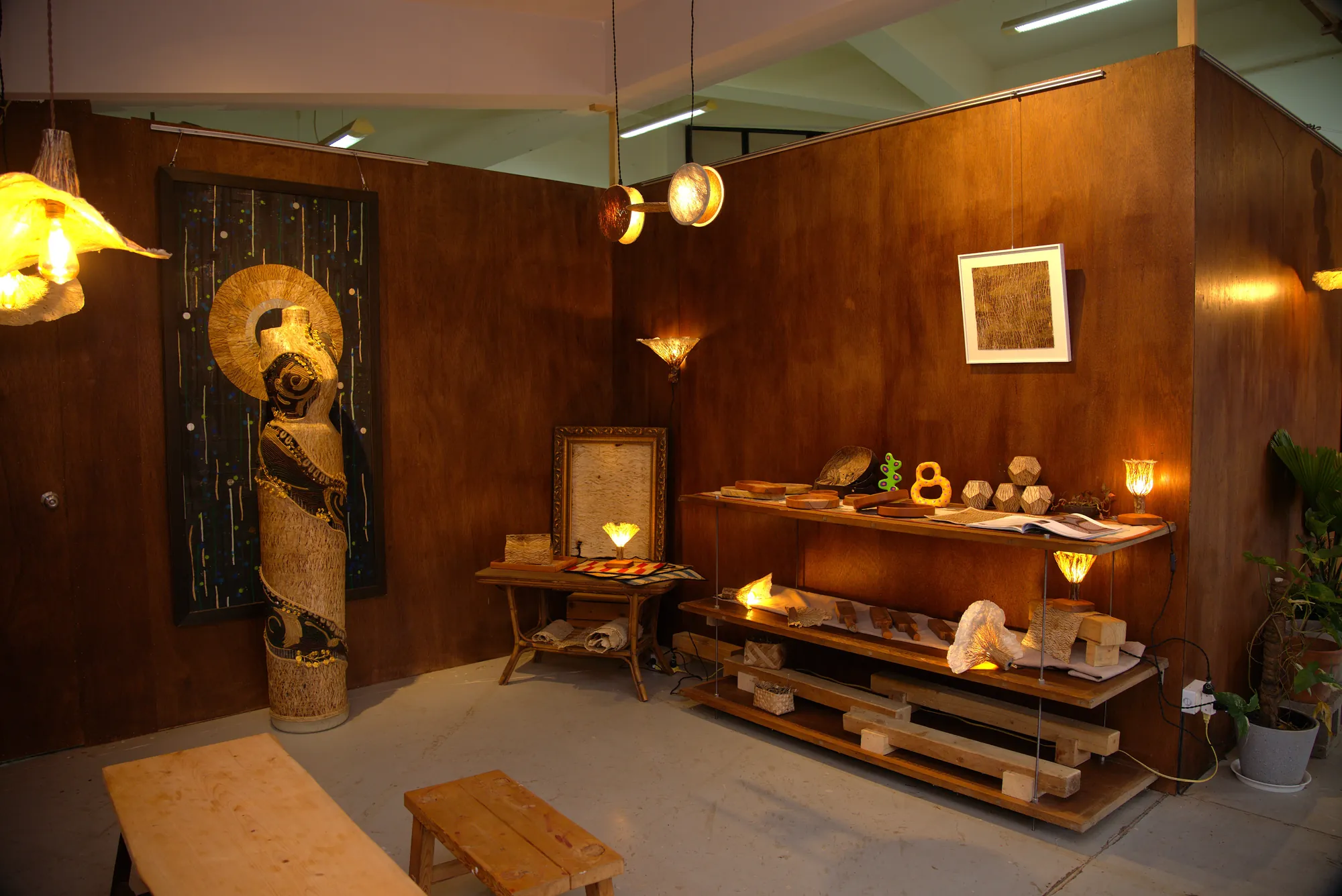
走進禮納里,姥瑰皮藝坊(Ljaukui)內總瀰漫著一股草本植物與皮革交融的溫暖氣息。皮雕師相信創作應始於土地,她親自採集小米穗、蕨類、山棕與花卉種子,經日曬風乾後,巧手編織成各式花飾與頭冠。她更擅長將排灣族文化中象徵生命與守護的圖騰,如蝴蝶、陶壺、百步蛇等,精緻地融入皮雕技藝中,並將其轉化為筆記本、皮夾等日常用品。另一位創作者王雅蘭則以「構樹皮」延續古老技藝。她嚴格遵循古法,以木槌反覆捶打樹皮,提取出其中柔韌的纖維,再將其製作成餐墊、燈飾與服飾等生活器物。
在部落的文化復興中,美食同樣扮演重要角色。族人運用小米、樹豆與各種山野食材,致力復興傳統料理的風味。例如象徵祝福與團圓的「吉拿富」(Cinavu,小米粽),以小米混合花生泥包裹肉餡,再以清香的月桃葉包裹蒸製;或是煙燻香氣濃郁的「陶甕烤豬」,在部落的宴席與祭典中,象徵著共享與文化的世代傳承。
禮納里,不僅是災後重建家園的縮影,更是族人透過藝術、飲食、工藝與日常實踐,對「家」的意義進行一場深刻而動人的重新詮釋。在這裡,每一件手作工藝、每一道傳統佳餚,都深深承載著遷徙後的民族韌性與文化創新。