
'%20fill='%23a9976d'/%3e%3cpath%20id='Path_251'%20data-name='Path%20251'%20d='M8,35a1,1,0,0,1,1-1H23a1,1,0,0,1,0,2H9A1,1,0,0,1,8,35Z'%20transform='translate(-8%20-22)'%20fill='%23a9976d'/%3e%3cpath%20id='Path_252'%20data-name='Path%20252'%20d='M9,22a1,1,0,0,0,0,2h8a1,1,0,0,0,0-2Z'%20transform='translate(-8%20-16)'%20fill='%23a9976d'/%3e%3c/svg%3e)
'%20fill='%23a9976d'/%3e%3c/g%3e%3c/svg%3e)
跟著《臺灣漫遊錄》吃美食:潤餅— 有南北差異,但無爭議
時令探索
主題探索
春
文化美食
分享
'%3e%3cg%20id='Ellipse_27'%20data-name='Ellipse%2027'%20transform='translate(813%20250)'%20fill='none'%20stroke='%23ccac89'%20stroke-width='1'%3e%3ccircle%20cx='16'%20cy='16'%20r='16'%20stroke='none'/%3e%3ccircle%20cx='16'%20cy='16'%20r='15.5'%20fill='none'/%3e%3c/g%3e%3cg%20id='facebook'%20transform='translate(824.105%20258.296)'%3e%3cpath%20id='Path_243'%20data-name='Path%20243'%20d='M8.894.111V2.556H7.441a1.361,1.361,0,0,0-1.074.333,1.534,1.534,0,0,0-.278,1v1.75H8.8L8.441,8.38H6.089v7.028H3.255V8.38H.894V5.639H3.255V3.62A3.582,3.582,0,0,1,4.218.949,3.5,3.5,0,0,1,6.783,0,15.317,15.317,0,0,1,8.894.111Z'%20transform='translate(0%200)'%20fill='%23ccac89'/%3e%3c/g%3e%3c/g%3e%3c/svg%3e)

'%3e%3cg%20id='Ellipse_29'%20data-name='Ellipse%2029'%20transform='translate(901%20250)'%20fill='none'%20stroke='%23ccac89'%20stroke-width='1'%3e%3ccircle%20cx='16'%20cy='16'%20r='16'%20stroke='none'/%3e%3ccircle%20cx='16'%20cy='16'%20r='15.5'%20fill='none'/%3e%3c/g%3e%3cg%20id='link-45deg'%20transform='translate(902.607%20253.105)'%3e%3cg%20id='Group_479'%20data-name='Group%20479'%20transform='translate(7.393%205.896)'%3e%3cpath%20id='Path_241'%20data-name='Path%20241'%20d='M10.246,17.821,8.507,19.56a3.8,3.8,0,0,0,5.378,5.378L16.2,22.62a3.8,3.8,0,0,0-1.05-6.12l-.743.743a1.27,1.27,0,0,0-.2.252,2.535,2.535,0,0,1,1.091,4.23L12.99,24.042A2.536,2.536,0,0,1,9.4,20.455l1.005-1a5.093,5.093,0,0,1-.162-1.631Z'%20transform='translate(-7.393%20-12.02)'%20fill='%23ccac89'/%3e%3cpath%20id='Path_242'%20data-name='Path%20242'%20d='M18.236,9.327a3.8,3.8,0,0,0,1.05,6.12l.982-.984a2.535,2.535,0,0,1-1.136-4.241L21.448,7.9a2.536,2.536,0,1,1,3.587,3.587l-1.005,1a5.1,5.1,0,0,1,.162,1.631l1.739-1.739A3.8,3.8,0,1,0,20.553,7.01Z'%20transform='translate(-13.011%20-5.896)'%20fill='%23ccac89'/%3e%3c/g%3e%3c/g%3e%3c/g%3e%3c/svg%3e)
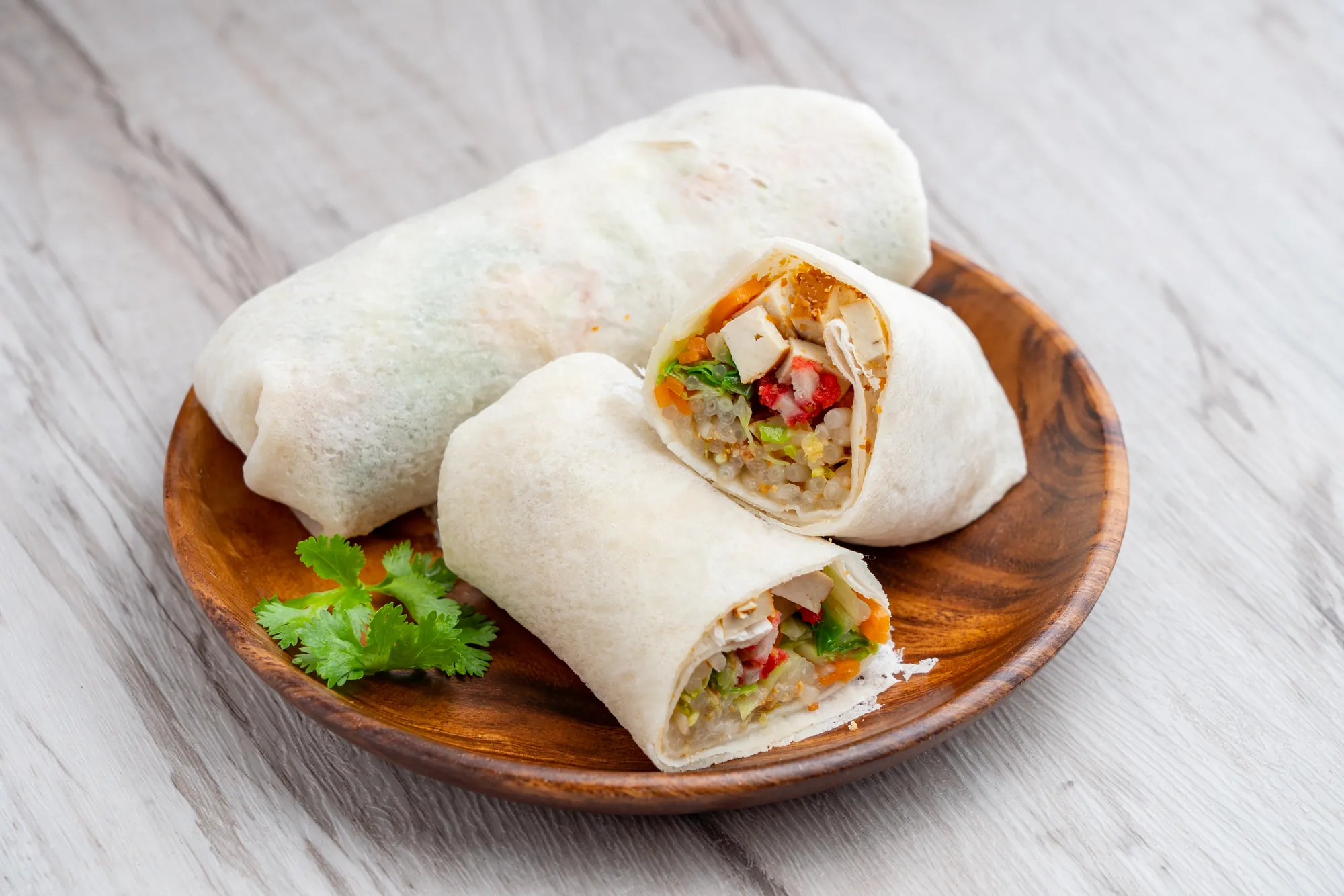
潤餅是台灣最具代表性的常民飲食之一,從節慶供桌到街頭攤販,各地都有不同做法與風味。近期因《臺灣漫遊錄》的熱潮也讓這道傳統小吃,再次受到矚目。
◤文.圖/看見台灣基金會編輯群
潤
餅的起源可追溯至春秋戰國時期,春天時民眾以蔥蒜香菜等五辛盤,祭祀後以餅包裹五辛(大葱、小蒜、韮菜、香菜、芸苔)食之,以求開五臟的保健效果,是謂「春餅」,即為潤餅和春捲的前身,之後流行於整個東南亞。
後來,潤餅成為閩南的節慶食物之一。閩南各地,內含材料各自不同,差異大到正如美食作家陳靜宜曾提及「潤餅就像沒有文字的族譜,可以讀出一個人的身世」。
▋南偏好甜、北偏好清爽
今日台灣常見的潤餅,其食材不僅包含五辛,還增添胡蘿蔔、豆芽、高麗菜等食材,口感更顯豐富。然而,跟粽子一樣,有南北差異,時間上,北台灣在尾牙、過年前吃;南部在清明節前吃。
口味上,無論在夜市或街市上時常見潤餅販售,南部潤餅偏甜,除了花生粉之外還會放些白糖、油麵;北台灣偏好清爽,蛋酥與紅燒肉則不可少。各有所好,幸好沒有像粽子一樣,引發南北大戰。
潤餅與春捲傳至東南亞後,又有了許多不同的模樣,例如炸春捲等小食,成為亞洲地區常見的美食之一。
越南的春潤以米紙而非麵粉製作,餡料放蝦仁及九層塔,沾甜酸辣醬食用,自成一格。
探索更多
檸檬─台灣特有酸度,猶如「初戀的滋味」
檸檬為柑橘類水果,日治時期1920年前後引進台灣種植,風味酸香甘美、盛產於夏季。原產於熱帶森林的檸檬,移居台灣後,最適合的種植地點是最南端的屏東,目前屏東檸檬的產量占全台超過8成。
大甲檳榔心芋──兩溪沃土孕育出的綿密香氣
一顆芋頭,連著大甲的溪水、沃土與季節風土。從田間到芋頭酥、芋頭米粉,大甲以檳榔心芋種出台灣人熟悉的鬆綿香氣。
來大稻埕,尋味法皮台骨潮食─新派經典美食運動進行中
漫步在台北大稻埕迪化街的巴洛克風格十連棟古蹟內,品嘗融合法國鄉土情懷與台灣在地風味的創新料理,帶人遙想19世紀英、美等國商人在六館街成立洋行進口茶、糖與樟腦等物資,大稻埕從此被納入國際貿易體系。(圖片來源:豐舍)